THE ADVENTURE COLLECTIVE® · Independent discovery and booking for outdoor travel

Step off the high‑rise grid and into the lanes where Dubai began: wind‑towered alleys, an abra crossing, and markets that still trade in spices and gold. This 2–3 hour walking tour maps the city’s maritime and mercantile past with accessible stops and local insight.
Step off the high‑rise grid and into the lanes where Dubai began: wind‑towered alleys, an abra crossing, and markets that still trade in spices and gold. This 2–3 hour walking tour maps the city’s maritime and mercantile past with accessible stops and local insight.
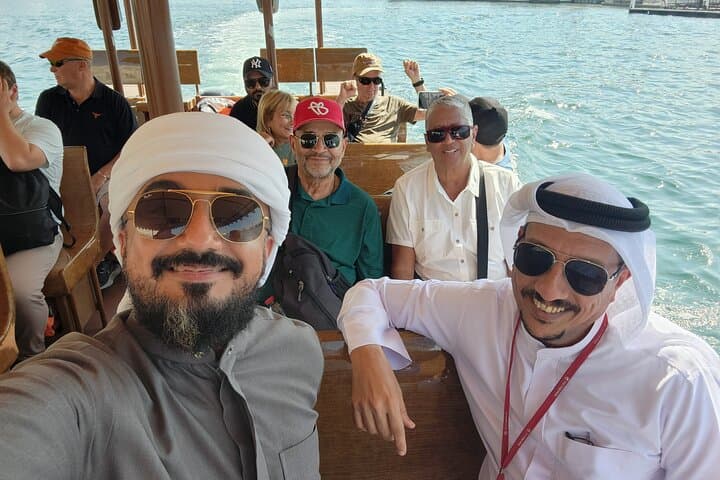
Morning light slides across Dubai Creek and the city exhales—a line of wooden abras cut the water as they have for decades, carrying traders and curious travelers between Deira and Bur Dubai. Start in the narrow lanes of Al Fahidi, where wind towers and limestone buildings keep a quieter pace than the skyline a few kilometers away. The creek itself seems to dare you forward, its current pushing stories of merchants, pearls, and dhow crossings into every breeze.
Verified experiences and guided adventures in the surrounding area.
Operated by zahed martaa · Dubai, Dubai
Morning light slides across Dubai Creek and the city exhales—a line of wooden abras cut the water as they have for decades, carrying traders and curious travelers between Deira and Bur Dubai. Start in the narrow lanes of Al Fahidi, where wind towers and limestone buildings keep a quieter pace than the skyline a few kilometers away. The creek itself seems to dare you forward, its current pushing stories of merchants, pearls, and dhow crossings into every breeze.
This tour threads through Dubai’s commercial and cultural roots. Al Fahidi (Al Bastakiya) preserves late 19th-century architecture and the lived history of a pre-oil port city; the Spice Souq reflects centuries of trade connecting the Arabian Gulf to South Asia and East Africa; Deira’s Gold Souq showcases the regional appetite for ornament and craftsmanship. Geologically the creek carved a natural inlet that made Dubai a natural stop on maritime routes, and the built environment grew around that advantage.
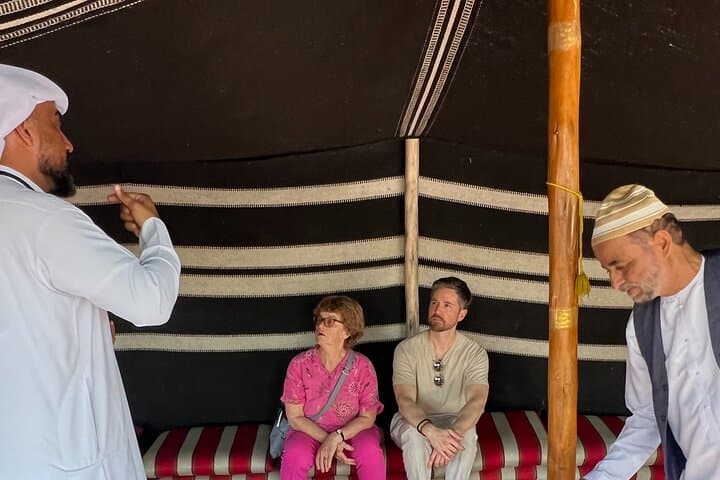
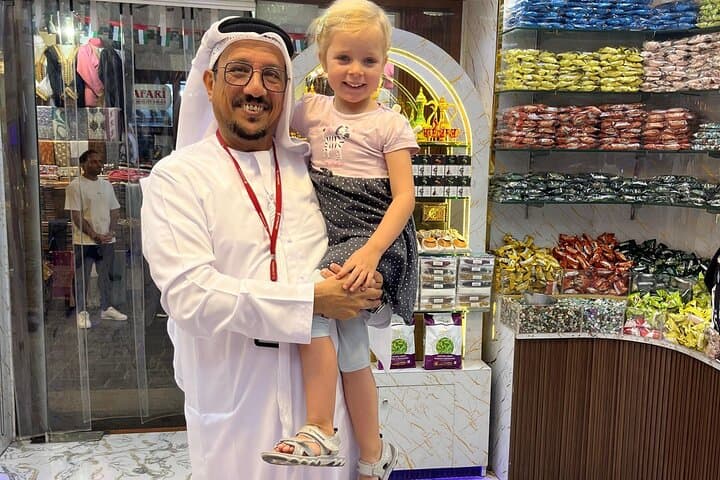
Expect a mix of shaded courtyards, waterfront promenades, and bustling market alleys. The Abra boat crossing is brief but atmospheric; vendors display powders, whole spices, and filigree that catch the light. Guides usually explain cultural norms—modest dress and polite bargaining—and point out local ateliers and cafés.
Practical guidance: plan this as a 2–3 hour walking experience in flat, paved terrain. Bring sun protection, comfortable shoes, and a refillable bottle; photography is welcome but be respectful in religious or private spaces. Wheelchair access is generally good at key stops, but cobbled alleys can be uneven. Arrive early for cooler temperatures and thinner crowds.
easy.
2–3 hours.
Suitable for most fitness levels; involves continuous walking on flat but sometimes uneven surfaces.
Typical duration is 2–3 hours, covering Al Fahidi, Al Seef, an abra crossing, Spice Souq, and Deira’s Gold Souq.
Yes—an abra crossing across Dubai Creek is part of the itinerary and included with most tour packages.
Key stops and transports are generally wheelchair accessible, but some older alleys may have uneven surfaces—check with the operator for specifics.
Tipping is customary but not required; small tips for guides and service staff are appreciated for good service.
Dubai grew as a maritime trading entrepôt—pearling and regional trade across the Arabian Gulf shaped the architecture and markets you visit today.
The creek faces urban development pressures and water quality concerns; support local preservation by following marked paths, avoiding litter, and choosing responsible vendors.
zahed martaa operates guided outdoor trips and adventures with an emphasis on safety, stewardship, and memorable experiences.

Morning light slides across Dubai Creek and the city exhales—a line of wooden abras cut the water as they have for decades, carrying traders and curious travelers between Deira and Bur Dubai. Start in the narrow lanes of Al Fahidi, where wind towers and limestone buildings keep a quieter pace than the skyline a few kilometers away. The creek itself seems to dare you forward, its current pushing stories of merchants, pearls, and dhow crossings into every breeze.
Morning light slides across Dubai Creek and the city exhales—a line of wooden abras cut the water as they have for decades, carrying traders and curious travelers between Deira and Bur Dubai. Start in the narrow lanes of Al Fahidi, where wind towers and limestone buildings keep a quieter pace than the skyline a few kilometers away. The creek itself seems to dare you forward, its current pushing stories of merchants, pearls, and dhow crossings into every breeze.
This tour threads through Dubai’s commercial and cultural roots. Al Fahidi (Al Bastakiya) preserves late 19th-century architecture and the lived history of a pre-oil port city; the Spice Souq reflects centuries of trade connecting the Arabian Gulf to South Asia and East Africa; Deira’s Gold Souq showcases the regional appetite for ornament and craftsmanship. Geologically the creek carved a natural inlet that made Dubai a natural stop on maritime routes, and the built environment grew around that advantage.
Expect a mix of shaded courtyards, waterfront promenades, and bustling market alleys. The Abra boat crossing is brief but atmospheric; vendors display powders, whole spices, and filigree that catch the light. Guides usually explain cultural norms—modest dress and polite bargaining—and point out local ateliers and cafés.
Practical guidance: plan this as a 2–3 hour walking experience in flat, paved terrain. Bring sun protection, comfortable shoes, and a refillable bottle; photography is welcome but be respectful in religious or private spaces. Wheelchair access is generally good at key stops, but cobbled alleys can be uneven. Arrive early for cooler temperatures and thinner crowds.