THE ADVENTURE COLLECTIVE® · Independent discovery and booking for outdoor travel

Explore the layered streets of Old Dhaka and the raw industrial spectacle of nearby ship breaking yards on a full-day guided tour. Visit Lalbagh Fort, Ahsan Manzil, Sadarghat and more while learning local history and practical tips for urban river travel.
Explore the layered streets of Old Dhaka and the raw industrial spectacle of nearby ship breaking yards on a full-day guided tour. Visit Lalbagh Fort, Ahsan Manzil, Sadarghat and more while learning local history and practical tips for urban river travel.
You step out of the van into a throat of sound: rickshaw bells, hawkers calling, and the river cutting a bright line through the city. In Old Dhaka the street is alive — brick façades rubbed smooth by generations, spice stalls that scent the air, and the Buriganga daring you to cross its crowded ghats.
Verified experiences and guided adventures in the surrounding area.
Operated by TaabuTour · Dhaka, Dhaka
You step out of the van into a throat of sound: rickshaw bells, hawkers calling, and the river cutting a bright line through the city. In Old Dhaka the street is alive — brick façades rubbed smooth by generations, spice stalls that scent the air, and the Buriganga daring you to cross its crowded ghats.
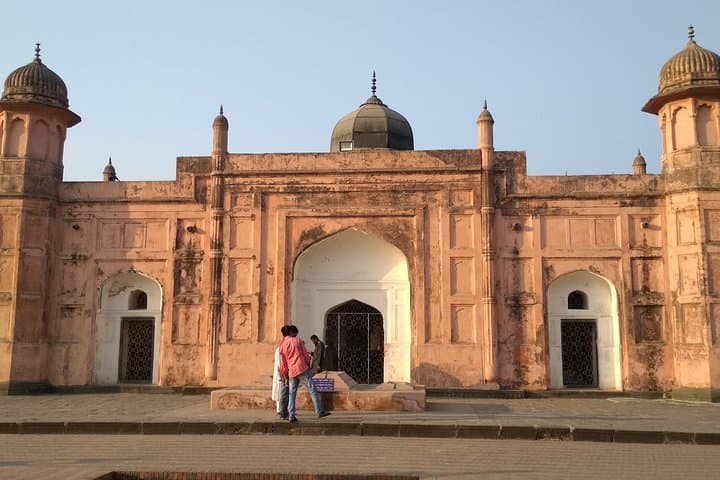
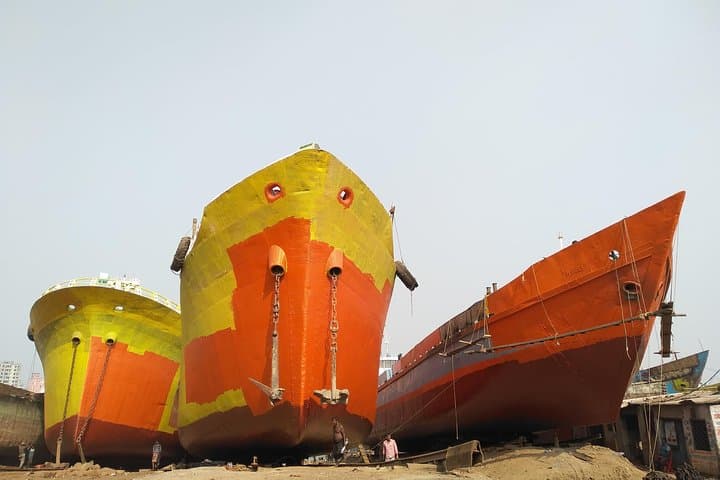
This full-day excursion threads Mughal history with working-class industry. You'll move from Lalbagh Fort’s 17th-century brick walls to the pink façade of Ahsan Manzil — vestiges of colonial and Mughal power — then down to the Sadarghat boat terminal where timber boats jostle and the ship breaking yards farther downstream reveal the city's industrial pulse. Geologically the area sits on the Bengal delta: flat, low-lying silt plains shaped by the Ganges-Brahmaputra sediment load, which explains the city’s intimate relationship with rivers.
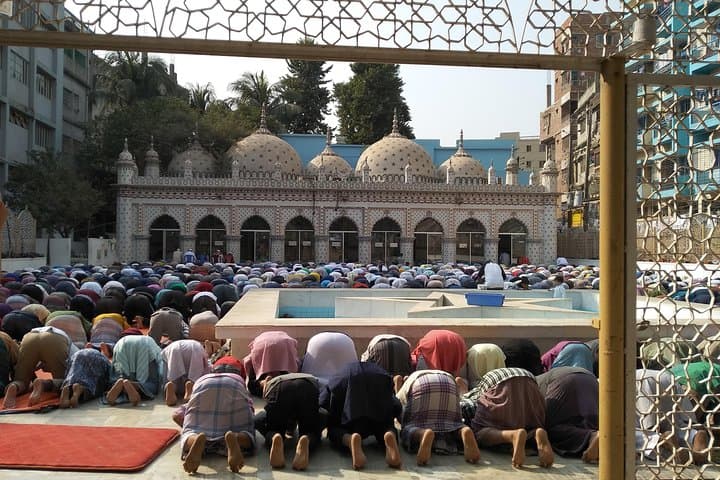
Culturally, Old Dhaka is compact and communal: narrow lanes open to courtyards, mosques like Hossaini Dalan hold centuries of ritual, and markets trade food, fabric, and oral history. Expect close-up encounters — a local guide will point out architectural details, explain religious practices, and navigate crowded alleys.
Practical guidance: wear closed-toe shoes, keep valuables secured, and plan for heat and occasional traffic delays. Photography is welcome in most public places; ask before entering religious sites. The ship breaking area can be visually stark and hazardous — it’s best viewed from distances arranged by your operator.
This tour is immersive and gritty rather than polished: it rewards curiosity, patience, and respect for a city that remains constantly at work.
easy.
10 hours.
Basic urban mobility — able to walk 4–6 miles over a day with frequent stops and some stairs.
Operators typically arrange a safe viewing area; follow your guide’s directions and avoid unsupervised access to industrial zones.
Cash (Bangladeshi taka) is useful for small purchases; cards may not be accepted in local markets and boat fares.
Lunch is included as a buffet; vegetarian options are usually available if requested in advance.
The operator advises against this for pregnant travelers; children can join but expect crowded, busy areas and longer transfers.
Old Dhaka grew under Mughal rule and expanded during colonial times — landmarks like Lalbagh Fort and Ahsan Manzil reflect both Mughal-era and 19th-century elite histories.
Ship breaking contributes to local livelihoods but causes pollution and worker-safety concerns; support guides who emphasize responsible viewing and choose operators that minimize environmental impact.
TaabuTour operates guided outdoor trips and adventures with an emphasis on safety, stewardship, and memorable experiences.
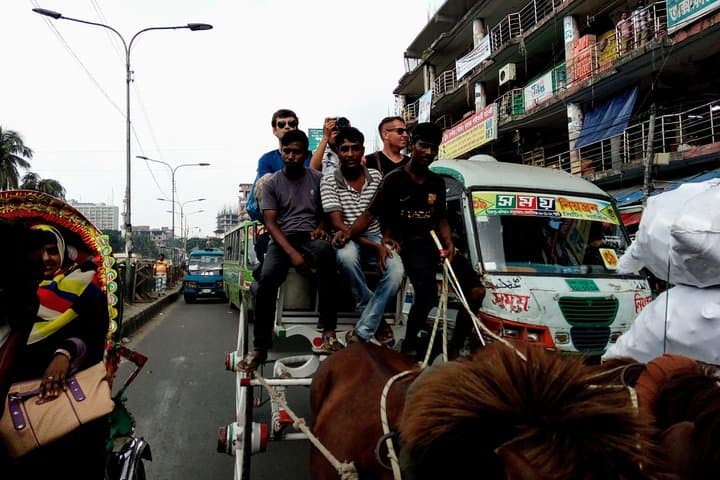
You step out of the van into a throat of sound: rickshaw bells, hawkers calling, and the river cutting a bright line through the city. In Old Dhaka the street is alive — brick façades rubbed smooth by generations, spice stalls that scent the air, and the Buriganga daring you to cross its crowded ghats.
You step out of the van into a throat of sound: rickshaw bells, hawkers calling, and the river cutting a bright line through the city. In Old Dhaka the street is alive — brick façades rubbed smooth by generations, spice stalls that scent the air, and the Buriganga daring you to cross its crowded ghats.
This full-day excursion threads Mughal history with working-class industry. You'll move from Lalbagh Fort’s 17th-century brick walls to the pink façade of Ahsan Manzil — vestiges of colonial and Mughal power — then down to the Sadarghat boat terminal where timber boats jostle and the ship breaking yards farther downstream reveal the city's industrial pulse. Geologically the area sits on the Bengal delta: flat, low-lying silt plains shaped by the Ganges-Brahmaputra sediment load, which explains the city’s intimate relationship with rivers.
Culturally, Old Dhaka is compact and communal: narrow lanes open to courtyards, mosques like Hossaini Dalan hold centuries of ritual, and markets trade food, fabric, and oral history. Expect close-up encounters — a local guide will point out architectural details, explain religious practices, and navigate crowded alleys.
Practical guidance: wear closed-toe shoes, keep valuables secured, and plan for heat and occasional traffic delays. Photography is welcome in most public places; ask before entering religious sites. The ship breaking area can be visually stark and hazardous — it’s best viewed from distances arranged by your operator.
This tour is immersive and gritty rather than polished: it rewards curiosity, patience, and respect for a city that remains constantly at work.