THE ADVENTURE COLLECTIVE® · Independent discovery and booking for outdoor travel

Join a priority table in Hofbräu-Festzelt and move through Oktoberfest with a guide who handles reservations, food and Maß vouchers. Learn where to go, what to expect, and how to prepare for Munich’s biggest outdoor party.
Join a priority table in Hofbräu-Festzelt and move through Oktoberfest with a guide who handles reservations, food and Maß vouchers. Learn where to go, what to expect, and how to prepare for Munich’s biggest outdoor party.
You step onto the Theresienwiese and the air hits you with brass-band music, warm malt and the thump of wooden benches as strangers become companions around a Maß. The Hofbräu-Festzelt glares blue-and-white, the tent roof a moving ceiling of voices; servers shoulder trays piled with liter steins and plates of roasted chicken.
Verified experiences and guided adventures in the surrounding area.
Operated by Yolo Gmbh · Munich, Bavaria
You step onto the Theresienwiese and the air hits you with brass-band music, warm malt and the thump of wooden benches as strangers become companions around a Maß. The Hofbräu-Festzelt glares blue-and-white, the tent roof a moving ceiling of voices; servers shoulder trays piled with liter steins and plates of roasted chicken.
Oktoberfest began in 1810 as Crown Prince Ludwig’s wedding celebration, and the festival still unfolds on Munich’s broad flatlands—an urban meadow where fairground rides and traditional tents crowd a field once used for parades. The Oide Wiesn area preserves older rides and Bavarian folklore, while the Bavaria statue keeps watch over the whole scene.
Expect an intensely social, sensory day: live oompah bands that prompt communal singing, long wooden tables designed for sharing, and lines at specialty stalls. The ground is mostly compacted soil and temporary flooring, so the terrain is flat but crowded—plan for slow movement.
Practical edge: reservations matter. A booked table is the difference between a settled five-hour session and hunting for space amid a party that can swell to tens of thousands. Use Munich’s U-Bahn or S-Bahn for direct access; road traffic and parking are limited. Bring government ID for beer purchases, wear comfortable closed-toe shoes, and layer for sharp autumn evenings. Hydrate between beers and alternate food with drinks—traditional fare is rich and filling.
If you want a quieter cultural angle, spend part of your visit in the Oide Wiesn to hear stories of early Munich. Otherwise, pace your day, respect shared seating, and let the festival’s energy pull you into the next round. Prost!
easy.
6 hours.
Suitable for most fitness levels—requires stamina for standing and navigating crowds for several hours.
No—entry to the festival grounds is free, but table reservations are strongly recommended for guaranteed seating inside major tents during peak hours.
Yes—Munich’s U-Bahn/S-Bahn to Theresienwiese is direct and avoids limited parking and road closures around the festival.
Yes—families are common during daytime; children can attend but alcohol rules apply and some tent atmospheres become adult-focused in the evening.
Guided party tours are typically in English and/or German—confirm at booking if you require a specific language.
Oktoberfest began in 1810 as a royal wedding celebration for Crown Prince Ludwig and Theresia; it evolved into the annual folk festival on Munich’s Theresienwiese.
The festival produces significant waste and energy use—opt for recycling bins, reusable bottles where allowed, and respect tent rules to minimize impact.
Yolo Gmbh operates guided outdoor trips and adventures with an emphasis on safety, stewardship, and memorable experiences.
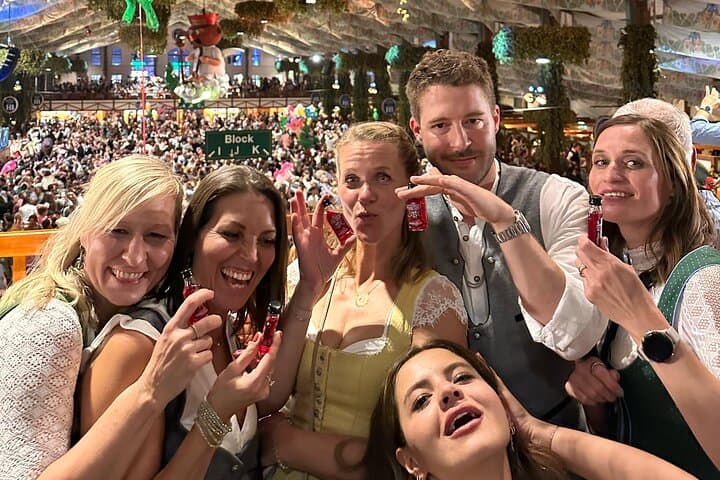
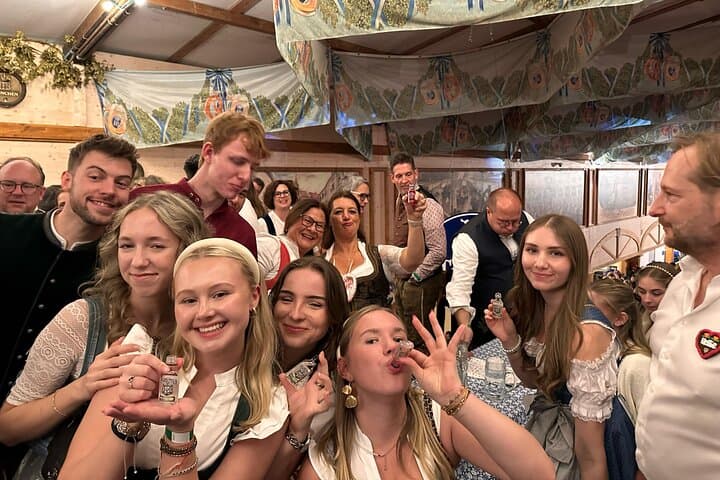
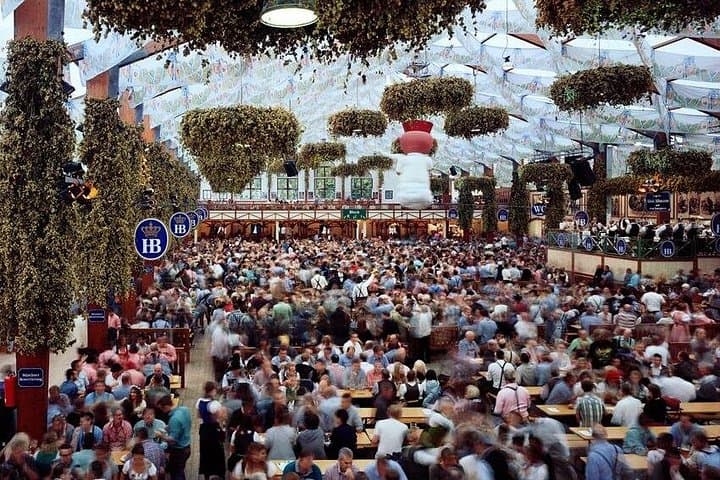
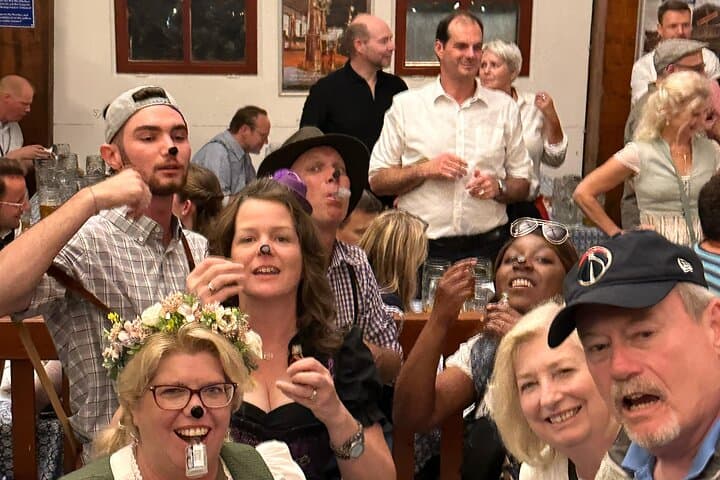
You step onto the Theresienwiese and the air hits you with brass-band music, warm malt and the thump of wooden benches as strangers become companions around a Maß. The Hofbräu-Festzelt glares blue-and-white, the tent roof a moving ceiling of voices; servers shoulder trays piled with liter steins and plates of roasted chicken.
You step onto the Theresienwiese and the air hits you with brass-band music, warm malt and the thump of wooden benches as strangers become companions around a Maß. The Hofbräu-Festzelt glares blue-and-white, the tent roof a moving ceiling of voices; servers shoulder trays piled with liter steins and plates of roasted chicken.
Oktoberfest began in 1810 as Crown Prince Ludwig’s wedding celebration, and the festival still unfolds on Munich’s broad flatlands—an urban meadow where fairground rides and traditional tents crowd a field once used for parades. The Oide Wiesn area preserves older rides and Bavarian folklore, while the Bavaria statue keeps watch over the whole scene.
Expect an intensely social, sensory day: live oompah bands that prompt communal singing, long wooden tables designed for sharing, and lines at specialty stalls. The ground is mostly compacted soil and temporary flooring, so the terrain is flat but crowded—plan for slow movement.
Practical edge: reservations matter. A booked table is the difference between a settled five-hour session and hunting for space amid a party that can swell to tens of thousands. Use Munich’s U-Bahn or S-Bahn for direct access; road traffic and parking are limited. Bring government ID for beer purchases, wear comfortable closed-toe shoes, and layer for sharp autumn evenings. Hydrate between beers and alternate food with drinks—traditional fare is rich and filling.
If you want a quieter cultural angle, spend part of your visit in the Oide Wiesn to hear stories of early Munich. Otherwise, pace your day, respect shared seating, and let the festival’s energy pull you into the next round. Prost!