THE ADVENTURE COLLECTIVE® · Independent discovery and booking for outdoor travel

Board a high-speed double-deck yacht at Naha and chase humpback whales where the Kuroshio current meets steep shelves. This 3–4 hour winter excursion offers close sightings, naturalist commentary, and practical comforts for all travelers.
Board a high-speed double-deck yacht at Naha and chase humpback whales where the Kuroshio current meets steep shelves. This 3–4 hour winter excursion offers close sightings, naturalist commentary, and practical comforts for all travelers.
You step onto the double-deck yacht at Naha Port with sea spray tasting of salt and the Kuroshio current humming beneath the hull. The harbor slips away and the coastline narrows into open water; within an hour the coast becomes a low, blue horizon and the first blows punctuate the winter air.
Verified experiences and guided adventures in the surrounding area.
Operated by マリンハウスシーサー那覇店 · Naha, Okinawa Prefecture
You step onto the double-deck yacht at Naha Port with sea spray tasting of salt and the Kuroshio current humming beneath the hull. The harbor slips away and the coastline narrows into open water; within an hour the coast becomes a low, blue horizon and the first blows punctuate the winter air.
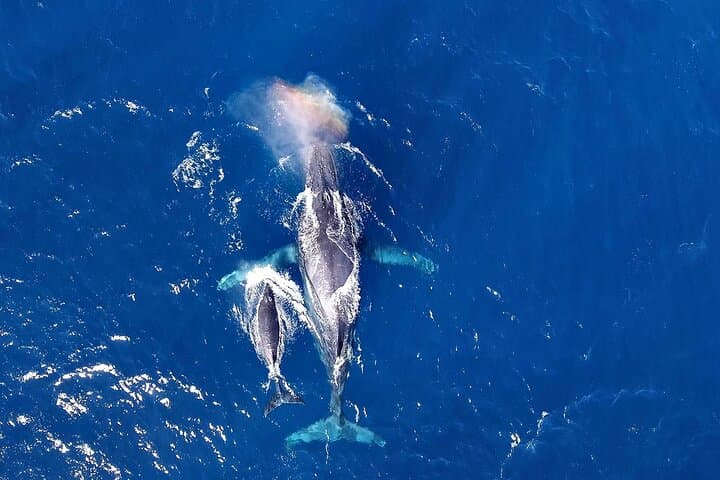
Whale watching off Okinawa follows the annual migration of humpbacks that ride warm waters and the shelf edge from January through March. The Kuroshio Current sculpts the underwater topography here—steep drop-offs and channels that funnel krill and small fish, drawing mothers and calves close to the surface. Okinawa’s maritime culture, inherited from the Ryukyu Kingdom and shaped by fishing traditions, still reads the sea for these seasonal visitors.
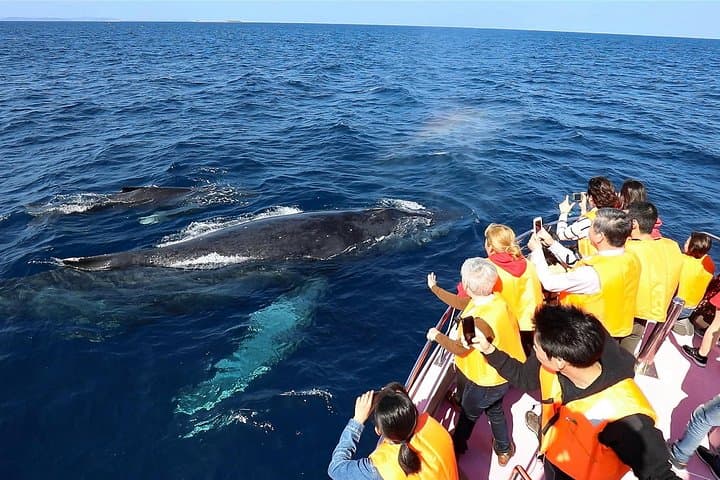
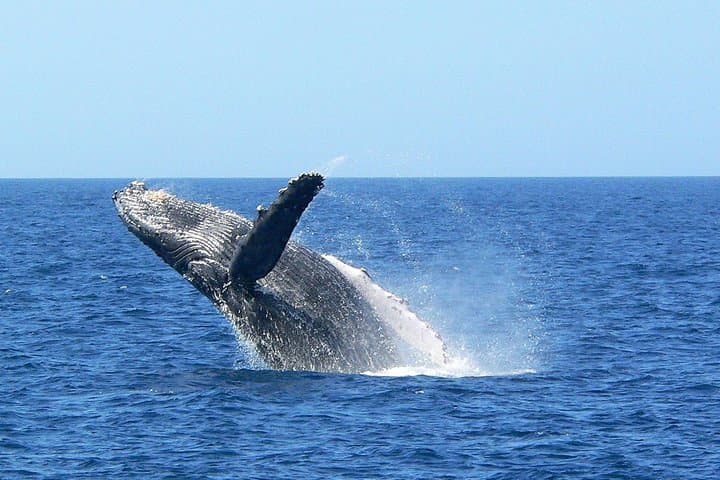
Expect patient, guided searching using radar and hydrophones; sightings are often within a few boat lengths and include tail slaps, breaches and long, rolling exhalations. The operator runs a high-speed vessel with two toilet rooms, life jackets, raincoats on request and hot and cold drinks—conveniences that make the offshore hours straightforward.
Practical tips: dress in warm, windproof layers; bring UV protection for reflective light; carry motion-sickness medication if you’re prone; bring binoculars and a camera with a long lens. Tours run about 3–4 hours, with naturalist commentary and photo downloads included. Operators follow local guidelines to minimize disturbance—observe quietly, don’t stick limbs over railings, and listen to crew directions for safe viewing.
This is an accessible, thrilling way to meet winter giants with minimal hiking and maximum marine time—ideal for travelers based in Naha seeking a high-probability whale encounter.
easy.
3–4 hours.
Minimal fitness required; participants should be able to stand and move on an unstabilized boat for several hours.
Humpback whales are most reliably observed from January through the end of March, with peak detections in February and March.
The operator offers a full refund for tours in February and March if no whales are spotted; other winter dates may receive a re-trial voucher—check booking terms for details.
Children are permitted (bring a carrier for those who can’t stand), but pregnant or possibly pregnant travelers and people with certain medical conditions are advised not to join per operator safety rules.
The vessel is a large high-speed double-deck yacht with two toilet rooms, life jackets, raincoat rentals, hot and cold drinks, and downloadable photos included.
Okinawa’s maritime identity traces to the Ryukyu Kingdom and long-standing fishing traditions; modern whale-watching here relies on local knowledge of migratory routes and sea conditions.
Operators follow distance guidelines and use trained naturalists to minimize disturbance; visitors should avoid loud noises, feeding wildlife, and leaving any trash at sea.
マリンハウスシーサー那覇店 operates guided outdoor trips and adventures with an emphasis on safety, stewardship, and memorable experiences.
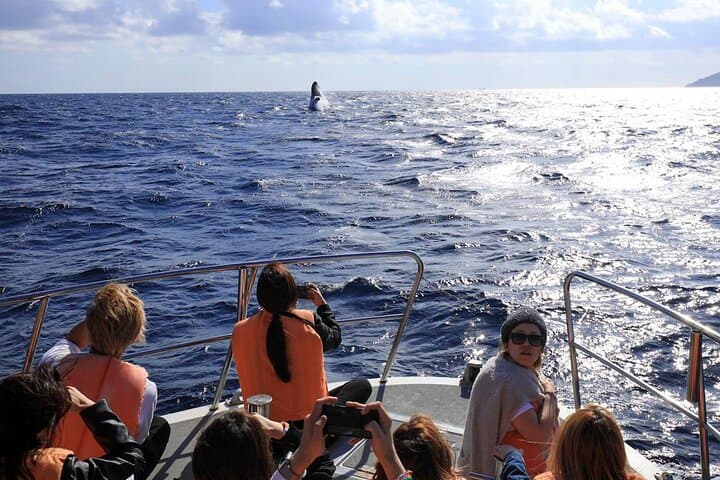
You step onto the double-deck yacht at Naha Port with sea spray tasting of salt and the Kuroshio current humming beneath the hull. The harbor slips away and the coastline narrows into open water; within an hour the coast becomes a low, blue horizon and the first blows punctuate the winter air.
You step onto the double-deck yacht at Naha Port with sea spray tasting of salt and the Kuroshio current humming beneath the hull. The harbor slips away and the coastline narrows into open water; within an hour the coast becomes a low, blue horizon and the first blows punctuate the winter air.
Whale watching off Okinawa follows the annual migration of humpbacks that ride warm waters and the shelf edge from January through March. The Kuroshio Current sculpts the underwater topography here—steep drop-offs and channels that funnel krill and small fish, drawing mothers and calves close to the surface. Okinawa’s maritime culture, inherited from the Ryukyu Kingdom and shaped by fishing traditions, still reads the sea for these seasonal visitors.
Expect patient, guided searching using radar and hydrophones; sightings are often within a few boat lengths and include tail slaps, breaches and long, rolling exhalations. The operator runs a high-speed vessel with two toilet rooms, life jackets, raincoats on request and hot and cold drinks—conveniences that make the offshore hours straightforward.
Practical tips: dress in warm, windproof layers; bring UV protection for reflective light; carry motion-sickness medication if you’re prone; bring binoculars and a camera with a long lens. Tours run about 3–4 hours, with naturalist commentary and photo downloads included. Operators follow local guidelines to minimize disturbance—observe quietly, don’t stick limbs over railings, and listen to crew directions for safe viewing.
This is an accessible, thrilling way to meet winter giants with minimal hiking and maximum marine time—ideal for travelers based in Naha seeking a high-probability whale encounter.