THE ADVENTURE COLLECTIVE® · Independent discovery and booking for outdoor travel

Float through narrow channels in a traditional mokoro and let a local poler guide you across the Okavango’s reed-lined waterways. This full-day trip pairs quiet canoeing with an island picnic and a short nature walk led by people who grew up on the delta.
Float through narrow channels in a traditional mokoro and let a local poler guide you across the Okavango’s reed-lined waterways. This full-day trip pairs quiet canoeing with an island picnic and a short nature walk led by people who grew up on the delta.
Dawn finds the mokoro gliding like a pen across slow ink — the poler’s single-bladed push setting a steady cadence as papyrus and reedbeds part. You sit low in the craft, water lapping the hull, and the delta’s horizon widens: broad channels choked with aquatic grass, scattered islands, and birds that patrol the air.
Verified experiences and guided adventures in the surrounding area.
Operated by Kalahari Breeze Safaris · Maun, North-West District
Dawn finds the mokoro gliding like a pen across slow ink — the poler’s single-bladed push setting a steady cadence as papyrus and reedbeds part. You sit low in the craft, water lapping the hull, and the delta’s horizon widens: broad channels choked with aquatic grass, scattered islands, and birds that patrol the air.
The Okavango is an inland delta formed where the Kalahari meets seasonal floods from the Angolan highlands; its shifting channels and islands are recent geology in motion, remade each year by water and sediment. Human history here is living memory — polers born in the delta hand down navigation, plant knowledge, and bird calls. This tour is community-led: polers allocated by the local mokoro village trust who guide, interpret, and share traditional insights.
Expect a slow, reflective water journey punctuated by a picnic on a dry island and a guided nature walk. Hippo signs, spoor, and a chorus of malachite kingfishers and African fish eagles are common; the itinerary emphasizes the water system and cultural connection more than a big-game safari. Terrain on foot is sandy and uneven; channels may narrow and require silent poling.
Practical edge: wear quick-dry layers, a wide-brim hat, and water-resistant shoes you can step out of for the island walk. Bring sunscreen, insect repellent, and a daypack for camera and snacks. Tours run from Maun and last about eight hours with hotel transfer; prepare for sun and, in November–April, possible rain. The experience rewards patience — the delta moves slowly, and when it opens, the details do too.
moderate.
8 hours.
Moderate fitness for several hours sitting, balancing in a mokoro, and a short nature walk; not suitable for those with spinal issues.
The tour is about eight hours total, including hotel pick-up, a transfer to the NG32 concession, mokoro time, picnic lunch, and a short nature walk.
This experience focuses on the delta environment and birdlife; while you may see animal signs and occasional wildlife, it is not a guarantee for big-game sightings.
Polers are experienced at reading hippo behavior and navigating channels safely; follow the guide’s instructions at all times and keep a respectful distance on foot and water.
Local polers from the mokoro village Community Trust are allocated by rotation; guides are typically born and raised in the delta and share cultural and ecological knowledge.
The Okavango has long been home to communities who adapted to seasonal floods; mokoro navigation is a traditional skill passed through generations.
The delta is a fragile wetland managed through community trusts and conservation zones; visitors are asked to minimize disturbance and pack out waste.
Kalahari Breeze Safaris operates guided outdoor trips and adventures with an emphasis on safety, stewardship, and memorable experiences.
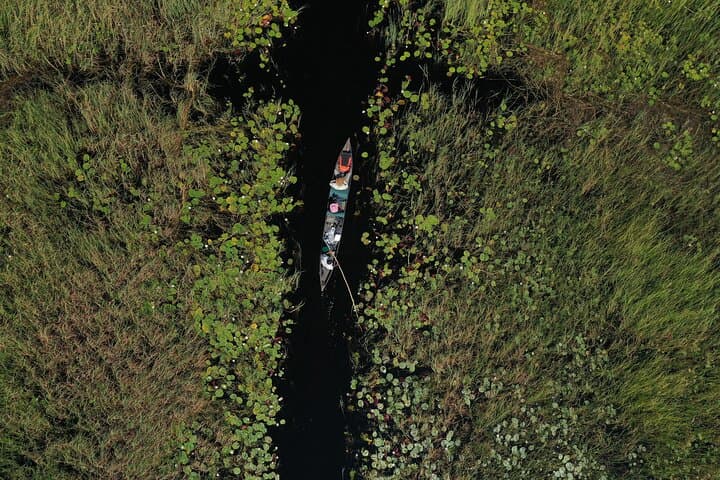
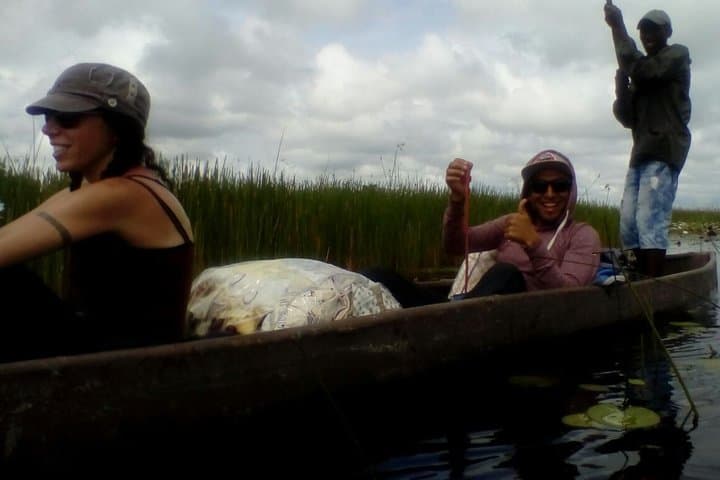
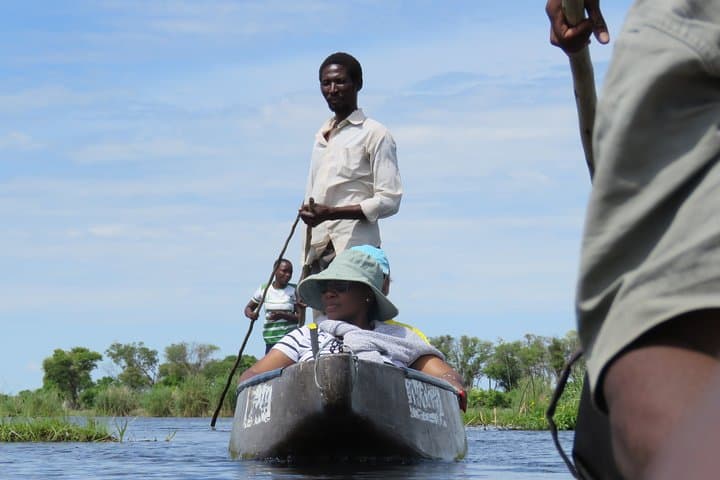
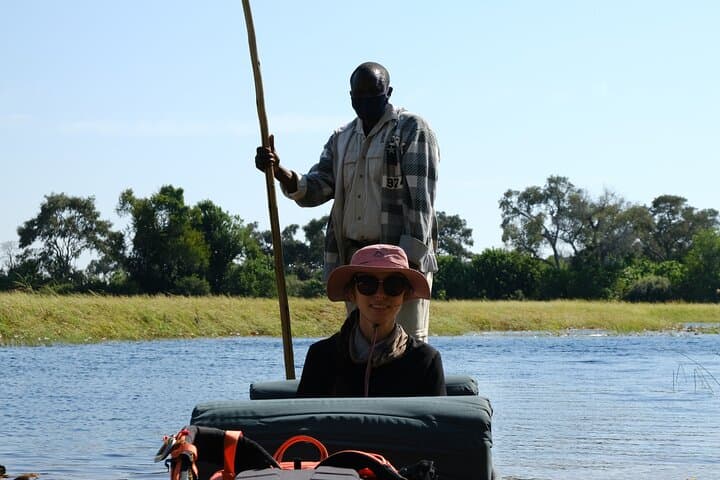
Dawn finds the mokoro gliding like a pen across slow ink — the poler’s single-bladed push setting a steady cadence as papyrus and reedbeds part. You sit low in the craft, water lapping the hull, and the delta’s horizon widens: broad channels choked with aquatic grass, scattered islands, and birds that patrol the air.
Dawn finds the mokoro gliding like a pen across slow ink — the poler’s single-bladed push setting a steady cadence as papyrus and reedbeds part. You sit low in the craft, water lapping the hull, and the delta’s horizon widens: broad channels choked with aquatic grass, scattered islands, and birds that patrol the air.
The Okavango is an inland delta formed where the Kalahari meets seasonal floods from the Angolan highlands; its shifting channels and islands are recent geology in motion, remade each year by water and sediment. Human history here is living memory — polers born in the delta hand down navigation, plant knowledge, and bird calls. This tour is community-led: polers allocated by the local mokoro village trust who guide, interpret, and share traditional insights.
Expect a slow, reflective water journey punctuated by a picnic on a dry island and a guided nature walk. Hippo signs, spoor, and a chorus of malachite kingfishers and African fish eagles are common; the itinerary emphasizes the water system and cultural connection more than a big-game safari. Terrain on foot is sandy and uneven; channels may narrow and require silent poling.
Practical edge: wear quick-dry layers, a wide-brim hat, and water-resistant shoes you can step out of for the island walk. Bring sunscreen, insect repellent, and a daypack for camera and snacks. Tours run from Maun and last about eight hours with hotel transfer; prepare for sun and, in November–April, possible rain. The experience rewards patience — the delta moves slowly, and when it opens, the details do too.