THE ADVENTURE COLLECTIVE® · Independent discovery and booking for outdoor travel

Walk rainforests, estuaries and dunes on a guided Ōkārito nature tour. Expect birdlife-rich lagoons, a short trig ascent with alpine views and hands-on restoration work at the native plant nursery.
Walk rainforests, estuaries and dunes on a guided Ōkārito nature tour. Expect birdlife-rich lagoons, a short trig ascent with alpine views and hands-on restoration work at the native plant nursery.
The wet wind off the Tasman pushes low across the lagoon as you step from the small wharf into a pocket of West Coast rainforest—pungent rimu, cabbage tree fronds and the hush of estuary mud flats underfoot. A guide from Glacier Valley Eco Tours leads the group along boardwalks and bleached beach, eyes scanning for the ghost-white kotuku (white heron) and the quick flash of a kakariki in the canopy.
Verified experiences and guided adventures in the surrounding area.
Operated by Glacier Valley Eco Tours · Okarito, West Coast
The wet wind off the Tasman pushes low across the lagoon as you step from the small wharf into a pocket of West Coast rainforest—pungent rimu, cabbage tree fronds and the hush of estuary mud flats underfoot. A guide from Glacier Valley Eco Tours leads the group along boardwalks and bleached beach, eyes scanning for the ghost-white kotuku (white heron) and the quick flash of a kakariki in the canopy.
Ōkārito’s story reads like a layered map: Māori whakapapa and seasonal mahinga kai precede the 19th-century gold rush that left a handful of weathered buildings and a harbour shed. Geologically the landscape was shaped by repeated glacial advances from the Southern Alps, leaving behind the wide lagoon, tombolo beaches and moraine-fed wetlands that attract migratory shorebirds and endemic species such as the fernbird and Rowi kiwi in nearby reserves.
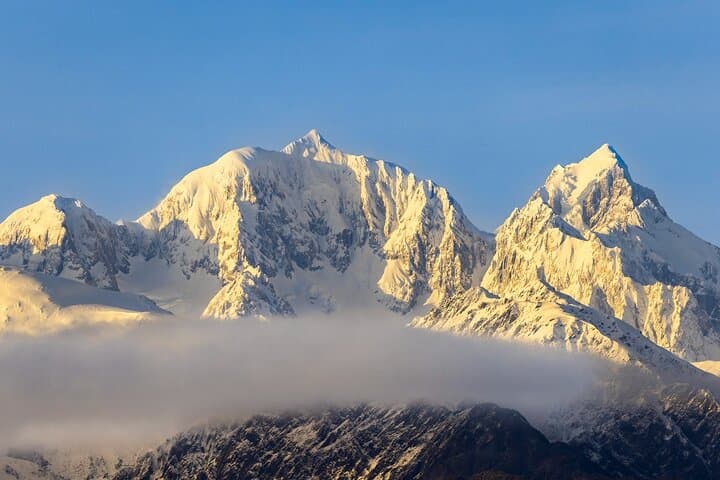
On the walk to the Okarito Trig you’ll move from flat estuary boardwalk to a short, steeper bush climb—expect a few hundred metres of ascent and 3–6 km of mixed terrain, with panoramic views of Aoraki/Mt Cook, Mt Tasman and Franz Josef on a clear day. Guides combine natural history, bird identification and local conservation work: you can visit the community native plant nursery and plant a tree for the Ōkārito Restoration project.
Practicalities: tours run in most weather—bring a waterproof layer, sturdy boots and binoculars. Shuttle options from Franz Josef make the logistics simple for day visitors. The route is family-friendly but requires moderate fitness on wet, uneven tracks; respect nesting seasons and stick to paths to protect fragile saltmarsh and dune systems.
moderate.
3–4 hours.
Moderate fitness; able to manage short steep sections and several kilometres on uneven, sometimes muddy ground
Tours last about 3–4 hours with roughly 3–6 km of walking depending on route and group pace, including the Okarito Trig short ascent.
Yes—tour operators state it suits all ages but participants should have moderate fitness and be able to manage uneven surfaces and short climbs.
Bring water and light snacks; tea and coffee are typically provided at the meeting point or on return to the village.
There is a shuttle option from Franz Josef arranged by the operator, or you can meet in Ōkārito; allow around 20 minutes driving time from Franz Josef township.
Ōkārito was a 19th-century gold-mining settlement whose remnant buildings and wharf remain; the area also has long-standing significance to local Māori as seasonal food-gathering grounds.
The lagoon and dune systems are ecologically sensitive—tours support local restoration plantings and visitors are asked to stay on tracks to prevent habitat erosion.
Glacier Valley Eco Tours operates guided outdoor trips and adventures with an emphasis on safety, stewardship, and memorable experiences.



The wet wind off the Tasman pushes low across the lagoon as you step from the small wharf into a pocket of West Coast rainforest—pungent rimu, cabbage tree fronds and the hush of estuary mud flats underfoot. A guide from Glacier Valley Eco Tours leads the group along boardwalks and bleached beach, eyes scanning for the ghost-white kotuku (white heron) and the quick flash of a kakariki in the canopy.
The wet wind off the Tasman pushes low across the lagoon as you step from the small wharf into a pocket of West Coast rainforest—pungent rimu, cabbage tree fronds and the hush of estuary mud flats underfoot. A guide from Glacier Valley Eco Tours leads the group along boardwalks and bleached beach, eyes scanning for the ghost-white kotuku (white heron) and the quick flash of a kakariki in the canopy.
Ōkārito’s story reads like a layered map: Māori whakapapa and seasonal mahinga kai precede the 19th-century gold rush that left a handful of weathered buildings and a harbour shed. Geologically the landscape was shaped by repeated glacial advances from the Southern Alps, leaving behind the wide lagoon, tombolo beaches and moraine-fed wetlands that attract migratory shorebirds and endemic species such as the fernbird and Rowi kiwi in nearby reserves.
On the walk to the Okarito Trig you’ll move from flat estuary boardwalk to a short, steeper bush climb—expect a few hundred metres of ascent and 3–6 km of mixed terrain, with panoramic views of Aoraki/Mt Cook, Mt Tasman and Franz Josef on a clear day. Guides combine natural history, bird identification and local conservation work: you can visit the community native plant nursery and plant a tree for the Ōkārito Restoration project.
Practicalities: tours run in most weather—bring a waterproof layer, sturdy boots and binoculars. Shuttle options from Franz Josef make the logistics simple for day visitors. The route is family-friendly but requires moderate fitness on wet, uneven tracks; respect nesting seasons and stick to paths to protect fragile saltmarsh and dune systems.