THE ADVENTURE COLLECTIVE® · Independent discovery and booking for outdoor travel

Scale a Fuegian glacier in one long, demanding day. The Ojo del Albino Glacier Challenge pairs a forested approach to Esmeralda Lagoon with a rocky climb to a blue-tinged glacier, all guided from Ushuaia.
Scale a Fuegian glacier in one long, demanding day. The Ojo del Albino Glacier Challenge pairs a forested approach to Esmeralda Lagoon with a rocky climb to a blue-tinged glacier, all guided from Ushuaia.
A low sun slices through lenga trunks as the van drops you at the trailhead and the silence of the Fuegian forest tightens around the group. The first hour moves easily—soft earth, moss, and the steady chatter of a guide who knows where the wind hides good views. The walk opens onto Esmeralda Lagoon like a held breath being released: green water rimmed with lichen-streaked boulders, then a climb that demands attention and calves.
Verified experiences and guided adventures in the surrounding area.
Operated by Patagon Mountain Agency · Ushuaia, Tierra del Fuego
A low sun slices through lenga trunks as the van drops you at the trailhead and the silence of the Fuegian forest tightens around the group. The first hour moves easily—soft earth, moss, and the steady chatter of a guide who knows where the wind hides good views. The walk opens onto Esmeralda Lagoon like a held breath being released: green water rimmed with lichen-streaked boulders, then a climb that demands attention and calves.
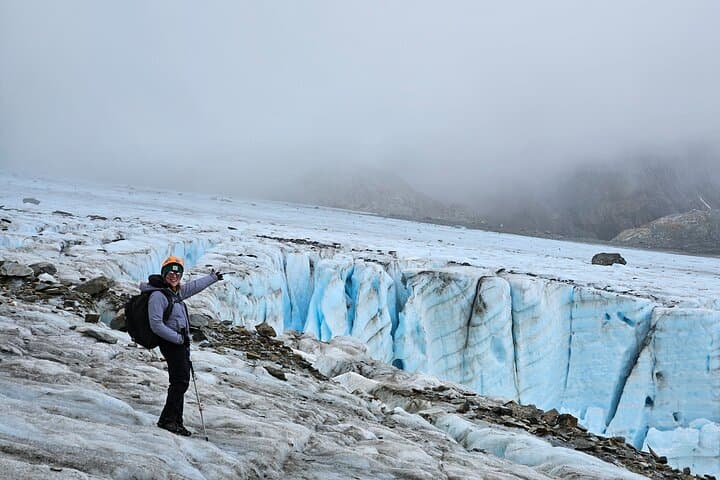
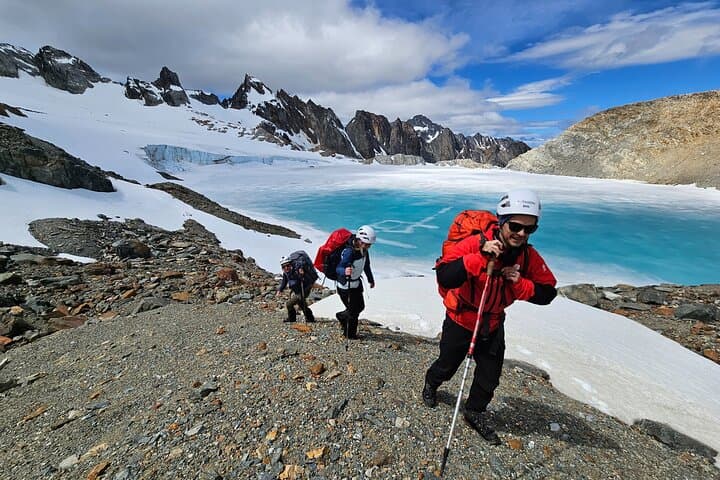
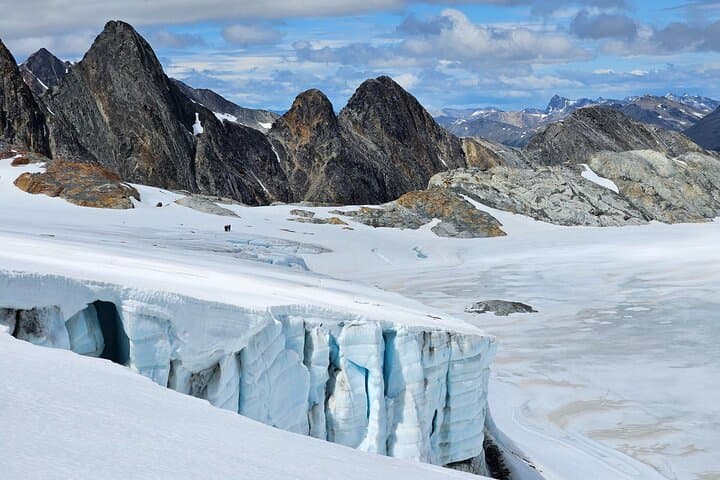
This is a route of contrasts. You cross peat-filled valleys that sponge your steps, navigate dense antarctic beech (lenga) and ñire woodlands, and finally climb from the vegetation line into loose rock and glacial moraine. The Ojo del Albino glacier doesn’t announce itself; it edges into view slowly, an old blue lip against a hard, dark ridge. At the glacier’s foot the air tastes of cold and mineral; the lagoon below the ice reflects a sudden, hard clarity.
Geology here is recent and active—Patagonia’s Andes were pushed up by the same compressive forces that carved Chile and Argentina’s southern spine, and the glaciers are the slow tools of that uplift. Culturally the region carries maritime and gaucho legacies and a small, resilient community in Ushuaia that built its identity on frontier fishing, naval bases, and guided access to the wild.
Practically speaking, this is a demanding single-day trek: expect roughly 12–15 km round-trip with about 600–800 m of elevation gain depending on route choices. The day runs long—hotel pickup in Ushuaia around 7:30 am, start walking near 8:00, reach the glacier around midday, then return and finish around 5:30 pm. Guides supply trekking poles, crampons, and helmets; a boxed lunch and hot tea help reset core temperature before the descent.
Prepare for variable weather—strong sun, sleet, and wind can trade places in an hour—and for terrain that transitions from soft forest underfoot to loose scree and icy patches near the glacier. Good ankle-supporting boots, layered insulation, and a small daypack with water, snacks, and a shell are essential. If you’re new to crampons or glacier approaches, let the guide know: they lead technical sections and provide instruction.
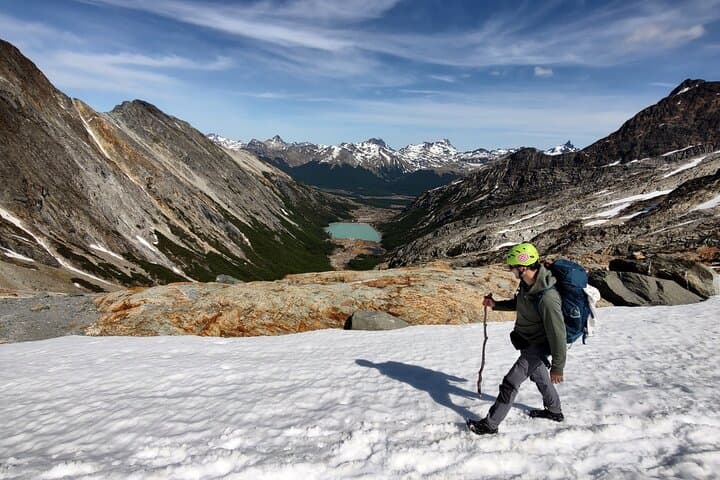
The reward is straightforward: sweeping Andean ridgelines, the emerald lagoon, and the sober, elemental presence of the Ojo del Albino—nature that pushes at your limits without ceremony. For travelers willing to match its tempo, this day delivers both physical work and distinct, close-up Patagonian wilderness.
challenging.
9 hours (approx.).
You should have high cardiovascular fitness and experience on full-day mountain hikes; ability to handle sustained ascents and uneven terrain required.
Expect roughly 12–15 km round-trip with about 600–800 m of elevation gain depending on route; the full outing including transfers lasts about nine hours.
Yes—crampons, helmet, and trekking poles are provided by the operator and fitted by guides before glacier sections.
This is a demanding trek that requires good cardiovascular fitness and prior full-day hiking experience; travelers should be able to sustain repeated steep sections and uneven terrain.
You’ll approach and possibly step onto glacial ice near the glacier toe—guides manage these sections and instruct on crampon use; no roped glacier travel is typically required for this program.
Yes—hotel pickup in Ushuaia is arranged about 30–60 minutes before the tour start; exact time is confirmed the day before departure.
Children are allowed but the operator recommends participants be physically fit; contact the operator about age and fitness specifics before booking.
The trails trace routes used by indigenous Yamana and later by settlers who established Ushuaia as a port and penal colony; the landscape reflects glacial sculpting over the last Ice Age.
This is fragile sub-Antarctic terrain—stick to established routes, avoid trampling peat bogs, and pack out all waste to limit erosion and habitat damage.
Patagon Mountain Agency operates guided outdoor trips and adventures with an emphasis on safety, stewardship, and memorable experiences.
A low sun slices through lenga trunks as the van drops you at the trailhead and the silence of the Fuegian forest tightens around the group. The first hour moves easily—soft earth, moss, and the steady chatter of a guide who knows where the wind hides good views. The walk opens onto Esmeralda Lagoon like a held breath being released: green water rimmed with lichen-streaked boulders, then a climb that demands attention and calves.
A low sun slices through lenga trunks as the van drops you at the trailhead and the silence of the Fuegian forest tightens around the group. The first hour moves easily—soft earth, moss, and the steady chatter of a guide who knows where the wind hides good views. The walk opens onto Esmeralda Lagoon like a held breath being released: green water rimmed with lichen-streaked boulders, then a climb that demands attention and calves.
This is a route of contrasts. You cross peat-filled valleys that sponge your steps, navigate dense antarctic beech (lenga) and ñire woodlands, and finally climb from the vegetation line into loose rock and glacial moraine. The Ojo del Albino glacier doesn’t announce itself; it edges into view slowly, an old blue lip against a hard, dark ridge. At the glacier’s foot the air tastes of cold and mineral; the lagoon below the ice reflects a sudden, hard clarity.
Geology here is recent and active—Patagonia’s Andes were pushed up by the same compressive forces that carved Chile and Argentina’s southern spine, and the glaciers are the slow tools of that uplift. Culturally the region carries maritime and gaucho legacies and a small, resilient community in Ushuaia that built its identity on frontier fishing, naval bases, and guided access to the wild.
Practically speaking, this is a demanding single-day trek: expect roughly 12–15 km round-trip with about 600–800 m of elevation gain depending on route choices. The day runs long—hotel pickup in Ushuaia around 7:30 am, start walking near 8:00, reach the glacier around midday, then return and finish around 5:30 pm. Guides supply trekking poles, crampons, and helmets; a boxed lunch and hot tea help reset core temperature before the descent.
Prepare for variable weather—strong sun, sleet, and wind can trade places in an hour—and for terrain that transitions from soft forest underfoot to loose scree and icy patches near the glacier. Good ankle-supporting boots, layered insulation, and a small daypack with water, snacks, and a shell are essential. If you’re new to crampons or glacier approaches, let the guide know: they lead technical sections and provide instruction.
The reward is straightforward: sweeping Andean ridgelines, the emerald lagoon, and the sober, elemental presence of the Ojo del Albino—nature that pushes at your limits without ceremony. For travelers willing to match its tempo, this day delivers both physical work and distinct, close-up Patagonian wilderness.