THE ADVENTURE COLLECTIVE® · Independent discovery and booking for outdoor travel

Make the most of an 11‑hour day trip from Skopje to Lake Ohrid: medieval churches, a cliffside fortress and the Bay of Bones reconstructed Neolithic village. This guide explains what to expect, practical tips and seasonal notes for a smoother visit.
Make the most of an 11‑hour day trip from Skopje to Lake Ohrid: medieval churches, a cliffside fortress and the Bay of Bones reconstructed Neolithic village. This guide explains what to expect, practical tips and seasonal notes for a smoother visit.
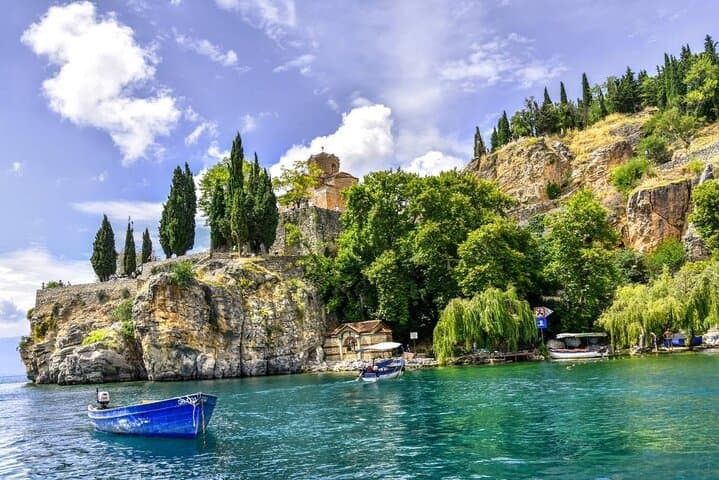
A long ribbon of road drops you down toward Lake Ohrid and the town’s red-tile roofs appear like punctuation against the water. The lake’s surface stretches wide and cold, daring you to imagine the centuries that have moved here: fishermen, saints, and scholars. On this full-day tour from Skopje, visitors move from capital-city bustle into a landscape where stone churches sit high on cliffs and a reconstructed Neolithic village floats on stilts in a sheltered bay.
Verified experiences and guided adventures in the surrounding area.
Operated by Experience Balkan · Ohrid, Ohrid Municipality
A long ribbon of road drops you down toward Lake Ohrid and the town’s red-tile roofs appear like punctuation against the water. The lake’s surface stretches wide and cold, daring you to imagine the centuries that have moved here: fishermen, saints, and scholars. On this full-day tour from Skopje, visitors move from capital-city bustle into a landscape where stone churches sit high on cliffs and a reconstructed Neolithic village floats on stilts in a sheltered bay.
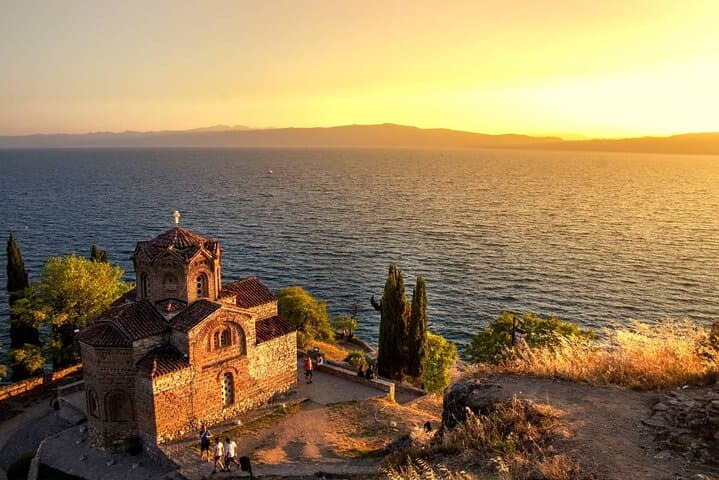
Ohrid is one of Europe’s oldest human settlements and a crucible of Slavic Christianity: Plaoshnik and the Church of St. Sophia preserve frescoes and foundations that trace back to the 9th–11th centuries, while Samuel’s Fortress watches the town from limestone heights. Lake Ohrid itself is an ancient tectonic basin with unusually clear, mineral-rich water that supports endemic species such as the Ohrid trout.
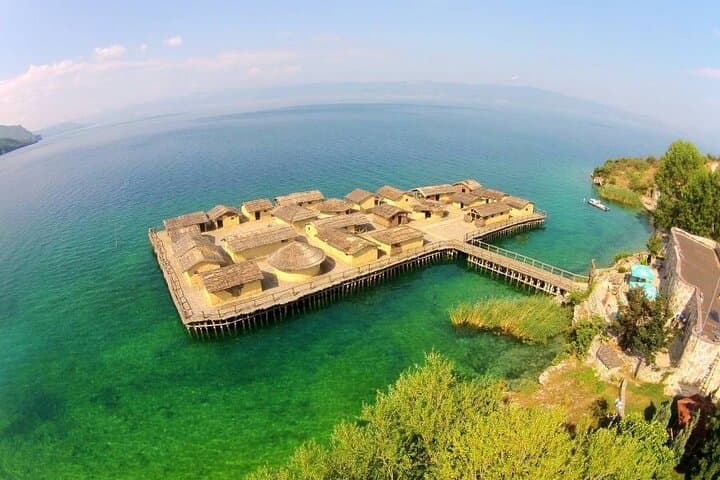
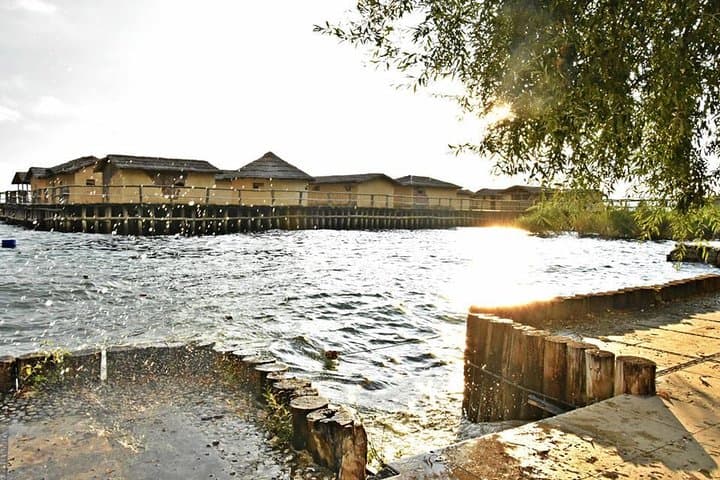
Culturally, expect a mix of Byzantine architecture, Ottoman-era alleyways, and cafés where locals trade stories over strong coffee. The Bay of Bones open-air museum recreates lakeside life from the Neolithic period, with boardwalks and thatched reconstructions that make prehistory tangible.
Practically: this is an 11-hour day with multiple short walks on cobbles, steps and uneven terrain; bring layered clothing for lake breezes, sun protection, and comfortable shoes. Photography windows are frequent but timed—plan for quick exits from the vehicle to capture viewpoints. Cash is useful for small purchases, and respect for church interiors (modest dress) keeps visits smooth. For travelers seeking a compact blend of geology, history and shoreline scenery, the Ohrid-Bay of Bones circuit delivers a densely packed, accessible day out.
easy.
11 hours.
Suitable for most fitness levels; involves several short walks and stair climbs over uneven surfaces.
The tour runs approximately 11 hours round-trip, including guided visits and transfers in an air-conditioned vehicle.
Basic transfers and guide/driver are included; specific entry fees to some monuments may not be included—confirm with the operator before booking.
Yes—walking segments are short, but the day is long; those with limited mobility should note uneven surfaces and stairs at several stops.
Yes—the itinerary typically includes a lunch break in Ohrid where you can sample local trout and regional dishes (own expense).
Ohrid was an early medieval center for Slavic literacy and Christianity; St. Clement of Ohrid and the Cyrillic tradition are closely tied to the town’s sites such as Plaoshnik.
Lake Ohrid is a UNESCO site facing pressure from development and pollution—minimize single-use plastics, follow signposted paths and avoid disturbing shoreline ecosystems.
Experience Balkan operates guided outdoor trips and adventures with an emphasis on safety, stewardship, and memorable experiences.
A long ribbon of road drops you down toward Lake Ohrid and the town’s red-tile roofs appear like punctuation against the water. The lake’s surface stretches wide and cold, daring you to imagine the centuries that have moved here: fishermen, saints, and scholars. On this full-day tour from Skopje, visitors move from capital-city bustle into a landscape where stone churches sit high on cliffs and a reconstructed Neolithic village floats on stilts in a sheltered bay.
A long ribbon of road drops you down toward Lake Ohrid and the town’s red-tile roofs appear like punctuation against the water. The lake’s surface stretches wide and cold, daring you to imagine the centuries that have moved here: fishermen, saints, and scholars. On this full-day tour from Skopje, visitors move from capital-city bustle into a landscape where stone churches sit high on cliffs and a reconstructed Neolithic village floats on stilts in a sheltered bay.
Ohrid is one of Europe’s oldest human settlements and a crucible of Slavic Christianity: Plaoshnik and the Church of St. Sophia preserve frescoes and foundations that trace back to the 9th–11th centuries, while Samuel’s Fortress watches the town from limestone heights. Lake Ohrid itself is an ancient tectonic basin with unusually clear, mineral-rich water that supports endemic species such as the Ohrid trout.
Culturally, expect a mix of Byzantine architecture, Ottoman-era alleyways, and cafés where locals trade stories over strong coffee. The Bay of Bones open-air museum recreates lakeside life from the Neolithic period, with boardwalks and thatched reconstructions that make prehistory tangible.
Practically: this is an 11-hour day with multiple short walks on cobbles, steps and uneven terrain; bring layered clothing for lake breezes, sun protection, and comfortable shoes. Photography windows are frequent but timed—plan for quick exits from the vehicle to capture viewpoints. Cash is useful for small purchases, and respect for church interiors (modest dress) keeps visits smooth. For travelers seeking a compact blend of geology, history and shoreline scenery, the Ohrid-Bay of Bones circuit delivers a densely packed, accessible day out.