THE ADVENTURE COLLECTIVE® · Independent discovery and booking for outdoor travel

Drive from Skopje to Lake Ohrid for a full-day private tour that pairs dramatic lakeside scenery with Byzantine frescoes, an ancient theater and the Hellenistic ruins of Heraclea. This one-day itinerary balances short walks, viewpoints and local cafés for an efficient cultural immersion.
Drive from Skopje to Lake Ohrid for a full-day private tour that pairs dramatic lakeside scenery with Byzantine frescoes, an ancient theater and the Hellenistic ruins of Heraclea. This one-day itinerary balances short walks, viewpoints and local cafés for an efficient cultural immersion.
A pre-dawn departure from Skopje eases onto the highway and the landscape opens: folded hills give way to the wide, glassy sweep of Lake Ohrid, its surface daring you to look longer. The town sits above the lake’s eastern shore; cobbled alleys lead to churches with frescoes that have watched centuries of commerce and worship.
Verified experiences and guided adventures in the surrounding area.
Operated by Experience Balkan · Ohrid, Ohrid Municipality
A pre-dawn departure from Skopje eases onto the highway and the landscape opens: folded hills give way to the wide, glassy sweep of Lake Ohrid, its surface daring you to look longer. The town sits above the lake’s eastern shore; cobbled alleys lead to churches with frescoes that have watched centuries of commerce and worship.
This route threads together Byzantine art, Hellenistic ruins and Ottoman-era cafés. Ohrid’s St. John at Kaneo perches on a cliff with Byzantine-Armenian forms; nearby Plaošnik preserves the memory of St. Clement’s early Slavic schools. The ancient theater’s acoustic shell hosts summer performances much as it did in antiquity. A short drive south brings you to Bitola—an Ottoman-era promenade, Shirok Sokak, and the nearby archaeological park of Heraclea Lyncestis, founded by Philip II in the 4th century BC and known for its mosaic floors and Roman baths.
Expect roughly 11 hours door-to-door, with about 2.5–3 hours driving each way (Skopje–Ohrid ≈170 km). The day mixes short guided walks, viewpoints, and museum stops; some sites charge admission. The terrain in town is mostly cobbled streets and short stairways; the fortress overlooks the lake and requires a steady climb. Practicalities: hotel pickup/drop-off is included, bring cash for small admissions, wear supportive shoes, and dress in layers—the microclimate by the lake can be cooler than Skopje. Hydrate and keep a light rain layer handy; the guide will adapt the pace to your group.
This is a compact cultural route that pairs dramatic lake scenery with deep historical layers—good for travelers who want immersive history without long multi-day logistics.
moderate.
11 hours.
Light to moderate fitness; you should be comfortable walking on uneven cobbles and climbing short stair sections.
Yes — the tour includes pickup and drop-off anywhere in Skopje as part of the booking.
Most admissions are not included; the guide will advise which sites charge separate entry fees.
Expect roughly 2.5–3 hours each way between Skopje and Ohrid (about 170 km), plus short drives between local sites and Bitola.
The tour is suitable for most fitness levels but involves uneven cobbles, steps and short uphill walks; travelers with limited mobility should discuss accessibility with the operator before booking.
Ohrid was a major early Christian center where St. Clement established Slavic liturgical schools; nearby Heraclea was founded by Philip II in the 4th century BC and later became a Roman administrative center.
Lake Ohrid and its surroundings are a UNESCO-listed site; visitors are asked to minimize pollution, respect fishing regulations for endemic species, and avoid single-use plastics where possible.
Experience Balkan operates guided outdoor trips and adventures with an emphasis on safety, stewardship, and memorable experiences.


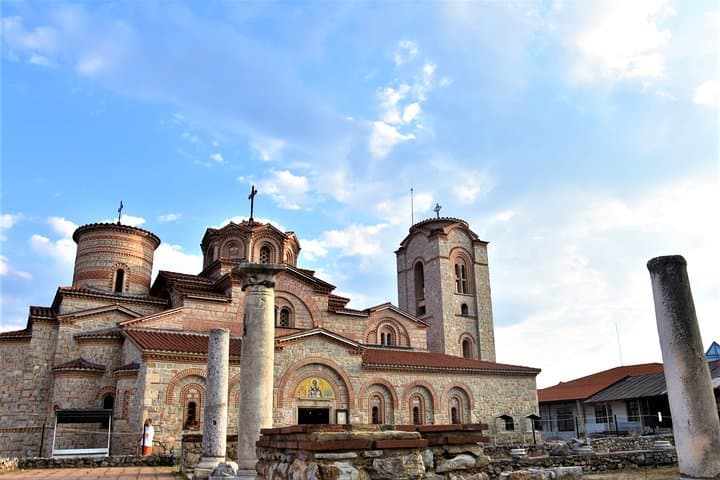

A pre-dawn departure from Skopje eases onto the highway and the landscape opens: folded hills give way to the wide, glassy sweep of Lake Ohrid, its surface daring you to look longer. The town sits above the lake’s eastern shore; cobbled alleys lead to churches with frescoes that have watched centuries of commerce and worship.
A pre-dawn departure from Skopje eases onto the highway and the landscape opens: folded hills give way to the wide, glassy sweep of Lake Ohrid, its surface daring you to look longer. The town sits above the lake’s eastern shore; cobbled alleys lead to churches with frescoes that have watched centuries of commerce and worship.
This route threads together Byzantine art, Hellenistic ruins and Ottoman-era cafés. Ohrid’s St. John at Kaneo perches on a cliff with Byzantine-Armenian forms; nearby Plaošnik preserves the memory of St. Clement’s early Slavic schools. The ancient theater’s acoustic shell hosts summer performances much as it did in antiquity. A short drive south brings you to Bitola—an Ottoman-era promenade, Shirok Sokak, and the nearby archaeological park of Heraclea Lyncestis, founded by Philip II in the 4th century BC and known for its mosaic floors and Roman baths.
Expect roughly 11 hours door-to-door, with about 2.5–3 hours driving each way (Skopje–Ohrid ≈170 km). The day mixes short guided walks, viewpoints, and museum stops; some sites charge admission. The terrain in town is mostly cobbled streets and short stairways; the fortress overlooks the lake and requires a steady climb. Practicalities: hotel pickup/drop-off is included, bring cash for small admissions, wear supportive shoes, and dress in layers—the microclimate by the lake can be cooler than Skopje. Hydrate and keep a light rain layer handy; the guide will adapt the pace to your group.
This is a compact cultural route that pairs dramatic lake scenery with deep historical layers—good for travelers who want immersive history without long multi-day logistics.