THE ADVENTURE COLLECTIVE® · Independent discovery and booking for outdoor travel

Cycle beyond Riga’s tourist loop on a three-hour guided ride that follows the Daugava, visits the Moscow district and Art Nouveau quarters, and blends history with contemporary street life. Expect flat terrain, cobbles, and local stories from a professional guide.
Cycle beyond Riga’s tourist loop on a three-hour guided ride that follows the Daugava, visits the Moscow district and Art Nouveau quarters, and blends history with contemporary street life. Expect flat terrain, cobbles, and local stories from a professional guide.
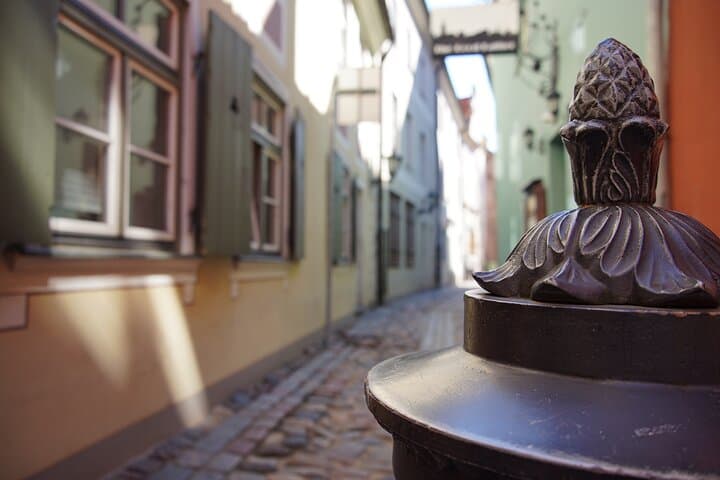
You push off from a busy square, the cobbles humming under city-bike tires, and the Daugava river falls into place at your right shoulder, daring you to look up at Riga’s broad skyline. The guide sets the pace: steady, conversational, pointing out a carved wooden house one moment and a mural peeking from an alley the next.
Verified experiences and guided adventures in the surrounding area.
Operated by Riga Events and Tours SIA · Riga, Riga
You push off from a busy square, the cobbles humming under city-bike tires, and the Daugava river falls into place at your right shoulder, daring you to look up at Riga’s broad skyline. The guide sets the pace: steady, conversational, pointing out a carved wooden house one moment and a mural peeking from an alley the next.
This loop follows the riverbank into the Moscow district—an area that became Riga’s Jewish ghetto during WWII—then sweeps through Central’s bike lanes and the Art Nouveau blocks that defined turn-of-the-century Riga. Geologically the city sits on glacial plain and river sediments; the ride is mostly flat with short stretches of cobbles and park paths rather than sustained climbs. Culturally, expect a mix of Soviet-era architecture, ornate early-20th-century façades, and modern café culture; the guide threads local stories about 1905 unrest, Latvian riflemen, and urban renewal.
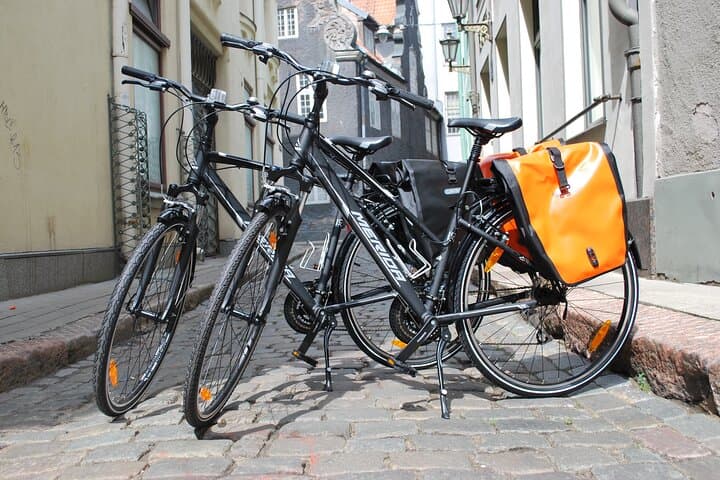
Practical guidance: tours run about three hours and cover roughly 8–12 km with multiple short stops for commentary and photos. Helmets and city bikes are supplied; wear closed-toe shoes and bring a refillable water bottle. Watch for tram rails in some central streets and slower traffic when passing through markets. Morning or late-afternoon departures offer softer light for photos and cooler temperatures in summer. If you want a quieter route, request more time in the suburbs; if you prefer contemporary Riga, ask the guide to linger in Central district cafés and street-art pockets.
moderate.
3 hours.
Suitable for riders with moderate fitness who can pedal for 3 hours with occasional stops; basic bike handling on cobbles helpful.
Yes — city bikes and helmets are provided as part of the tour; guides will check helmet fit before departure.
Yes — the route is mostly flat and family-friendly; infant seats are available but check age/height requirements when booking.
Tours operate in most weather; guides advise dressing appropriately, but the operator may cancel for severe weather—check cancellation terms when booking.
No — the tour does not offer hotel pickups; start location is in central Riga near public transport links.
Riga’s modern identity was shaped at the turn of the 20th century by Art Nouveau construction and earlier by events like the 1905 uprising; parts of the Moscow district were used as the Jewish ghetto during WWII.
Stay on paved routes and avoid trampling riverbanks; Riga’s urban parks rely on local stewardship—carry out litter and use refillable bottles to reduce plastic waste.
Riga Events and Tours SIA operates guided outdoor trips and adventures with an emphasis on safety, stewardship, and memorable experiences.
You push off from a busy square, the cobbles humming under city-bike tires, and the Daugava river falls into place at your right shoulder, daring you to look up at Riga’s broad skyline. The guide sets the pace: steady, conversational, pointing out a carved wooden house one moment and a mural peeking from an alley the next.
You push off from a busy square, the cobbles humming under city-bike tires, and the Daugava river falls into place at your right shoulder, daring you to look up at Riga’s broad skyline. The guide sets the pace: steady, conversational, pointing out a carved wooden house one moment and a mural peeking from an alley the next.
This loop follows the riverbank into the Moscow district—an area that became Riga’s Jewish ghetto during WWII—then sweeps through Central’s bike lanes and the Art Nouveau blocks that defined turn-of-the-century Riga. Geologically the city sits on glacial plain and river sediments; the ride is mostly flat with short stretches of cobbles and park paths rather than sustained climbs. Culturally, expect a mix of Soviet-era architecture, ornate early-20th-century façades, and modern café culture; the guide threads local stories about 1905 unrest, Latvian riflemen, and urban renewal.
Practical guidance: tours run about three hours and cover roughly 8–12 km with multiple short stops for commentary and photos. Helmets and city bikes are supplied; wear closed-toe shoes and bring a refillable water bottle. Watch for tram rails in some central streets and slower traffic when passing through markets. Morning or late-afternoon departures offer softer light for photos and cooler temperatures in summer. If you want a quieter route, request more time in the suburbs; if you prefer contemporary Riga, ask the guide to linger in Central district cafés and street-art pockets.