THE ADVENTURE COLLECTIVE® · Independent discovery and booking for outdoor travel

Share a home-cooked Alaskan dinner in an off-grid cabin, then step outside for a guided wait under Interior Alaska’s dark skies. This small-group evening tour mixes local stories, practical aurora tips, and the chance to see the Northern Lights.
Share a home-cooked Alaskan dinner in an off-grid cabin, then step outside for a guided wait under Interior Alaska’s dark skies. This small-group evening tour mixes local stories, practical aurora tips, and the chance to see the Northern Lights.
You step out of the van into a clear, bone-cold night and the forest exhales around you — black spruce and birch creak as the cabin’s wood stove sends a thin line of smoke into the sky. Inside, a long table of simple Alaska fare centers on locally caught salmon, crusty bread, and jam made from seasonal fruit; outside, the horizon waits, dark and patient.
Verified experiences and guided adventures in the surrounding area.
Operated by 1st Alaska Outdoor School · Fairbanks, Alaska
You step out of the van into a clear, bone-cold night and the forest exhales around you — black spruce and birch creak as the cabin’s wood stove sends a thin line of smoke into the sky. Inside, a long table of simple Alaska fare centers on locally caught salmon, crusty bread, and jam made from seasonal fruit; outside, the horizon waits, dark and patient.
The Interior of Alaska sits on river-carved plains and low ridges shaped by Pleistocene ice and subsequent thaw. Fairbanks grew from a gold rush outpost and sits within the traditional lands of the Athabascan people; local guides often weave native stories about the Aurora into the evening, linking sky displays to centuries-old cultural meaning.
Geologically, the region’s black-spruce taiga and permafrost-influenced soils create a flat, open vantage for aurora viewing — fewer city lights, long sightlines. The experience is part dinner, part classroom, part vigil: guides share dog-mushing tales, practical aurora science, and tips while you wait.
Practical guidance: the operation is an evening tour of about five hours with hotel pickup in Fairbanks and small groups (up to ~12). Temperatures can plunge well below freezing; plan multi-layer insulation, a tripod for long-exposure photography, and footwear that grips icy approaches. Expect minimal hiking — most of the time is spent at a remote yurt or cabin clearing. Remember the Aurora is a natural phenomenon; good forecasts improve odds but never guarantee sightings. Go prepared to be warm, patient, and ready for a sudden, thrilling sky show.
easy.
5 hours.
Minimal fitness required; mostly seated and short, level walks to an off-grid cabin clearing
No. The Aurora is a natural event influenced by solar activity and cloud cover; guides choose dark locations to maximize chances but sightings cannot be guaranteed.
Yes — the tour includes hotel pickup and drop-off in the Fairbanks area; confirm your exact pickup point when booking.
A salmon-based Alaska fare is standard with appetizers and dessert; a vegetarian option is available if requested at booking.
Nighttime temperatures often fall well below freezing in Aurora season; wear thermal base layers, insulating mid-layers, windproof outerwear, warm boots, hat, and gloves.
Fairbanks developed during the early 20th-century gold rush and sits within Athabascan homelands; guides often share indigenous stories tied to the Northern Lights.
Dark-sky preservation and minimizing light pollution are priorities — stay on designated paths, pack out waste, and follow guide instructions to protect fragile tundra and private land.
1st Alaska Outdoor School operates guided outdoor trips and adventures with an emphasis on safety, stewardship, and memorable experiences.
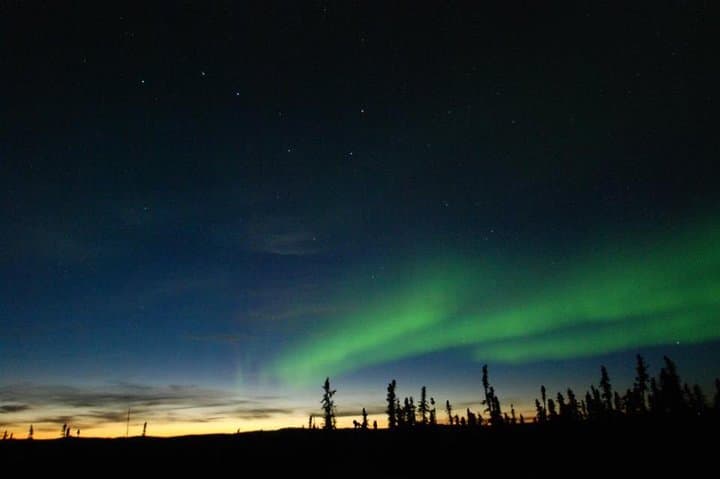


You step out of the van into a clear, bone-cold night and the forest exhales around you — black spruce and birch creak as the cabin’s wood stove sends a thin line of smoke into the sky. Inside, a long table of simple Alaska fare centers on locally caught salmon, crusty bread, and jam made from seasonal fruit; outside, the horizon waits, dark and patient.
You step out of the van into a clear, bone-cold night and the forest exhales around you — black spruce and birch creak as the cabin’s wood stove sends a thin line of smoke into the sky. Inside, a long table of simple Alaska fare centers on locally caught salmon, crusty bread, and jam made from seasonal fruit; outside, the horizon waits, dark and patient.
The Interior of Alaska sits on river-carved plains and low ridges shaped by Pleistocene ice and subsequent thaw. Fairbanks grew from a gold rush outpost and sits within the traditional lands of the Athabascan people; local guides often weave native stories about the Aurora into the evening, linking sky displays to centuries-old cultural meaning.
Geologically, the region’s black-spruce taiga and permafrost-influenced soils create a flat, open vantage for aurora viewing — fewer city lights, long sightlines. The experience is part dinner, part classroom, part vigil: guides share dog-mushing tales, practical aurora science, and tips while you wait.
Practical guidance: the operation is an evening tour of about five hours with hotel pickup in Fairbanks and small groups (up to ~12). Temperatures can plunge well below freezing; plan multi-layer insulation, a tripod for long-exposure photography, and footwear that grips icy approaches. Expect minimal hiking — most of the time is spent at a remote yurt or cabin clearing. Remember the Aurora is a natural phenomenon; good forecasts improve odds but never guarantee sightings. Go prepared to be warm, patient, and ready for a sudden, thrilling sky show.