THE ADVENTURE COLLECTIVE® · Independent discovery and booking for outdoor travel

Skip the crowds and see tulips, reclaimed polders and working windmills on a private half-day tour from Amsterdam. Quiet gardens, cheese tastings and the Beemster’s UNESCO landscape make for a distinctly Dutch spring outing.
Skip the crowds and see tulips, reclaimed polders and working windmills on a private half-day tour from Amsterdam. Quiet gardens, cheese tastings and the Beemster’s UNESCO landscape make for a distinctly Dutch spring outing.
You step out of Amsterdam’s morning hush and into a widescreen Dutch spring: a low horizon stitched with rows of tulips, farmhouses framed by canals, and a windmill’s arms turning the rhythm of reclaimed land. The guide eases you onto quiet dikes away from Keukenhof’s crowds, and the air smells of cut grass and hyacinths as you move between fields and small villages.
Verified experiences and guided adventures in the surrounding area.
Operated by Windmillgirl Tours · Amsterdam, North Holland
You step out of Amsterdam’s morning hush and into a widescreen Dutch spring: a low horizon stitched with rows of tulips, farmhouses framed by canals, and a windmill’s arms turning the rhythm of reclaimed land. The guide eases you onto quiet dikes away from Keukenhof’s crowds, and the air smells of cut grass and hyacinths as you move between fields and small villages.
This route threads through the Poldertuin at Anna Paulowna, the UNESCO-listed Beemster polder and the Schermer’s historic mills — places shaped by 17th-century water engineering when lakes were drained and new land planned on a grid of canals and roads. De Rijp’s gabled houses tell a different chapter: once a fishing hub, now inland but proud of its maritime past. Cheese farms nearby carry on centuries-old dairy traditions; wooden-shoe demonstrations and small-scale cheesemaking reveal daily life beyond the postcard.
Expect easy, largely flat driving interspersed with short walks: field-side photo stops, a one-hour garden visit, a museum mill tour where you climb through working gears, and a cheese tasting. The pace is relaxed and private, ideal for photographers, families, and anyone wanting a quieter spring experience.
Practical tips: arrive in comfortable shoes for damp fields, bring a wind layer for exposed dikes, and charge your camera — light changes fast. If visiting mid-March to mid-May, plan for peak bloom windows and flexible scheduling to catch peak color.
easy.
6 hours.
Suitable for most fitness levels; short, flat walks and mostly vehicle-based touring.
Mid-March to mid-May is the typical window; peak bloom often falls in April but varies by season and weather.
Yes — the tour notes indicate wheelchair and stroller accessibility for most vehicle stops, though some garden paths may be uneven.
The tour includes entrance to a windmill and the cheese tasting at the farm; confirm any additional personal purchases with the operator.
Yes — the tour offers hotel pick-up in Amsterdam and returns to the city at the end of the day.
The Beemster and Schermer polders were drained in the 17th century using windmills and planned as reclaimed agricultural land, an engineering hallmark of the Dutch Golden Age.
These polders rely on careful water management and sustainable farming; visitors are encouraged to stay on paths and avoid trampling flower beds to protect crops and habitat.
Windmillgirl Tours operates guided outdoor trips and adventures with an emphasis on safety, stewardship, and memorable experiences.
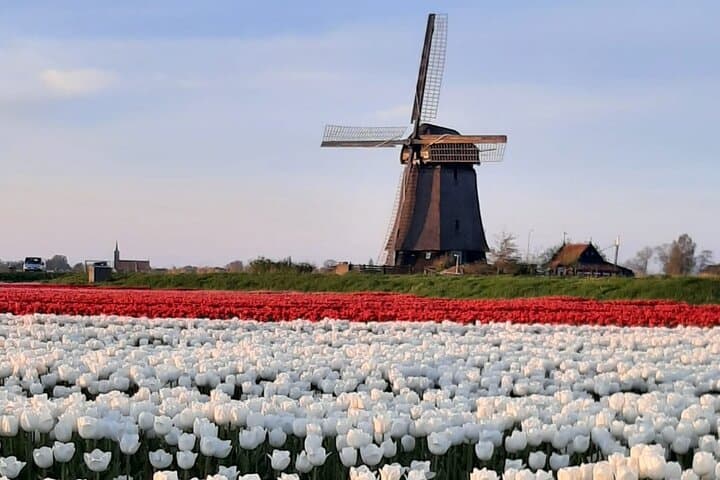
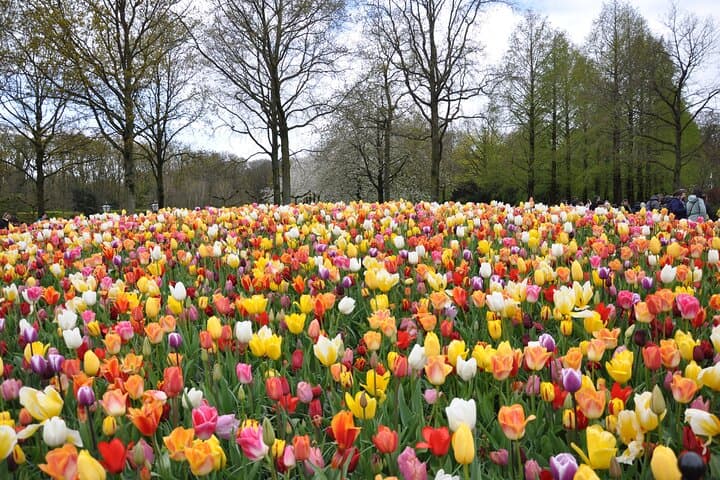
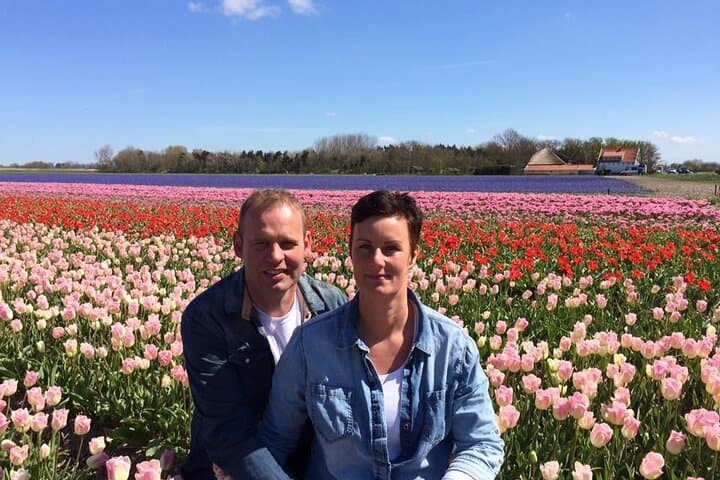
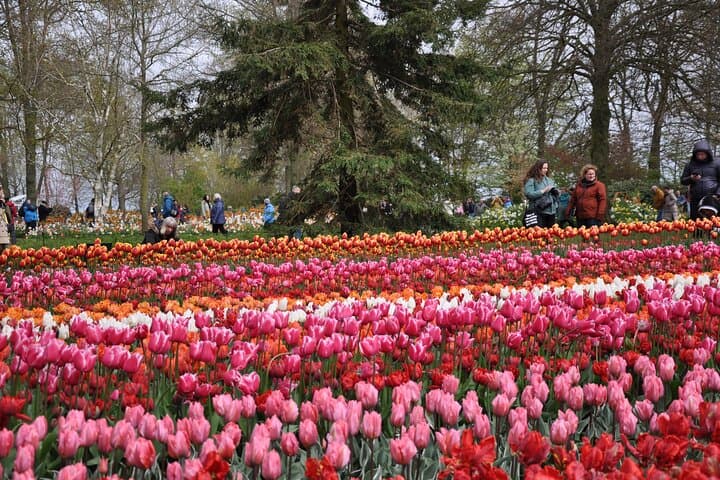
You step out of Amsterdam’s morning hush and into a widescreen Dutch spring: a low horizon stitched with rows of tulips, farmhouses framed by canals, and a windmill’s arms turning the rhythm of reclaimed land. The guide eases you onto quiet dikes away from Keukenhof’s crowds, and the air smells of cut grass and hyacinths as you move between fields and small villages.
You step out of Amsterdam’s morning hush and into a widescreen Dutch spring: a low horizon stitched with rows of tulips, farmhouses framed by canals, and a windmill’s arms turning the rhythm of reclaimed land. The guide eases you onto quiet dikes away from Keukenhof’s crowds, and the air smells of cut grass and hyacinths as you move between fields and small villages.
This route threads through the Poldertuin at Anna Paulowna, the UNESCO-listed Beemster polder and the Schermer’s historic mills — places shaped by 17th-century water engineering when lakes were drained and new land planned on a grid of canals and roads. De Rijp’s gabled houses tell a different chapter: once a fishing hub, now inland but proud of its maritime past. Cheese farms nearby carry on centuries-old dairy traditions; wooden-shoe demonstrations and small-scale cheesemaking reveal daily life beyond the postcard.
Expect easy, largely flat driving interspersed with short walks: field-side photo stops, a one-hour garden visit, a museum mill tour where you climb through working gears, and a cheese tasting. The pace is relaxed and private, ideal for photographers, families, and anyone wanting a quieter spring experience.
Practical tips: arrive in comfortable shoes for damp fields, bring a wind layer for exposed dikes, and charge your camera — light changes fast. If visiting mid-March to mid-May, plan for peak bloom windows and flexible scheduling to catch peak color.