THE ADVENTURE COLLECTIVE® · Independent discovery and booking for outdoor travel

Take an alternative Nagarkot route that leaves the crowds behind: a 6–8 hour forested day hike to Nagarkot View Tower with wide Himalayan vistas and authentic village encounters. Ideal for hikers who want solitude, layered terrain, and a dramatic sunset.
Take an alternative Nagarkot route that leaves the crowds behind: a 6–8 hour forested day hike to Nagarkot View Tower with wide Himalayan vistas and authentic village encounters. Ideal for hikers who want solitude, layered terrain, and a dramatic sunset.
You step out of the vehicle and the valley exhales — a ribbon of terraces and distant rooftops falling away toward Kathmandu while the hills press in, green and quiet.
Verified experiences and guided adventures in the surrounding area.
Operated by Eyes On Nepal · Nagarkot, Bagmati Province
You step out of the vehicle and the valley exhales — a ribbon of terraces and distant rooftops falling away toward Kathmandu while the hills press in, green and quiet.
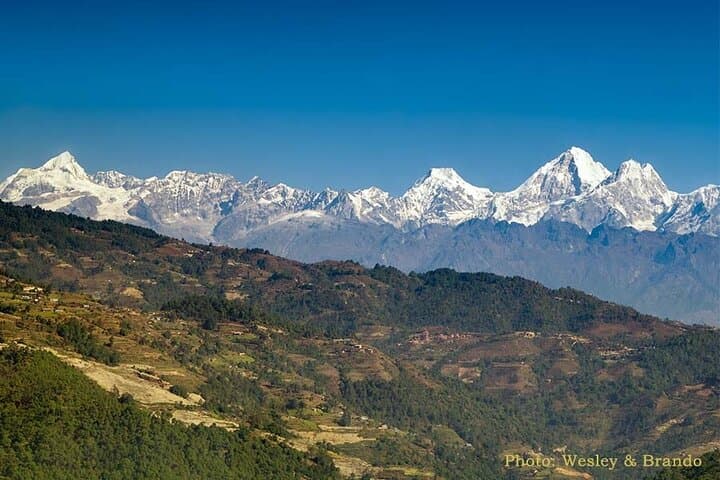
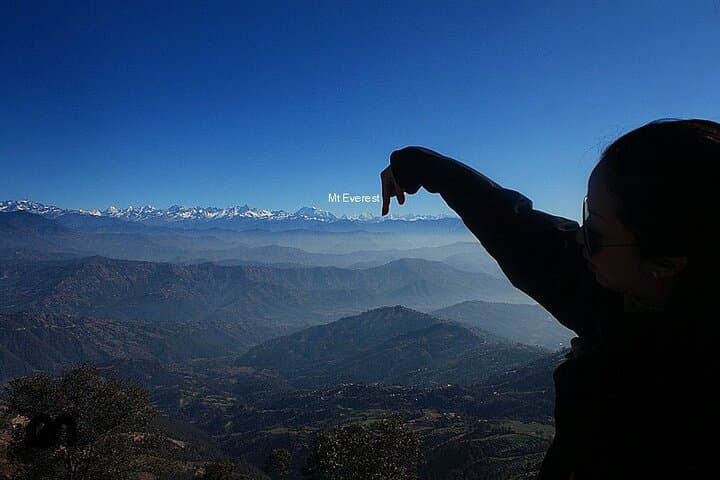
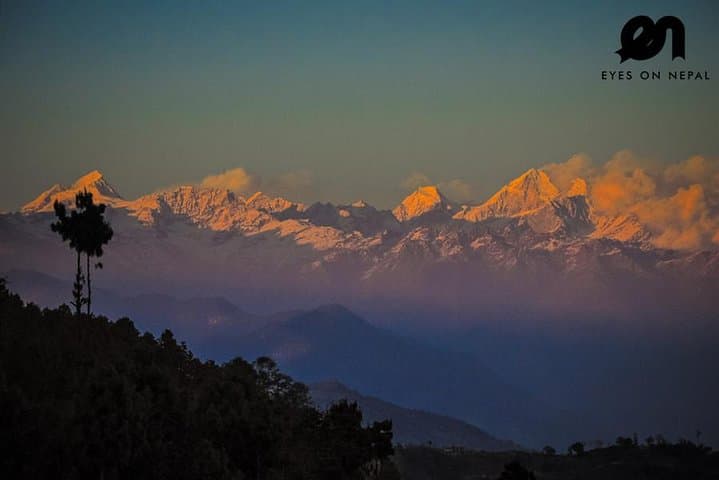
This full-day Nagarkot hike follows less-traveled tracks through mixed pine and oak forest, climbing toward the 2,195 m Nagarkot View Tower for a wide, unforgiving sunset. The route avoids motorable roads, so expect singletrack, stone steps and occasional mule tracks. On clear days the skyline reads like a map: Langtang, Ganesh Himal and Dorje Lakpa line the horizon; Everest can appear as a thin, white promise.
The trail threads historic settlements — think Newari houses, small terraced farms, and the living rhythm of mountain villages. Sankhu, an ancient Newari town nearby, stages local ritual life and offers a glimpse into the Kathmandu Valley's layered history. Geologically, these hills are uplifted flanks of the Himalaya; steep slopes and loose scree near ridgelines reward cautious footing.
Practical guidance: plan 6–8 hours total, with roughly 500–800 m of ascent depending on your start. Footwear should handle roots and stone steps; a headlamp helps if you linger for sunset. Carry at least 1–2 liters of water, and be ready for sudden temperature drops after sundown — the hill will cool fast and push you to layer up.
Expect few other tourists on this variant route, frequent encounters with local children and grazing cattle, and a sunset that pulls focus away from everything else. Timing is everything: arrive at the tower 30–45 minutes before sunset to secure views and decent light for photos.
moderate.
6–8 hours.
Suitable for hikers with regular walking fitness; expect sustained climbs and descents requiring leg endurance.
Expect 6–8 hours round trip with roughly 500–800 meters of elevation gain depending on your start point; terrain is a mix of singletrack, stone steps and forest paths.
A guide isn’t strictly required for experienced hikers, but local guides improve navigation on off-the-beaten tracks and provide cultural context.
Yes—on clear, dust-free days you can spot Everest and other distant peaks from Nagarkot View Tower; visibility is best in the dry season (autumn and spring).
Basic tea houses and small shops may appear near villages, but carry water and snacks for the full day as services are limited on the quieter sections.
Nagarkot and nearby Sankhu lie on historic trade and pilgrimage routes into the Kathmandu Valley; local Newari communities maintain centuries-old customs and festivals.
Stick to existing trails, avoid feeding wildlife, and carry out trash—trail erosion and plastic waste are local concerns during peak seasons.
Eyes On Nepal operates guided outdoor trips and adventures with an emphasis on safety, stewardship, and memorable experiences.
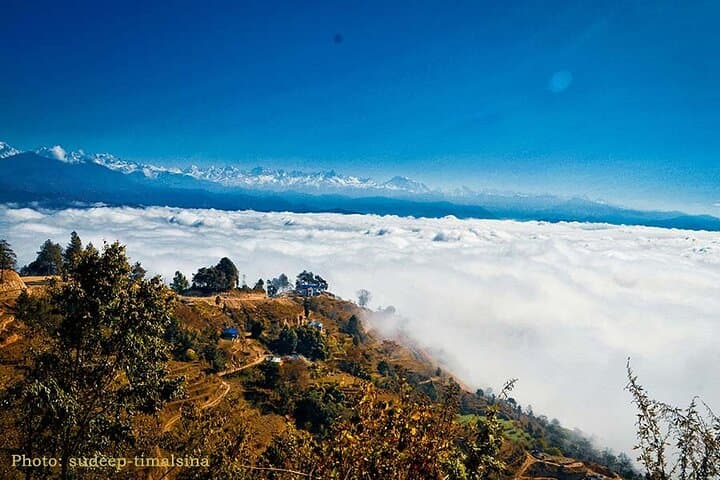
You step out of the vehicle and the valley exhales — a ribbon of terraces and distant rooftops falling away toward Kathmandu while the hills press in, green and quiet.
You step out of the vehicle and the valley exhales — a ribbon of terraces and distant rooftops falling away toward Kathmandu while the hills press in, green and quiet.
This full-day Nagarkot hike follows less-traveled tracks through mixed pine and oak forest, climbing toward the 2,195 m Nagarkot View Tower for a wide, unforgiving sunset. The route avoids motorable roads, so expect singletrack, stone steps and occasional mule tracks. On clear days the skyline reads like a map: Langtang, Ganesh Himal and Dorje Lakpa line the horizon; Everest can appear as a thin, white promise.
The trail threads historic settlements — think Newari houses, small terraced farms, and the living rhythm of mountain villages. Sankhu, an ancient Newari town nearby, stages local ritual life and offers a glimpse into the Kathmandu Valley's layered history. Geologically, these hills are uplifted flanks of the Himalaya; steep slopes and loose scree near ridgelines reward cautious footing.
Practical guidance: plan 6–8 hours total, with roughly 500–800 m of ascent depending on your start. Footwear should handle roots and stone steps; a headlamp helps if you linger for sunset. Carry at least 1–2 liters of water, and be ready for sudden temperature drops after sundown — the hill will cool fast and push you to layer up.
Expect few other tourists on this variant route, frequent encounters with local children and grazing cattle, and a sunset that pulls focus away from everything else. Timing is everything: arrive at the tower 30–45 minutes before sunset to secure views and decent light for photos.