THE ADVENTURE COLLECTIVE® · Independent discovery and booking for outdoor travel

Ride old sugarcane paths into St. Kitts’ rain forest on an open-back 4x4, stopping at an 18th-century fortress, a historic plantation with a water wheel, and a volcanic viewpoint that frames the sea, Brimstone Hill and Mount Liamuiga.
Ride old sugarcane paths into St. Kitts’ rain forest on an open-back 4x4, stopping at an 18th-century fortress, a historic plantation with a water wheel, and a volcanic viewpoint that frames the sea, Brimstone Hill and Mount Liamuiga.
The pickup rumbles away from the coastal road and the sea falls behind like a remembered song. Within minutes the open-back 4x4 climbs narrow farmer tracks, tires crunching old ballast and sugarcane dust as the forest canopy tightens overhead. Light filters through broad leaves; humid air pushes gently against the vehicle, smelling of damp earth and green resin. Guides point out medicinal plants and the scars of old carriage paths used to haul sugarcane in the 18th century.
Verified experiences and guided adventures in the surrounding area.
Operated by Rogers Eco Tours · Basseterre, Saint Kitts
The pickup rumbles away from the coastal road and the sea falls behind like a remembered song. Within minutes the open-back 4x4 climbs narrow farmer tracks, tires crunching old ballast and sugarcane dust as the forest canopy tightens overhead. Light filters through broad leaves; humid air pushes gently against the vehicle, smelling of damp earth and green resin. Guides point out medicinal plants and the scars of old carriage paths used to haul sugarcane in the 18th century.
This tour threads together the island’s layered history: the scars and stones of colonial plantations, stories of freed slaves carving new landholdings, and the military presence marked by a forgotten 18th-century fortress along a riverside. Geologically, St. Kitts rises from volcanic activity—the drive skirts ancient lava flows and gives a dramatic vantage beneath one of the island’s younger volcanic cones, where views open to the Caribbean, Brimstone Hill Fortress and Mount Liamuiga in a single sweep.
Culturally the route favors local knowledge—guides share pastries and tropical juice, recounting how rivers and water wheels once powered estate life. The rainforest is assertive here: vines nudge the tracks and birds call like punctuation.
Practical guidance: expect bumpy roads and short, optional walks at viewpoints; bring closed-toe shoes, sun protection and a light rain shell. The tour lasts about 3.5 hours, suitable for most fitness levels, and is best scheduled in the morning to avoid midday heat and the island’s brief afternoon showers.
easy.
3–4 hours.
Minimal fitness required—able to step in and out of an open-back 4x4 and manage short, flat walks at stops
The tour lasts about 210 minutes (3.5 hours); most time is spent riding with brief stops for viewpoints, light walks and interpretation.
The excursion is classified as easy but requires stepping into the open-back vehicle and short walks; it’s not recommended for people with serious spinal or mobility issues.
Light refreshments, including local pastries and tropical juice, are provided—bring water for extra hydration.
Families are welcome; confirm age and safety requirements with the operator when booking and secure younger children during the bumpy ride.
The route traces old sugarcane tractor roads and plantation sites from the 18th and 19th centuries and visits a small fortress tied to colonial defenses.
Stay on vehicle tracks and follow guide instructions to limit erosion and protect fragile rainforest undergrowth; supporting local guides helps fund conservation and community projects.
Rogers Eco Tours operates guided outdoor trips and adventures with an emphasis on safety, stewardship, and memorable experiences.
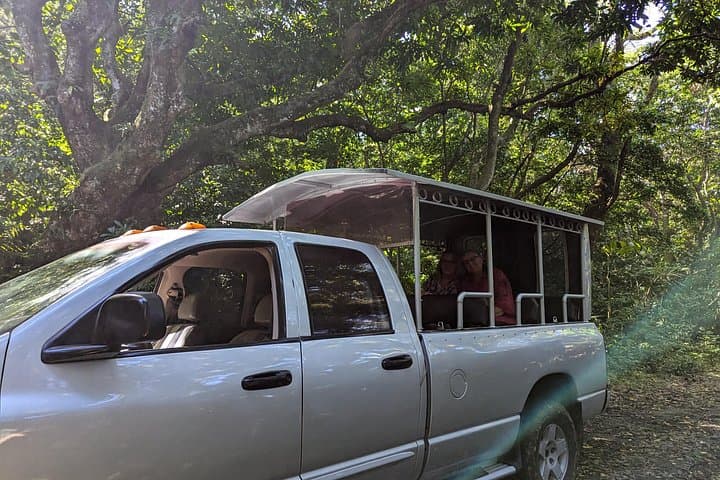
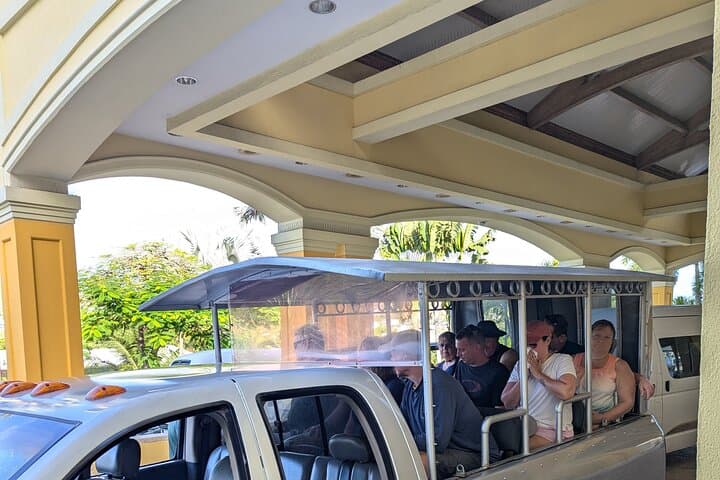
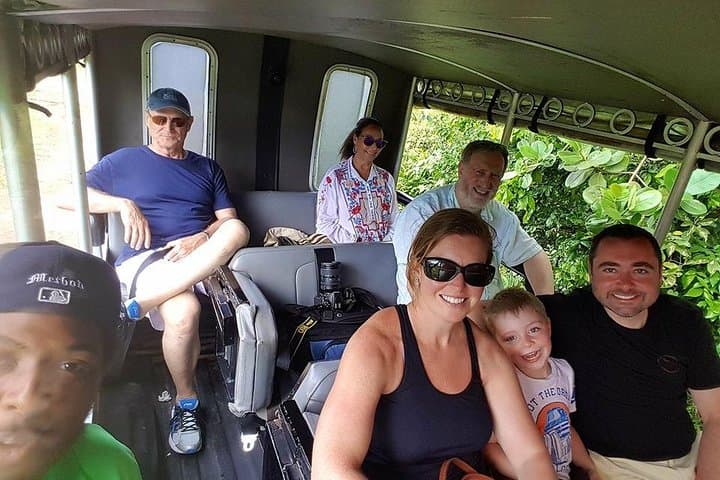
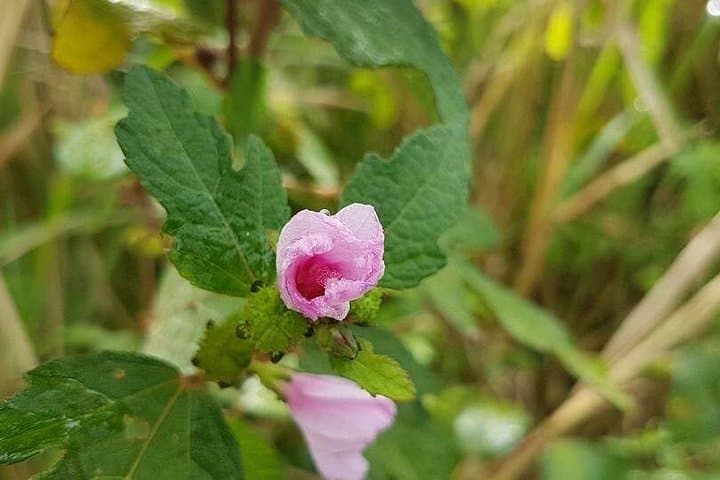
The pickup rumbles away from the coastal road and the sea falls behind like a remembered song. Within minutes the open-back 4x4 climbs narrow farmer tracks, tires crunching old ballast and sugarcane dust as the forest canopy tightens overhead. Light filters through broad leaves; humid air pushes gently against the vehicle, smelling of damp earth and green resin. Guides point out medicinal plants and the scars of old carriage paths used to haul sugarcane in the 18th century.
The pickup rumbles away from the coastal road and the sea falls behind like a remembered song. Within minutes the open-back 4x4 climbs narrow farmer tracks, tires crunching old ballast and sugarcane dust as the forest canopy tightens overhead. Light filters through broad leaves; humid air pushes gently against the vehicle, smelling of damp earth and green resin. Guides point out medicinal plants and the scars of old carriage paths used to haul sugarcane in the 18th century.
This tour threads together the island’s layered history: the scars and stones of colonial plantations, stories of freed slaves carving new landholdings, and the military presence marked by a forgotten 18th-century fortress along a riverside. Geologically, St. Kitts rises from volcanic activity—the drive skirts ancient lava flows and gives a dramatic vantage beneath one of the island’s younger volcanic cones, where views open to the Caribbean, Brimstone Hill Fortress and Mount Liamuiga in a single sweep.
Culturally the route favors local knowledge—guides share pastries and tropical juice, recounting how rivers and water wheels once powered estate life. The rainforest is assertive here: vines nudge the tracks and birds call like punctuation.
Practical guidance: expect bumpy roads and short, optional walks at viewpoints; bring closed-toe shoes, sun protection and a light rain shell. The tour lasts about 3.5 hours, suitable for most fitness levels, and is best scheduled in the morning to avoid midday heat and the island’s brief afternoon showers.