THE ADVENTURE COLLECTIVE® · Independent discovery and booking for outdoor travel

A full-day circuit from Siem Reap that links three very different Khmer sites: the finely carved Banteay Srei, the river-carved Kbal Spean, and the jungle-engulfed Beng Mealea. Expect moderate walking, rural encounters, and striking ancient stonework.
A full-day circuit from Siem Reap that links three very different Khmer sites: the finely carved Banteay Srei, the river-carved Kbal Spean, and the jungle-engulfed Beng Mealea. Expect moderate walking, rural encounters, and striking ancient stonework.
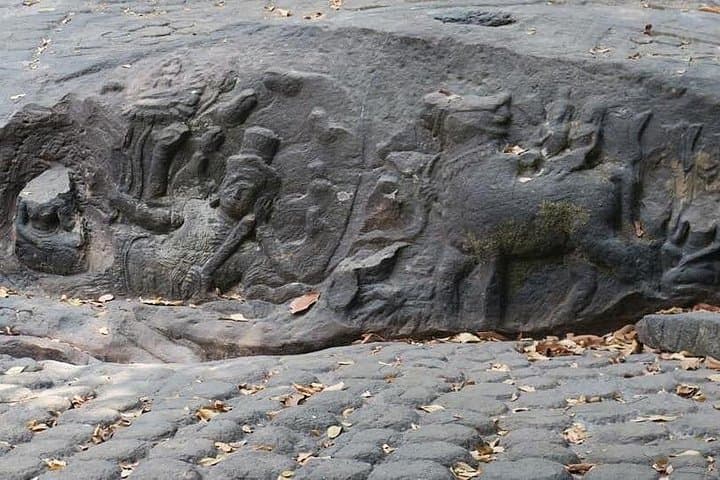
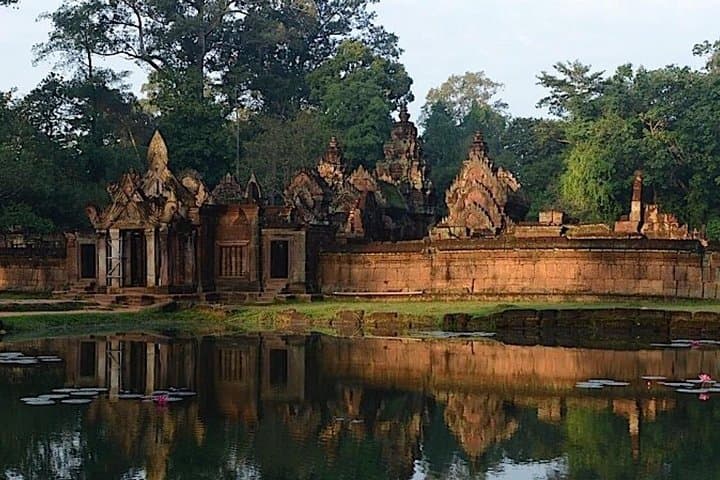
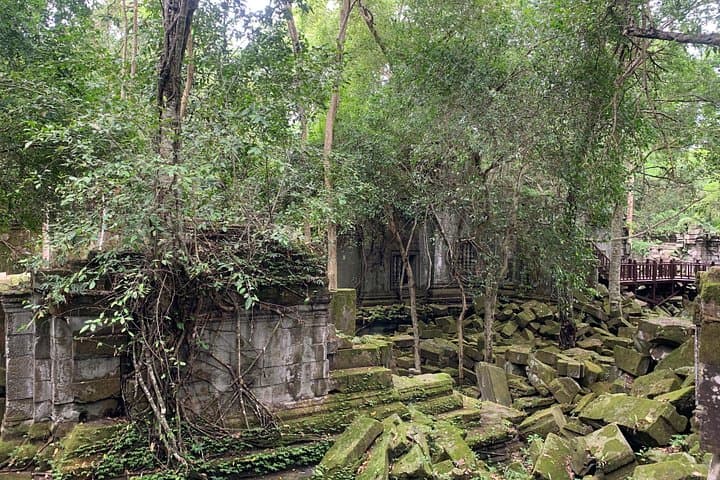
Morning light slices through low clouds as your driver eases away from Siem Reap and the road narrows into rice paddies and scrub. By midmorning you stand at Banteay Srei, its pink sandstone carvings catching the sun; later the Siem Reap River dares you along a shallow bed where thousands of lingas mark a sacred flow at Kbal Spean; the day closes inside Beng Mealea where roots push and hold collapsed galleries and the jungle feels like a living architect.
Verified experiences and guided adventures in the surrounding area.
Operated by ANGKOR CAB-OFF BEATEN TRUCK · Siem Reap, Siem Reap Province
Morning light slices through low clouds as your driver eases away from Siem Reap and the road narrows into rice paddies and scrub. By midmorning you stand at Banteay Srei, its pink sandstone carvings catching the sun; later the Siem Reap River dares you along a shallow bed where thousands of lingas mark a sacred flow at Kbal Spean; the day closes inside Beng Mealea where roots push and hold collapsed galleries and the jungle feels like a living architect.
These three sites span centuries of Khmer art and devotion. Banteay Srei (consecrated 967 CE) is famed for unusually fine carvings created by court scholars, while Kbal Spean’s riverbed carvings—lingas and Buddhist motifs—were carved in the 11th–12th centuries to bless waters heading to Angkor. Beng Mealea dates to Suryavarman II (early 12th century) and is notable for its semi-ruined, overgrown plan that resembles a slow-motion reclamation by the forest.
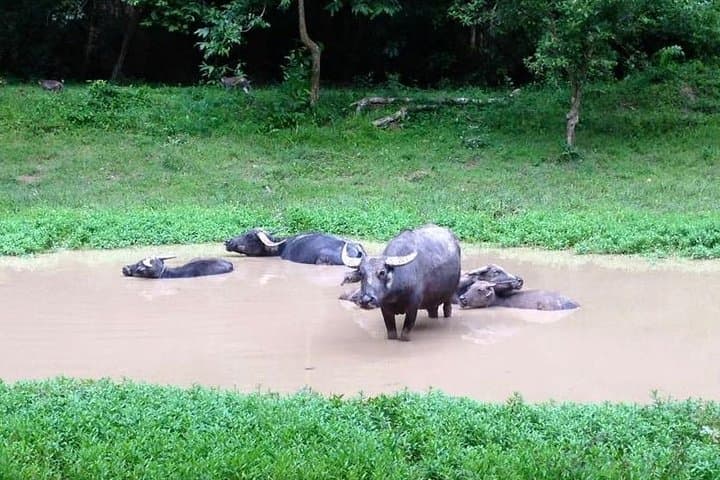
Geologically, the region’s sandstone erodes quickly in tropical rains, explaining the delicate reliefs and the temple collapse patterns. Culturally, the route crosses villages and roadside stalls where locals sell kralan (bamboo sticky rice) and crafts—the human rhythm of the countryside is as much part of the trip as the monuments.
Practical notes: expect a full day (about 8 hours) with moderate walking—uneven paths, short climbs, riverbed scrambles. Bring shade, steady footwear, and cash for entrance fees and local snacks. Start early to avoid midday heat and to enjoy quieter temple moments before tour buses arrive.
moderate.
8 hours.
Moderate fitness; comfortable walking on uneven ground and short uphill sections required
This tour notes admission is not included; bring cash to purchase tickets at each temple if not pre-arranged.
Expect several short hikes and uneven walking totaling a few kilometers—Kbal Spean includes a 1–1.5 km riverbed walk with steps.
Families and active seniors can join if mobile; those with limited mobility may find Beng Mealea’s ruins and Kbal Spean’s stone steps challenging.
There’s a lunch stop and basic facilities at main sites or nearby kiosks—carry small change for snacks and water.
Banteay Srei was consecrated in 967 CE and unusually built by courtiers; Kbal Spean’s river carvings were mainly cut in the 11th–12th centuries; Beng Mealea dates to Suryavarman II, early 12th century.
The sandstone reliefs are fragile; visitors should stay on marked paths, avoid touching carvings, and support local guides who help protect sites and educate visitors.
ANGKOR CAB-OFF BEATEN TRUCK operates guided outdoor trips and adventures with an emphasis on safety, stewardship, and memorable experiences.
Morning light slices through low clouds as your driver eases away from Siem Reap and the road narrows into rice paddies and scrub. By midmorning you stand at Banteay Srei, its pink sandstone carvings catching the sun; later the Siem Reap River dares you along a shallow bed where thousands of lingas mark a sacred flow at Kbal Spean; the day closes inside Beng Mealea where roots push and hold collapsed galleries and the jungle feels like a living architect.
Morning light slices through low clouds as your driver eases away from Siem Reap and the road narrows into rice paddies and scrub. By midmorning you stand at Banteay Srei, its pink sandstone carvings catching the sun; later the Siem Reap River dares you along a shallow bed where thousands of lingas mark a sacred flow at Kbal Spean; the day closes inside Beng Mealea where roots push and hold collapsed galleries and the jungle feels like a living architect.
These three sites span centuries of Khmer art and devotion. Banteay Srei (consecrated 967 CE) is famed for unusually fine carvings created by court scholars, while Kbal Spean’s riverbed carvings—lingas and Buddhist motifs—were carved in the 11th–12th centuries to bless waters heading to Angkor. Beng Mealea dates to Suryavarman II (early 12th century) and is notable for its semi-ruined, overgrown plan that resembles a slow-motion reclamation by the forest.
Geologically, the region’s sandstone erodes quickly in tropical rains, explaining the delicate reliefs and the temple collapse patterns. Culturally, the route crosses villages and roadside stalls where locals sell kralan (bamboo sticky rice) and crafts—the human rhythm of the countryside is as much part of the trip as the monuments.
Practical notes: expect a full day (about 8 hours) with moderate walking—uneven paths, short climbs, riverbed scrambles. Bring shade, steady footwear, and cash for entrance fees and local snacks. Start early to avoid midday heat and to enjoy quieter temple moments before tour buses arrive.