THE ADVENTURE COLLECTIVE® · Independent discovery and booking for outdoor travel

A five-hour coastal cruise from Larnaca that blends the underwater drama of the Zenobia wreck with cliff swims, sea caves, and a view of Cape Greco. Expect snorkeling stops, a Cypriot BBQ, and a practical taste of Cyprus’s coastline.
A five-hour coastal cruise from Larnaca that blends the underwater drama of the Zenobia wreck with cliff swims, sea caves, and a view of Cape Greco. Expect snorkeling stops, a Cypriot BBQ, and a practical taste of Cyprus’s coastline.
You step off the marble quay into a morning that smells of diesel and salt—Larnaca Marina framed by low white buildings, fishermen sorting nets, and a boat that already hums with the promise of offshore discovery. The Odyssey slips away from the harbor with a practiced ease. In an hour the shore becomes a thin line; the first stop is the Zenobia, a cargo ferry now arrested beneath clear blue water, its steel ribs home to schools of fish and the occasional curious diver.
You step off the marble quay into a morning that smells of diesel and salt—Larnaca Marina framed by low white buildings, fishermen sorting nets, and a boat that already hums with the promise of offshore discovery. The Odyssey slips away from the harbor with a practiced ease. In an hour the shore becomes a thin line; the first stop is the Zenobia, a cargo ferry now arrested beneath clear blue water, its steel ribs home to schools of fish and the occasional curious diver.
The day reads like a coastal primer: wreck, cliffs, caves, and a coastline that flips between honey-hued sandstone and rugged limestone. The Zenobia sank in 1980 and has since become one of the Mediterranean’s most accessible deep wrecks—part maritime history, part underwater classroom. From above, the hull outlines a ghostly presence; in the water it invites a different set of senses—the muted creak of steel and the vivid flash of parrotfish.
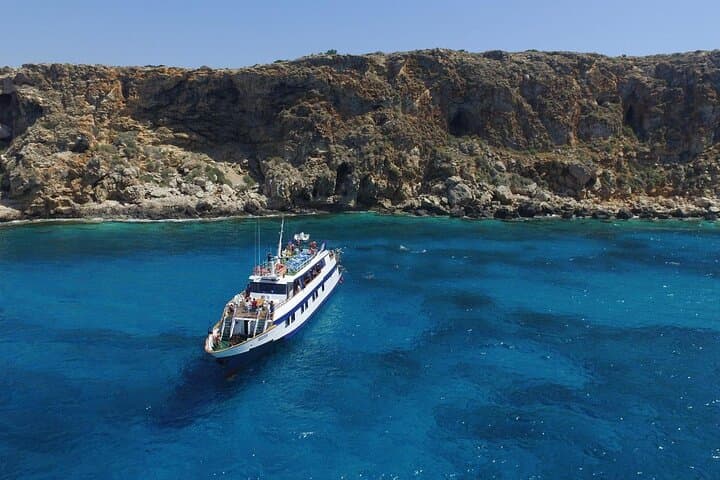
Heading east, the boat grazes red cliffs and the scrubby sprawl of Cape Pyla. Here, the sea dares you: jumps from the deck fall into calm turquoise pockets rimmed by stone. The captain eases toward coastal caves—natural amphitheaters cut by millennia of waves. Locals call one cluster Pirate Caves; in quieter seasons you can still imagine boats slipping inside to hide contraband centuries ago.
Cape Greco slices the horizon—its terraces of limestone and dolomite carved by wind and water. Along the way, the boat passes Love Bridge, a thin arch of rock framing open sea, then traces the coastline of Protaras toward Famagusta. From the water you get a brief, sobering view of the city’s fenced edges, a reminder of Cyprus’s modern history and the island’s political divide.
At midday the crew lays out a Cypriot buffet: grilled halloumi, lemony roast chicken, koupes and fresh salads—homemade flavors that taste like the island. The meal is more than fuel; it’s a chance to swap impressions with other travelers while the coastline keeps moving by.
Practicalities matter: the trip runs roughly five hours and combines open-deck cruising with two or three swim/snorkel stops. Snorkeling non-swimmers should remain cautious around the wreck and beware drop-offs. Bring reef-safe sunscreen, a mask, and a light jacket for the return run when the wind picks up. If you’re prone to seasickness, take a pill an hour before departure; the open Mediterranean can be calm one day and choppy the next.
The Odyssey Boat Safari is equal parts natural spectacle and island context—an efficient way to see Cyprus’s marine highlights in a single day, with enough time to swim, photograph, and learn a little history between stretches of sun and salt.
moderate.
5 hours.
Moderate fitness; able to climb steps on/off the boat, swim short distances, and handle brief standing periods on deck.
The full experience runs about five hours including sea stops and the onboard lunch.
Yes—there are shallow areas ideal for beginners, but strong swimmers will get better access; guides supervise but basic comfort in open water is recommended.
Yes, a Cypriot buffet and BBQ are provided around 13:00 with local salads, grilled meats and vegetarian options.
You step off the marble quay into a morning that smells of diesel and salt—Larnaca Marina framed by low white buildings, fishermen sorting nets, and a boat that already hums with the promise of offshore discovery. The Odyssey slips away from the harbor with a practiced ease. In an hour the shore becomes a thin line; the first stop is the Zenobia, a cargo ferry now arrested beneath clear blue water, its steel ribs home to schools of fish and the occasional curious diver.
Verified experiences and guided adventures in the surrounding area.
The boat approaches Famagusta for coastal views and commentary on the Ghost City but does not dock; passengers see the occupied city from the sea.
Families with older children typically find it suitable; younger kids should be strong swimmers or wear life jackets during swim stops.
Operators monitor conditions and may alter the route or cancel for safety; bring seasickness medication if you’re sensitive to motion.
The Zenobia sank in 1980 on her maiden voyage and has since become one of the Mediterranean’s most visited wrecks, drawing divers and marine researchers.
The area is ecologically sensitive—avoid touching the wreck or marine life, use reef‑safe products, and follow crew guidance to minimize impact.
You step off the marble quay into a morning that smells of diesel and salt—Larnaca Marina framed by low white buildings, fishermen sorting nets, and a boat that already hums with the promise of offshore discovery. The Odyssey slips away from the harbor with a practiced ease. In an hour the shore becomes a thin line; the first stop is the Zenobia, a cargo ferry now arrested beneath clear blue water, its steel ribs home to schools of fish and the occasional curious diver.
The day reads like a coastal primer: wreck, cliffs, caves, and a coastline that flips between honey-hued sandstone and rugged limestone. The Zenobia sank in 1980 and has since become one of the Mediterranean’s most accessible deep wrecks—part maritime history, part underwater classroom. From above, the hull outlines a ghostly presence; in the water it invites a different set of senses—the muted creak of steel and the vivid flash of parrotfish.
Heading east, the boat grazes red cliffs and the scrubby sprawl of Cape Pyla. Here, the sea dares you: jumps from the deck fall into calm turquoise pockets rimmed by stone. The captain eases toward coastal caves—natural amphitheaters cut by millennia of waves. Locals call one cluster Pirate Caves; in quieter seasons you can still imagine boats slipping inside to hide contraband centuries ago.
Cape Greco slices the horizon—its terraces of limestone and dolomite carved by wind and water. Along the way, the boat passes Love Bridge, a thin arch of rock framing open sea, then traces the coastline of Protaras toward Famagusta. From the water you get a brief, sobering view of the city’s fenced edges, a reminder of Cyprus’s modern history and the island’s political divide.
At midday the crew lays out a Cypriot buffet: grilled halloumi, lemony roast chicken, koupes and fresh salads—homemade flavors that taste like the island. The meal is more than fuel; it’s a chance to swap impressions with other travelers while the coastline keeps moving by.
Practicalities matter: the trip runs roughly five hours and combines open-deck cruising with two or three swim/snorkel stops. Snorkeling non-swimmers should remain cautious around the wreck and beware drop-offs. Bring reef-safe sunscreen, a mask, and a light jacket for the return run when the wind picks up. If you’re prone to seasickness, take a pill an hour before departure; the open Mediterranean can be calm one day and choppy the next.
The Odyssey Boat Safari is equal parts natural spectacle and island context—an efficient way to see Cyprus’s marine highlights in a single day, with enough time to swim, photograph, and learn a little history between stretches of sun and salt.