THE ADVENTURE COLLECTIVE® · Independent discovery and booking for outdoor travel

Small groups, a nimble skiff, and the open Pacific — this Oceanside open-boat whale watch prioritizes proximity and sightings. Expect up-close marine encounters, salt spray, and expert local guides on a 2.5-hour excursion.
Small groups, a nimble skiff, and the open Pacific — this Oceanside open-boat whale watch prioritizes proximity and sightings. Expect up-close marine encounters, salt spray, and expert local guides on a 2.5-hour excursion.
The bow cuts a clean line through cold Pacific air and spray; gulls wheel like loose punctuation above the harbor as the captain eases the throttle and the coastline thins into horizon.
Verified experiences and guided adventures in the surrounding area.
Operated by O’side whales · Oceanside, California
The bow cuts a clean line through cold Pacific air and spray; gulls wheel like loose punctuation above the harbor as the captain eases the throttle and the coastline thins into horizon.
Off Oceanside, the ocean feels intentionally alive — a moving stage where gray whales migrate, dolphins slice the swell, and kelp beds bob with hidden life. That close-quarters energy is exactly what small-group, open-boat trips deliver: a fast, stable skiff that chases sightings rather than drifting in crowds. The shoreline here is young geologically — uplifted marine terraces of Pliocene sandstone give way to sandy beaches and a working harbor shaped by 20th-century fishing and surf culture. The region sits on ancestral Luiseño territory; today local mariners and guides pass down observational knowledge about whale routes and seasonal patterns.
Expect binocular chatter, the thump of distant blows, and quick shifts from coastline views to open-ocean scanning. Tours run about 2.5 hours, and the best months align with California’s migratory windows: winter-spring for northbound calves and late-winter for southbound adults. Guides emphasize respectful viewing distance and NOAA guidelines; the goal is close-up observation without interrupting behavior.
Practical notes: layers and sun protection are nonnegotiable, and motion-sickness prep pays dividends on choppy days. Parking and restrooms are available at the harbor; groups are limited to six, so the experience is intimate but fills quickly. For photographers, a fast shutter and a 200–400mm lens handle most encounters. Arrive early, listen to your guide, and be ready to trade a calm shore morning for the unpredictable, thrilling motion of the open Pacific.
easy.
2–3 hours.
Light physical fitness; able to board a low-side skiff and stand for extended periods.
The departure is about 150 minutes (roughly 2.5 hours) from check-in to return to the harbor.
Yes—groups are limited to six passengers; infants must sit on laps and specialized infant seats are available.
Common sightings include migrating gray whales and Pacific common dolphins; seasonal sightings can include humpbacks and seabird flocks.
The tour is classified as easy but requires stepping into a low-side open skiff; it is not recommended for travelers with certain back or spinal conditions.
The Oceanside coast sits on lands historically used by the Luiseño people; 20th-century development turned the harbor into a mixed-use fishing and recreational port that still shapes local maritime culture.
Guides follow NOAA and state protocols to minimize disturbance to whales; visitors are encouraged to avoid single-use plastics and to support local marine conservation groups.
O’side whales operates guided outdoor trips and adventures with an emphasis on safety, stewardship, and memorable experiences.
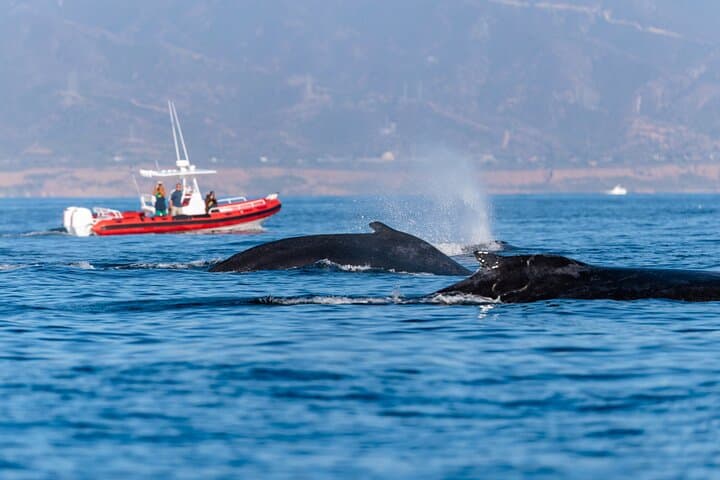
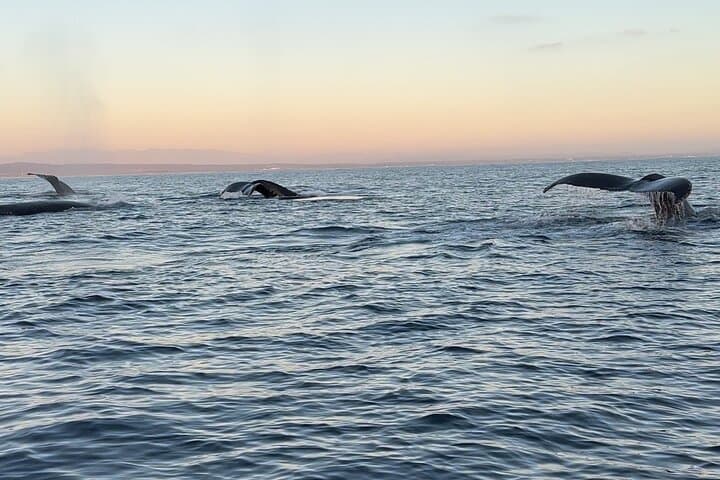
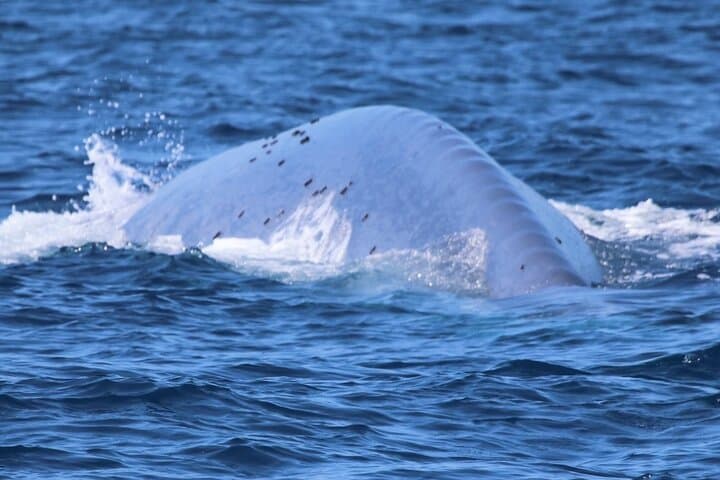
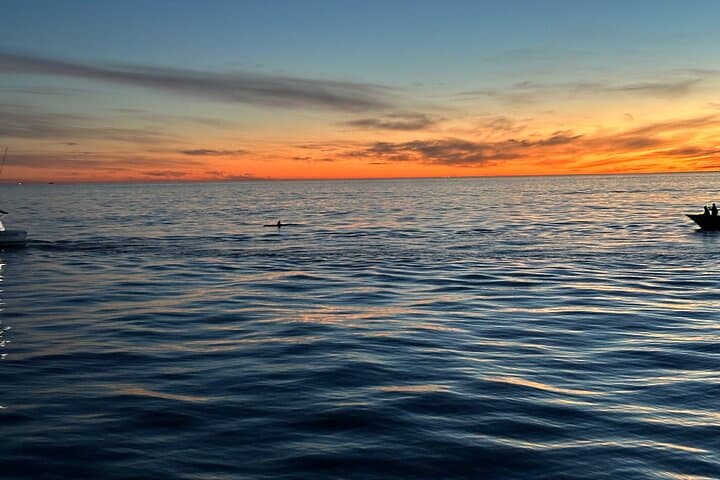
The bow cuts a clean line through cold Pacific air and spray; gulls wheel like loose punctuation above the harbor as the captain eases the throttle and the coastline thins into horizon.
The bow cuts a clean line through cold Pacific air and spray; gulls wheel like loose punctuation above the harbor as the captain eases the throttle and the coastline thins into horizon.
Off Oceanside, the ocean feels intentionally alive — a moving stage where gray whales migrate, dolphins slice the swell, and kelp beds bob with hidden life. That close-quarters energy is exactly what small-group, open-boat trips deliver: a fast, stable skiff that chases sightings rather than drifting in crowds. The shoreline here is young geologically — uplifted marine terraces of Pliocene sandstone give way to sandy beaches and a working harbor shaped by 20th-century fishing and surf culture. The region sits on ancestral Luiseño territory; today local mariners and guides pass down observational knowledge about whale routes and seasonal patterns.
Expect binocular chatter, the thump of distant blows, and quick shifts from coastline views to open-ocean scanning. Tours run about 2.5 hours, and the best months align with California’s migratory windows: winter-spring for northbound calves and late-winter for southbound adults. Guides emphasize respectful viewing distance and NOAA guidelines; the goal is close-up observation without interrupting behavior.
Practical notes: layers and sun protection are nonnegotiable, and motion-sickness prep pays dividends on choppy days. Parking and restrooms are available at the harbor; groups are limited to six, so the experience is intimate but fills quickly. For photographers, a fast shutter and a 200–400mm lens handle most encounters. Arrive early, listen to your guide, and be ready to trade a calm shore morning for the unpredictable, thrilling motion of the open Pacific.