THE ADVENTURE COLLECTIVE® · Independent discovery and booking for outdoor travel

Paddle out from Flamengo Beach into Guanabara Bay for close-up views of Sugarloaf, Christ the Redeemer and historic Urca. This three-hour guided sea kayak tour mixes coastal geology and city history with practical on‑water instruction.
Paddle out from Flamengo Beach into Guanabara Bay for close-up views of Sugarloaf, Christ the Redeemer and historic Urca. This three-hour guided sea kayak tour mixes coastal geology and city history with practical on‑water instruction.
You push off from the sand at Praia do Flamengo with the city unfolding around you: Sugarloaf looms to starboard, the Christ the Redeemer silhouette creeps over forested ridgelines, and the long arc of the Rio–Niterói Bridge cuts the horizon.
Verified experiences and guided adventures in the surrounding area.
Operated by Rio Montanha · Rio de Janeiro, Rio de Janeiro
You push off from the sand at Praia do Flamengo with the city unfolding around you: Sugarloaf looms to starboard, the Christ the Redeemer silhouette creeps over forested ridgelines, and the long arc of the Rio–Niterói Bridge cuts the horizon.
This three‑hour sea kayaking loop through Guanabara Bay threads together geology and history—granite monoliths like Pão de Açúcar were sculpted by ancient uplift and erosion, while colonial-era forts and old Urca buildings map the bay’s strategic past. The water here has always been a working landscape: fishermen, ferries and the naval forts that once guarded the harbor leave visible traces along the breakwaters.
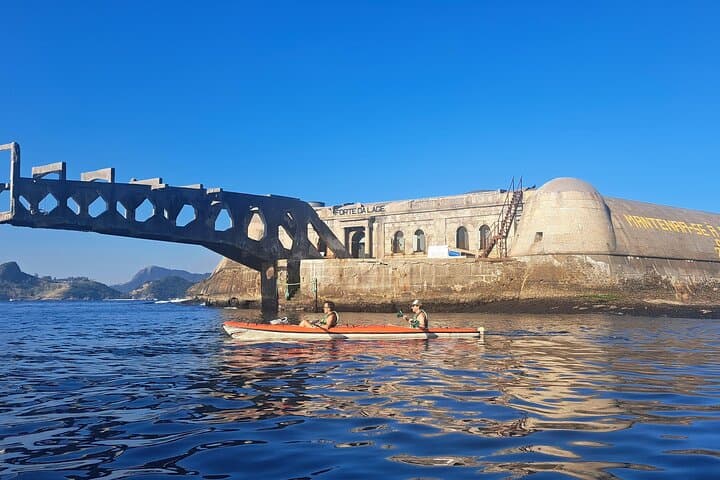
Culturally the outing is as much urban as wild. Paddling past Praia da Urca and the Tamandaré Laje Fort gives a close-up of neighborhoods where Carioca life meets the sea: fishermen hauling nets, anglers on the seawall and joggers on Aterro do Flamengo.
Practically, the operator begins with 15–20 minutes of instruction on basic strokes, re‑entry and safety; swimmers only. Expect exposed bay conditions—wind chop and boat traffic—so timing matters. Bring reef‑safe sunscreen, a dry bag, and a charged phone in waterproof case. Plan for early morning or late afternoon to avoid peak sun and ferry traffic; tours are weather‑dependent and cancel if conditions are unsafe. For paddlers with moderate fitness and basic technique, the route is a rewarding way to see Rio from water level—intimate, active and unmistakably urban.
moderate.
3 hours.
Moderate level of fitness — able to paddle continuously for stretches and re‑enter a kayak if needed
Beginners can join—guides provide 15–20 minutes of instruction—but participants must be comfortable swimming and following safety directions.
Meet at Praia do Flamengo near the designated launch spot; organizers typically ask you to arrive 10 minutes early.
Tours are weather‑dependent and will be cancelled for high winds, heavy rain or unsafe sea conditions; check cancellation policy for refund deadlines.
Yes—kayaks, paddles, PFDs and basic safety gear are provided; bring your own dry bag and sun protection.
Guanabara Bay has been a strategic harbor since colonial times; forts around Urca and Ilha Fiscal reflect its military and trade importance.
Water quality in the bay has improved but remains sensitive—use reef‑safe products, avoid littering and respect restricted areas and marine life.
Rio Montanha operates guided outdoor trips and adventures with an emphasis on safety, stewardship, and memorable experiences.
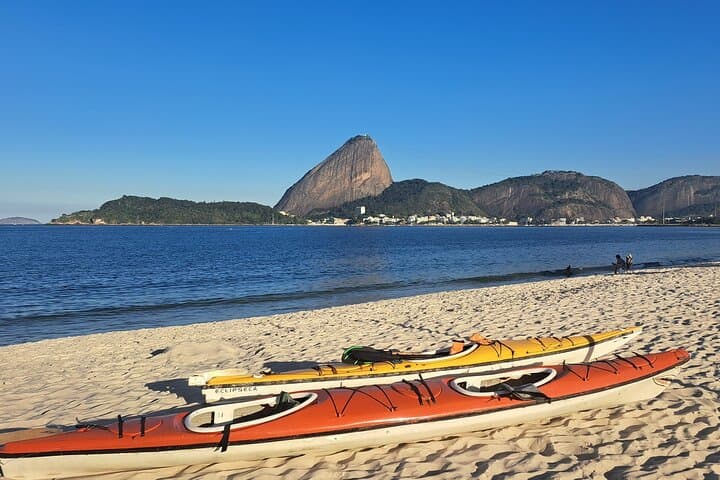
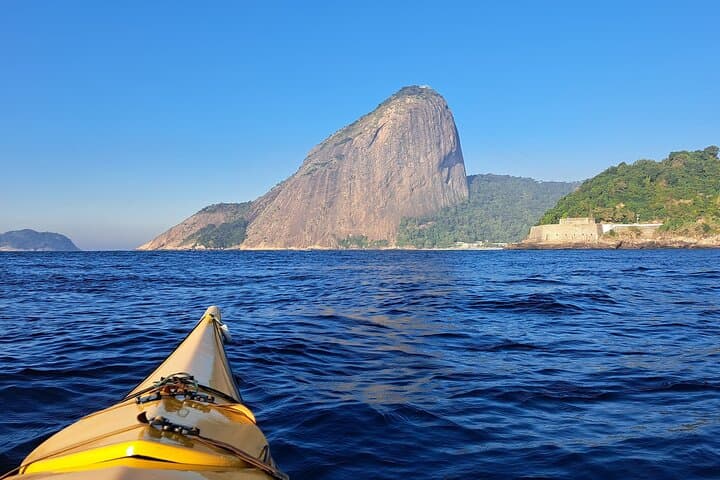
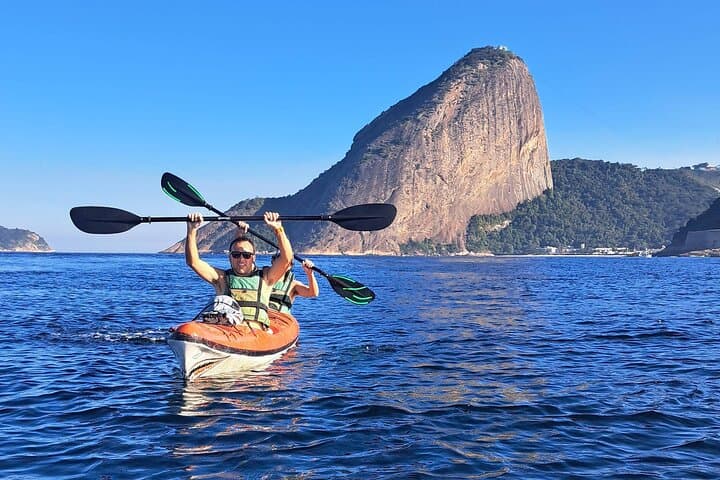
You push off from the sand at Praia do Flamengo with the city unfolding around you: Sugarloaf looms to starboard, the Christ the Redeemer silhouette creeps over forested ridgelines, and the long arc of the Rio–Niterói Bridge cuts the horizon.
You push off from the sand at Praia do Flamengo with the city unfolding around you: Sugarloaf looms to starboard, the Christ the Redeemer silhouette creeps over forested ridgelines, and the long arc of the Rio–Niterói Bridge cuts the horizon.
This three‑hour sea kayaking loop through Guanabara Bay threads together geology and history—granite monoliths like Pão de Açúcar were sculpted by ancient uplift and erosion, while colonial-era forts and old Urca buildings map the bay’s strategic past. The water here has always been a working landscape: fishermen, ferries and the naval forts that once guarded the harbor leave visible traces along the breakwaters.
Culturally the outing is as much urban as wild. Paddling past Praia da Urca and the Tamandaré Laje Fort gives a close-up of neighborhoods where Carioca life meets the sea: fishermen hauling nets, anglers on the seawall and joggers on Aterro do Flamengo.
Practically, the operator begins with 15–20 minutes of instruction on basic strokes, re‑entry and safety; swimmers only. Expect exposed bay conditions—wind chop and boat traffic—so timing matters. Bring reef‑safe sunscreen, a dry bag, and a charged phone in waterproof case. Plan for early morning or late afternoon to avoid peak sun and ferry traffic; tours are weather‑dependent and cancel if conditions are unsafe. For paddlers with moderate fitness and basic technique, the route is a rewarding way to see Rio from water level—intimate, active and unmistakably urban.