THE ADVENTURE COLLECTIVE® · Independent discovery and booking for outdoor travel

Move through Óbidos at your own pace with a smartphone audio guide that maps a concise 90‑minute route. See the castle, gates, churches, and the medieval main street while hearing local history from a professional narrator.
Move through Óbidos at your own pace with a smartphone audio guide that maps a concise 90‑minute route. See the castle, gates, churches, and the medieval main street while hearing local history from a professional narrator.
A narrow lane opens under the stone arch of Porta da Vila and the town exhales its centuries: whitewashed houses, hand-painted azulejos, and the thud of cobbles underfoot. Follow the app’s map and the audio guide will lead you, at your own pace, from the gate up to the battlements of Óbidos Castle, stopping for stories at churches, aqueduct arches, and the small squares where locals sip Ginja.
Verified experiences and guided adventures in the surrounding area.
Operated by TouringBee · Óbidos, Leiria
A narrow lane opens under the stone arch of Porta da Vila and the town exhales its centuries: whitewashed houses, hand-painted azulejos, and the thud of cobbles underfoot. Follow the app’s map and the audio guide will lead you, at your own pace, from the gate up to the battlements of Óbidos Castle, stopping for stories at churches, aqueduct arches, and the small squares where locals sip Ginja.
Óbidos sits on a limestone ridge above agricultural plains carved by Pleistocene rivers; its medieval walls and 12th-century castle reflect strategic shifts from Moorish to Christian control. The town keeps craft traditions alive — tiles, woodwork, and the seasonal Medieval Market — while museums housed in former convents explain daily life across centuries.
The route highlights Porta da Vila, Rua Direita with its tilework and shops, St. Mary’s Church with its famous azulejos, and the Usseira Aqueduct’s Renaissance arches. Short detours reward quiet viewpoints and the Baloiço (swing) overlooking the valley.
Practical guidance: the tour is ~90 minutes on cobbled streets — wear sturdy shoes and bring a charged phone and headphones. Download the audio files beforehand to use offline; museum entrances aren’t included so reserve tickets if you plan to enter. Early morning or late afternoon offers softer light and fewer crowds; mid-summer can be hot and exposed, so carry water and sun protection. This self-guided format gives historical depth without the pace of a group, ideal for travellers who want flexibility while covering Óbidos’ essential sites.
easy.
1.5 hours.
Suitable for most fitness levels; expect light walking on uneven cobbles and short climbs to the castle ramparts.
No — once downloaded the audio guide and the route work offline; download over Wi‑Fi before you arrive.
No — museum and castle entries are generally not included and should be purchased separately or on site where available.
Yes — the audio guide is self‑paced and accessible any time within your one‑year access period, though listed duration is about 90 minutes.
Many streets are narrow and cobbled with steps in places; some sections are challenging for strollers or wheelchairs—check individual site access in advance.
Óbidos’ walls and castle date mainly to the 12th century when the town was fortified; Igreja de Santa Maria hosted the 1387 royal wedding of King João I and Philippa of Lancaster.
Heavy foot traffic and souvenir-driven waste can stress narrow streets and historic fabric; stick to marked paths, avoid leaning or climbing on fragile masonry, and support local artisans responsibly.
TouringBee operates guided outdoor trips and adventures with an emphasis on safety, stewardship, and memorable experiences.

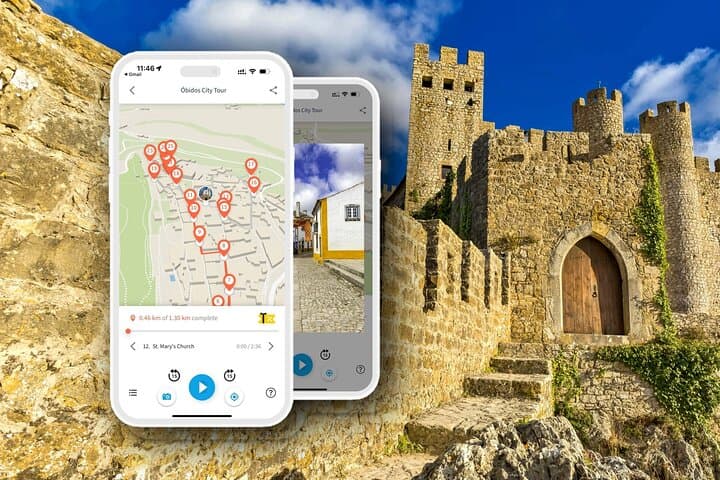


A narrow lane opens under the stone arch of Porta da Vila and the town exhales its centuries: whitewashed houses, hand-painted azulejos, and the thud of cobbles underfoot. Follow the app’s map and the audio guide will lead you, at your own pace, from the gate up to the battlements of Óbidos Castle, stopping for stories at churches, aqueduct arches, and the small squares where locals sip Ginja.
A narrow lane opens under the stone arch of Porta da Vila and the town exhales its centuries: whitewashed houses, hand-painted azulejos, and the thud of cobbles underfoot. Follow the app’s map and the audio guide will lead you, at your own pace, from the gate up to the battlements of Óbidos Castle, stopping for stories at churches, aqueduct arches, and the small squares where locals sip Ginja.
Óbidos sits on a limestone ridge above agricultural plains carved by Pleistocene rivers; its medieval walls and 12th-century castle reflect strategic shifts from Moorish to Christian control. The town keeps craft traditions alive — tiles, woodwork, and the seasonal Medieval Market — while museums housed in former convents explain daily life across centuries.
The route highlights Porta da Vila, Rua Direita with its tilework and shops, St. Mary’s Church with its famous azulejos, and the Usseira Aqueduct’s Renaissance arches. Short detours reward quiet viewpoints and the Baloiço (swing) overlooking the valley.
Practical guidance: the tour is ~90 minutes on cobbled streets — wear sturdy shoes and bring a charged phone and headphones. Download the audio files beforehand to use offline; museum entrances aren’t included so reserve tickets if you plan to enter. Early morning or late afternoon offers softer light and fewer crowds; mid-summer can be hot and exposed, so carry water and sun protection. This self-guided format gives historical depth without the pace of a group, ideal for travellers who want flexibility while covering Óbidos’ essential sites.