THE ADVENTURE COLLECTIVE® · Independent discovery and booking for outdoor travel

Travel from Oaxaca City to the artisan palenques of Matatlán for a full‑day immersion in mezcal production, agave fields and optional weaving demonstrations in Teotitlán del Valle. Learn traditional distillation, taste diverse mezcal expressions, and gain cultural context for this iconic Oaxacan spirit.
Travel from Oaxaca City to the artisan palenques of Matatlán for a full‑day immersion in mezcal production, agave fields and optional weaving demonstrations in Teotitlán del Valle. Learn traditional distillation, taste diverse mezcal expressions, and gain cultural context for this iconic Oaxacan spirit.
Morning light leaves Oaxaca City and the highway narrows into agave country as you drive 45 km to Santiago Matatlán. The air changes — smoke from underground pits and the sweet, resinous perfume of cooked agave follow you into a palenque where copper stills huff and local distillers explain each measured step.
Verified experiences and guided adventures in the surrounding area.
Operated by Circuitos por México · Oaxaca City, Oaxaca
Morning light leaves Oaxaca City and the highway narrows into agave country as you drive 45 km to Santiago Matatlán. The air changes — smoke from underground pits and the sweet, resinous perfume of cooked agave follow you into a palenque where copper stills huff and local distillers explain each measured step.
This region sits on volcanic‑rich soils of the Sierra Sur and Sierra Madre de Oaxaca foothills; mineral content and microclimates shape distinct mezcal profiles. Matatlán is a living workshop of family palenques where centuries‑old techniques — pit-roasting, tahona crushing, open‑fermentation and small copper distillation — remain central. If time allows, a 20 km detour brings you to Teotitlán del Valle to watch natural dyes and back‑strap looms that illustrate Oaxaca’s broader artisanal heritage.
Expect about 7–8 hours on the road with two 60‑minute stops in palenque and fields and an optional 90‑minute visit to Teotitlán. There’s a short additional fee for agave‑truck access to some fields (usually around $12 USD per person). Tastings are guided; vendors often offer bottles for purchase and you’ll leave with a clearer palate and stories about mezcal’s role in festivals, healing rites and community life.
Practical tips: start mid‑morning to avoid early fog, bring a reusable water bottle and sun protection, and wear closed shoes for uneven courtyards. Respect tasting portions, ask about provenance, and keep bottle receipts for transport home. This is cultural travel with an outdoor rhythm — attentive, sensory and straightforward.
easy.
7–8 hours.
Light activity; suitable for all fitness levels with short walks and standing during tastings
The tour lasts about 7–8 hours (420–480 minutes), including palenque visits, agave fields and optional Teotitlán del Valle stop.
Yes — private transportation is included and picks up from central Oaxaca meeting points or arranged hotels.
Guided tastings are part of the visit; participants must be of legal drinking age (18+ in Mexico) to taste.
Some fields charge a small additional fee for truck access (typically around $12 USD per person); confirm with your operator before departure.
Mezcal production in the Oaxaca valley predates Spanish contact; indigenous processing methods blended over centuries with introduced distillation to create modern mezcal traditions.
Many producers practice small‑scale, regenerative agave farming and rotational harvests; travelers should avoid buying bottles without clear provenance to discourage unsustainable wild maguey harvesting.
Circuitos por México operates guided outdoor trips and adventures with an emphasis on safety, stewardship, and memorable experiences.
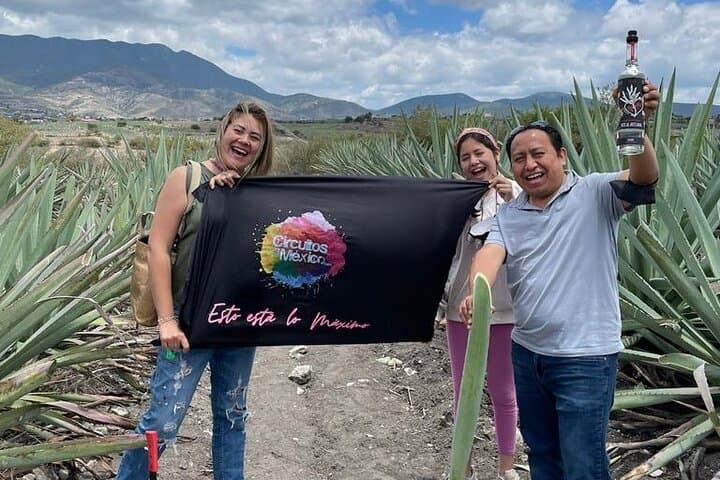
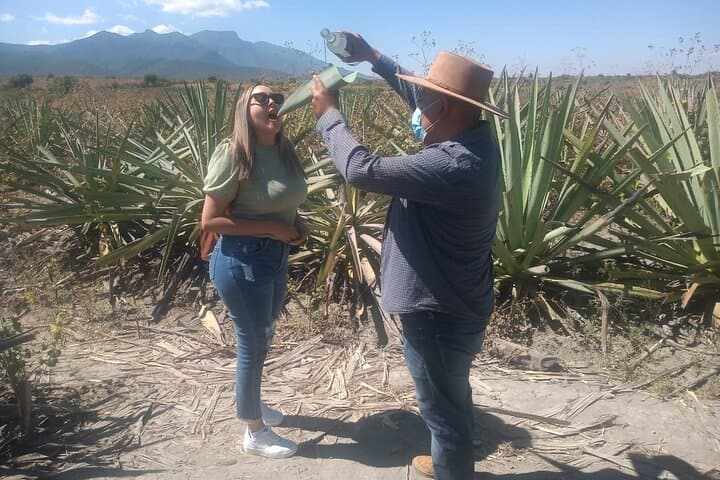
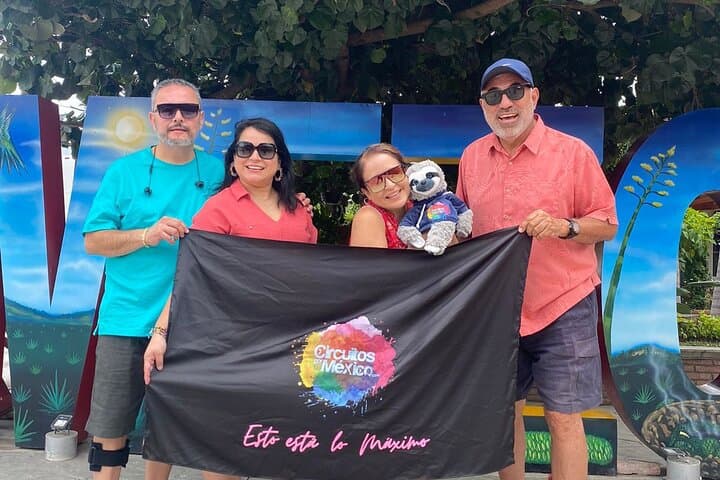
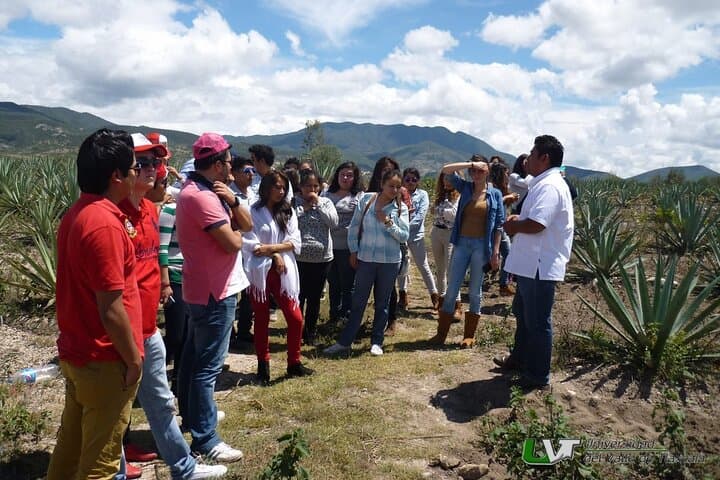
Morning light leaves Oaxaca City and the highway narrows into agave country as you drive 45 km to Santiago Matatlán. The air changes — smoke from underground pits and the sweet, resinous perfume of cooked agave follow you into a palenque where copper stills huff and local distillers explain each measured step.
Morning light leaves Oaxaca City and the highway narrows into agave country as you drive 45 km to Santiago Matatlán. The air changes — smoke from underground pits and the sweet, resinous perfume of cooked agave follow you into a palenque where copper stills huff and local distillers explain each measured step.
This region sits on volcanic‑rich soils of the Sierra Sur and Sierra Madre de Oaxaca foothills; mineral content and microclimates shape distinct mezcal profiles. Matatlán is a living workshop of family palenques where centuries‑old techniques — pit-roasting, tahona crushing, open‑fermentation and small copper distillation — remain central. If time allows, a 20 km detour brings you to Teotitlán del Valle to watch natural dyes and back‑strap looms that illustrate Oaxaca’s broader artisanal heritage.
Expect about 7–8 hours on the road with two 60‑minute stops in palenque and fields and an optional 90‑minute visit to Teotitlán. There’s a short additional fee for agave‑truck access to some fields (usually around $12 USD per person). Tastings are guided; vendors often offer bottles for purchase and you’ll leave with a clearer palate and stories about mezcal’s role in festivals, healing rites and community life.
Practical tips: start mid‑morning to avoid early fog, bring a reusable water bottle and sun protection, and wear closed shoes for uneven courtyards. Respect tasting portions, ask about provenance, and keep bottle receipts for transport home. This is cultural travel with an outdoor rhythm — attentive, sensory and straightforward.