THE ADVENTURE COLLECTIVE® · Independent discovery and booking for outdoor travel

Walk the streets that shaped Oasis: a two-hour, insider-led tour of rehearsal rooms, favourite pubs and iconic venues in central Manchester. Expect local stories, urban history and plenty of photo stops.
Walk the streets that shaped Oasis: a two-hour, insider-led tour of rehearsal rooms, favourite pubs and iconic venues in central Manchester. Expect local stories, urban history and plenty of photo stops.
You step off the tram into a Manchester drizzle that never feels like an apology — it feels like a setting. On this two-hour walking tour, a local guide folds you into the city’s narrow streets, past terracotta facades and converted cotton warehouses where percussion and protest once shared the same air. Photograph-ready corners appear as you pass rehearsal rooms, former pubs and the concrete outlines of venues that shaped Britpop.
Verified experiences and guided adventures in the surrounding area.
Operated by The Ultimate Manchester Free Walking Tour · Manchester, Greater Manchester
You step off the tram into a Manchester drizzle that never feels like an apology — it feels like a setting. On this two-hour walking tour, a local guide folds you into the city’s narrow streets, past terracotta facades and converted cotton warehouses where percussion and protest once shared the same air. Photograph-ready corners appear as you pass rehearsal rooms, former pubs and the concrete outlines of venues that shaped Britpop.
Manchester’s story is as physical as its music: Victorian mills and the cotton trade made the city wealthy, and that industrial backbone provided the stages and spaces where local bands could rehearse and collide. By the late 1980s and early 1990s Manchester’s clubs and rehearsal spaces birthed the sounds that fed Oasis and their peers — a cultural moment rooted in working-class neighborhoods and amplified on international stages.
The tour moves at an easy pace, balancing anecdotes about the Gallagher brothers with site-specific history: former music venues, a civic square linked to reform movements, and the listed buildings that now house bars, galleries and music shops. Expect stories about specific songs, places where band members lived and worked, and chances to see signed instruments or album-era props when available.
Practical guidance: wear grippy shoes for uneven pavements, bring a compact rain layer, and plan to arrive by public transit — central Manchester is well-connected. The route is low-impact and accessible, making it a good fit for music fans who want context as much as photo ops.
easy.
2 hours.
Suitable for most fitness levels — mostly flat, urban walking over paved surfaces.
Tours meet in central Manchester near a major tram or train hub — check your confirmation for the exact meeting point, which is typically within a short walk of Piccadilly or Victoria.
Yes — the operator lists wheelchair and stroller accessibility, with paved routes and transport options that can accommodate mobility needs; contact the provider for specifics.
Yes — the tour is family-friendly and suitable for all ages, though check for child ticketing rules when booking as some operators limit group size.
Photography is allowed at most public sites; be respectful inside any venues or private properties and follow your guide’s instructions regarding memorabilia and private items.
Manchester’s industrial-era mills and cotton warehouses fueled both economic growth and a rich urban culture; the city’s clubs and rehearsal spaces in the 1980s–90s incubated bands like Oasis.
Respect lived-in neighbourhoods and private properties; support local music shops and venues and avoid touching displayed memorabilia unless invited.
The Ultimate Manchester Free Walking Tour operates guided outdoor trips and adventures with an emphasis on safety, stewardship, and memorable experiences.
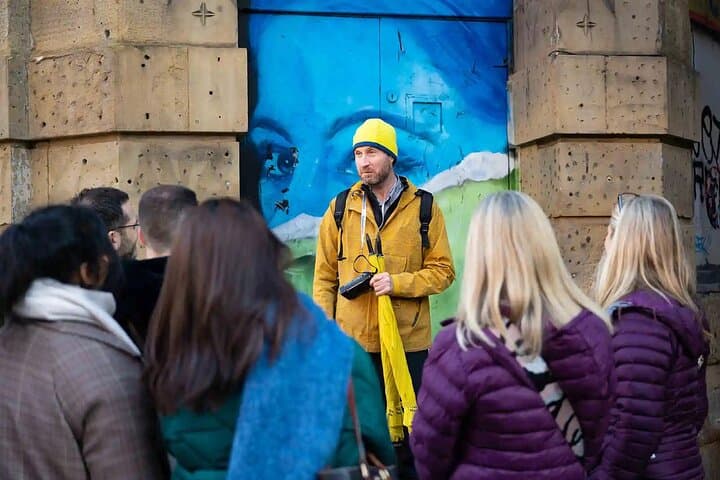
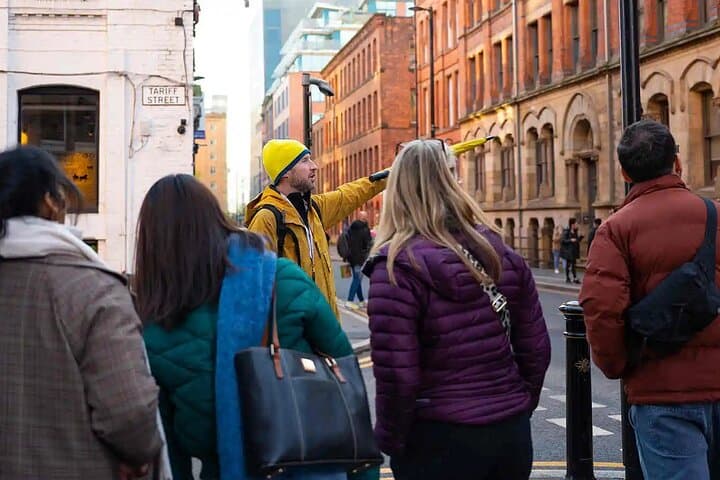

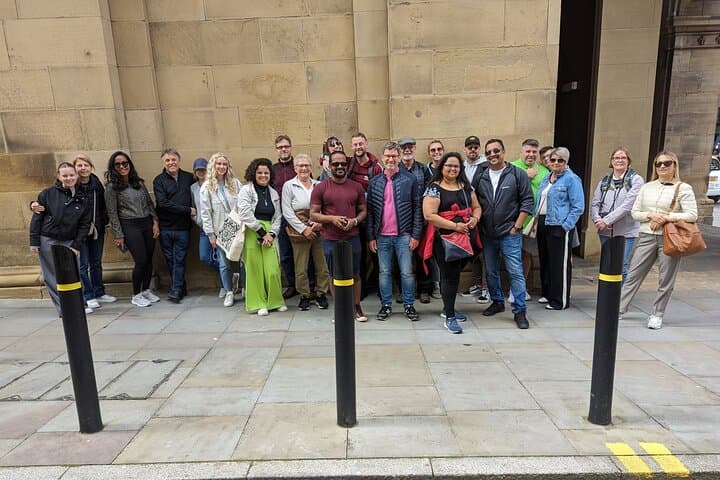
You step off the tram into a Manchester drizzle that never feels like an apology — it feels like a setting. On this two-hour walking tour, a local guide folds you into the city’s narrow streets, past terracotta facades and converted cotton warehouses where percussion and protest once shared the same air. Photograph-ready corners appear as you pass rehearsal rooms, former pubs and the concrete outlines of venues that shaped Britpop.
You step off the tram into a Manchester drizzle that never feels like an apology — it feels like a setting. On this two-hour walking tour, a local guide folds you into the city’s narrow streets, past terracotta facades and converted cotton warehouses where percussion and protest once shared the same air. Photograph-ready corners appear as you pass rehearsal rooms, former pubs and the concrete outlines of venues that shaped Britpop.
Manchester’s story is as physical as its music: Victorian mills and the cotton trade made the city wealthy, and that industrial backbone provided the stages and spaces where local bands could rehearse and collide. By the late 1980s and early 1990s Manchester’s clubs and rehearsal spaces birthed the sounds that fed Oasis and their peers — a cultural moment rooted in working-class neighborhoods and amplified on international stages.
The tour moves at an easy pace, balancing anecdotes about the Gallagher brothers with site-specific history: former music venues, a civic square linked to reform movements, and the listed buildings that now house bars, galleries and music shops. Expect stories about specific songs, places where band members lived and worked, and chances to see signed instruments or album-era props when available.
Practical guidance: wear grippy shoes for uneven pavements, bring a compact rain layer, and plan to arrive by public transit — central Manchester is well-connected. The route is low-impact and accessible, making it a good fit for music fans who want context as much as photo ops.