THE ADVENTURE COLLECTIVE® · Independent discovery and booking for outdoor travel

Explore Kaymaklı’s underground chambers, hike 3.8 km along Ihlara Canyon’s river, and visit the cathedral-size Selime Monastery on a packed 6–8 hour small-group tour—ideal for travelers who want geology, history and accessible adventure in one day.
Explore Kaymaklı’s underground chambers, hike 3.8 km along Ihlara Canyon’s river, and visit the cathedral-size Selime Monastery on a packed 6–8 hour small-group tour—ideal for travelers who want geology, history and accessible adventure in one day.
You step out of the minivan as wind and sun meet the volcanic spires of Cappadocia; the day unfurls in layered light across soft tuff and scrub. First, descending into Kaymaklı’s carved rooms, the cool, narrow tunnels seem to breathe with centuries of refuge—stone stairwells, storage niches and ventilation shafts telling a story of survival.
Verified experiences and guided adventures in the surrounding area.
Operated by Pupa Travel · Göreme, Nevşehir
You step out of the minivan as wind and sun meet the volcanic spires of Cappadocia; the day unfurls in layered light across soft tuff and scrub. First, descending into Kaymaklı’s carved rooms, the cool, narrow tunnels seem to breathe with centuries of refuge—stone stairwells, storage niches and ventilation shafts telling a story of survival.
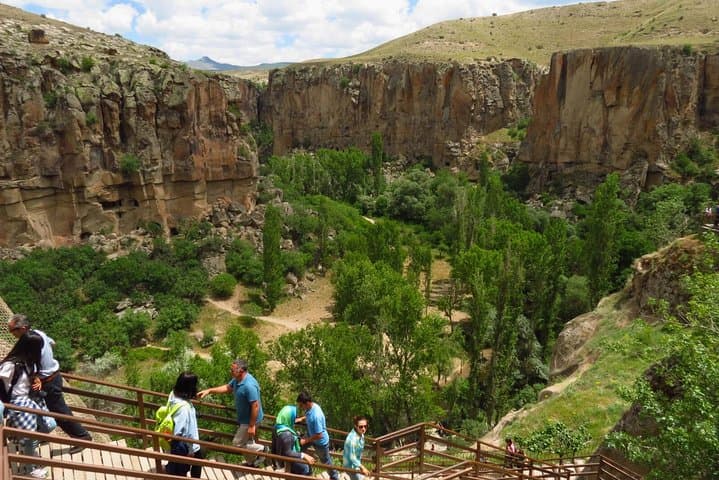
The route moves east to Nar Lake for a quick photo pause, then down into Ihlara Canyon: a river dares you forward through shade and planes of basalt and tuff. The advertised 3.8 km riverside hike follows a cool microclimate where hundreds of plant species find shelter in the canyon’s lee. Selime Monastery crowns the valley with a cathedral-scale church hollowed from rock; nearby, the Sarihan Caravanserai recalls the medieval Silk Road cadence of merchants and camels.
Geology here is blunt and readable—millions of years of ash and erosion forming valleys, fairy chimneys and underground refuges that amazed successive civilizations. Culture threads from early Christian frescoes in cave churches to Ottoman caravanserais; guides typically explain how communities adapted to a landscape that both protects and exposes.
Practical edge: expect a 6–8 hour day with periods of walking, stairs and loose rock. Wear grippy hiking shoes, bring 1.5–2 liters of water, sun protection and layered clothing for shifting canyon temperatures. Mobility limitations and pregnancy are not recommended for this itinerary due to stairs in underground cities and uneven canyon trails. Morning light is best for photos and cooler hiking; the guide provides local context and handles entry logistics so you can focus on the terrain and the history underfoot.
moderate.
6–8 hours.
Suitable for travellers with regular fitness who can manage stairs, uneven trail and a 3.8 km riverside walk.
The tour includes about 3.8 km of mostly flat riverside walking with some steps; overall the day is moderate, suitable for most active travelers.
Yes—Kaymaklı has narrow stairways and low ceilings in places; anyone with serious spine or mobility issues should avoid entering.
Lunch is included; inform your operator of dietary requirements at booking so they can arrange suitable options.
Pickup times vary by hotel location and are confirmed the day before; be ready at reception five minutes before the assigned pickup.
Cappadocia’s cave dwellings and underground cities were developed over millennia as shelter and monastic centers; Selime’s monastery is a major medieval rock-cut complex.
Erosion and visitor traffic affect fragile tuff formations and frescoes; stick to marked paths, avoid touching rock-cut art and follow guide instructions to minimize impact.
Pupa Travel operates guided outdoor trips and adventures with an emphasis on safety, stewardship, and memorable experiences.



You step out of the minivan as wind and sun meet the volcanic spires of Cappadocia; the day unfurls in layered light across soft tuff and scrub. First, descending into Kaymaklı’s carved rooms, the cool, narrow tunnels seem to breathe with centuries of refuge—stone stairwells, storage niches and ventilation shafts telling a story of survival.
You step out of the minivan as wind and sun meet the volcanic spires of Cappadocia; the day unfurls in layered light across soft tuff and scrub. First, descending into Kaymaklı’s carved rooms, the cool, narrow tunnels seem to breathe with centuries of refuge—stone stairwells, storage niches and ventilation shafts telling a story of survival.
The route moves east to Nar Lake for a quick photo pause, then down into Ihlara Canyon: a river dares you forward through shade and planes of basalt and tuff. The advertised 3.8 km riverside hike follows a cool microclimate where hundreds of plant species find shelter in the canyon’s lee. Selime Monastery crowns the valley with a cathedral-scale church hollowed from rock; nearby, the Sarihan Caravanserai recalls the medieval Silk Road cadence of merchants and camels.
Geology here is blunt and readable—millions of years of ash and erosion forming valleys, fairy chimneys and underground refuges that amazed successive civilizations. Culture threads from early Christian frescoes in cave churches to Ottoman caravanserais; guides typically explain how communities adapted to a landscape that both protects and exposes.
Practical edge: expect a 6–8 hour day with periods of walking, stairs and loose rock. Wear grippy hiking shoes, bring 1.5–2 liters of water, sun protection and layered clothing for shifting canyon temperatures. Mobility limitations and pregnancy are not recommended for this itinerary due to stairs in underground cities and uneven canyon trails. Morning light is best for photos and cooler hiking; the guide provides local context and handles entry logistics so you can focus on the terrain and the history underfoot.