THE ADVENTURE COLLECTIVE® · Independent discovery and booking for outdoor travel

Drop to a 100‑foot wreck in the blue and surface among colorful reef fish on a small-group Oahu dive. This guided outing pairs deeper wreck work with a shallower reef second dive—ideal for experienced, certified divers who want pelagics and structure exploration.
Drop to a 100‑foot wreck in the blue and surface among colorful reef fish on a small-group Oahu dive. This guided outing pairs deeper wreck work with a shallower reef second dive—ideal for experienced, certified divers who want pelagics and structure exploration.
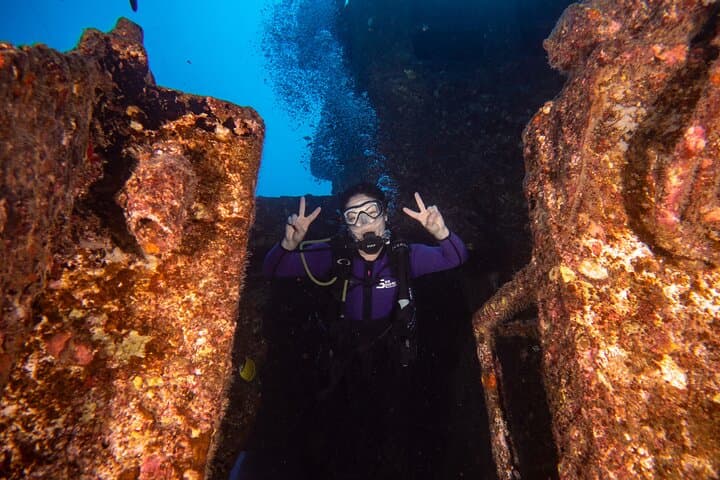
The boat rocks gently as the harbor light slides past—crew checking tanks, fins stacked like silent oars, and the ocean opening beyond the breakwater. By the time you clear the shoreline the water has a different vocabulary: a deeper blue that dares you to look down. On this small-group deep dive the first descent often drops toward a shipwreck at roughly 100 feet, where the hull collects shadow and life; the second dive eases you into a coral reef at 40–60 feet, bright with parrotfish and stony coral.
Verified experiences and guided adventures in the surrounding area.
Operated by Hawaiian Diving Adventures · Honolulu, Hawaii
The boat rocks gently as the harbor light slides past—crew checking tanks, fins stacked like silent oars, and the ocean opening beyond the breakwater. By the time you clear the shoreline the water has a different vocabulary: a deeper blue that dares you to look down. On this small-group deep dive the first descent often drops toward a shipwreck at roughly 100 feet, where the hull collects shadow and life; the second dive eases you into a coral reef at 40–60 feet, bright with parrotfish and stony coral.
Geologically, Oahu is an eroded volcanic shield; reefs form on lava flows and submerged structures, and wrecks quickly become artificial reefs—attracting pelagics and resident fish alike. Many wrecks in Hawaiian waters date from mid‑20th century shipping and wartime losses; today they’re part historical artifact, part habitat. Local dive culture emphasizes respect for the ocean—briefings cover reef etiquette and safety before every trip.
Practical guidance: expect a 3–4 hour outing from harbor meet-up, with boat entries and exits. This trip requires certified divers (advanced or 25 logged dives preferred) and good buoyancy at depth. Plan for a pre-dive health questionnaire, avoid flying for 18 hours after diving, and hydrate well—surface time after the deep dive matters. Bring a dive computer, logbook and certification card, and a reliable mask; wear a 2–3mm wetsuit or rash guard for comfort. Currents and visibility vary—early morning departures often offer calmer seas and better light for deeper profiles.
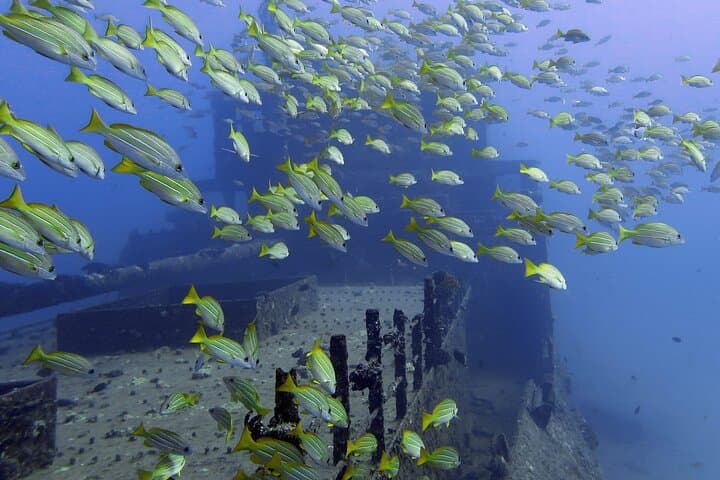
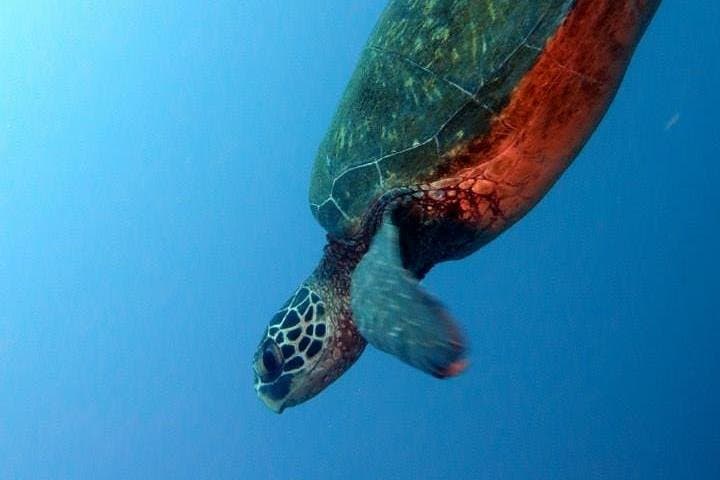
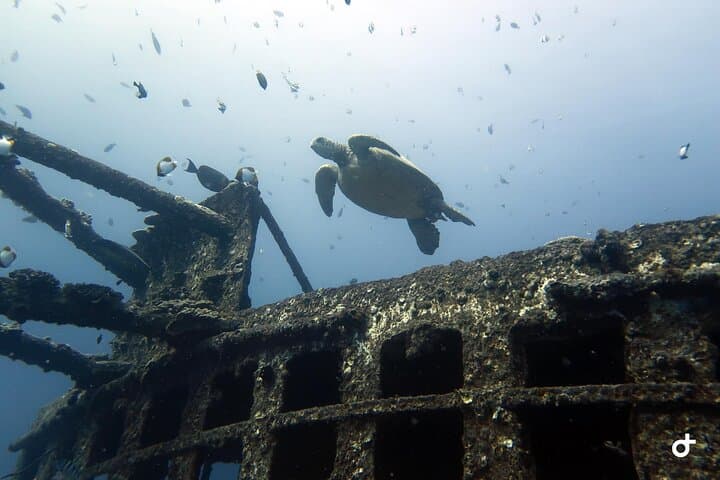
The experience balances technical depth with reef sightings: expect turtles, reef sharks, and dense schools around wreck structure, all guided with safety and conservation front of mind.
challenging.
3–4 hours.
Moderate to strong cardiovascular fitness; comfortable with boat entries and managing heavy gear, and able to perform controlled ascents.
Yes—the operator requires advanced certification or approximately 25 logged dives due to depths near 100 ft and the need for strong buoyancy skills.
Typical profiles start with a wreck around 100 ft (30 m) and a second reef dive between 40–60 ft (12–18 m), though exact depths vary by site and conditions.
No—flying within 18 hours of diving is not recommended; follow your dive computer and operator guidance to avoid decompression risk.
Expect green sea turtles (honu), reef sharks, schools of trevally and snapper, and a variety of reef fish attracted to wreck structure; pelagic sightings are more likely on deeper wrecks.
Wrecks off Oahu include mid‑20th century and wartime losses that have since become artificial reefs; the islands’ volcanic origin provides the underlying substrate for coral growth.
Use reef‑safe sunscreen, avoid touching or finning near coral and historical structures, and follow dive briefings to minimize disturbance to marine life.
Hawaiian Diving Adventures operates guided outdoor trips and adventures with an emphasis on safety, stewardship, and memorable experiences.
The boat rocks gently as the harbor light slides past—crew checking tanks, fins stacked like silent oars, and the ocean opening beyond the breakwater. By the time you clear the shoreline the water has a different vocabulary: a deeper blue that dares you to look down. On this small-group deep dive the first descent often drops toward a shipwreck at roughly 100 feet, where the hull collects shadow and life; the second dive eases you into a coral reef at 40–60 feet, bright with parrotfish and stony coral.
The boat rocks gently as the harbor light slides past—crew checking tanks, fins stacked like silent oars, and the ocean opening beyond the breakwater. By the time you clear the shoreline the water has a different vocabulary: a deeper blue that dares you to look down. On this small-group deep dive the first descent often drops toward a shipwreck at roughly 100 feet, where the hull collects shadow and life; the second dive eases you into a coral reef at 40–60 feet, bright with parrotfish and stony coral.
Geologically, Oahu is an eroded volcanic shield; reefs form on lava flows and submerged structures, and wrecks quickly become artificial reefs—attracting pelagics and resident fish alike. Many wrecks in Hawaiian waters date from mid‑20th century shipping and wartime losses; today they’re part historical artifact, part habitat. Local dive culture emphasizes respect for the ocean—briefings cover reef etiquette and safety before every trip.
Practical guidance: expect a 3–4 hour outing from harbor meet-up, with boat entries and exits. This trip requires certified divers (advanced or 25 logged dives preferred) and good buoyancy at depth. Plan for a pre-dive health questionnaire, avoid flying for 18 hours after diving, and hydrate well—surface time after the deep dive matters. Bring a dive computer, logbook and certification card, and a reliable mask; wear a 2–3mm wetsuit or rash guard for comfort. Currents and visibility vary—early morning departures often offer calmer seas and better light for deeper profiles.
The experience balances technical depth with reef sightings: expect turtles, reef sharks, and dense schools around wreck structure, all guided with safety and conservation front of mind.