THE ADVENTURE COLLECTIVE® · Independent discovery and booking for outdoor travel

Ride the subway like a historian: a two-hour guided walk from Fulton Center through visible remnants of abandoned stations, archival photos, and the story of New York’s transit birth. Learn why some platforms remain only glimpses from a passing train.
Ride the subway like a historian: a two-hour guided walk from Fulton Center through visible remnants of abandoned stations, archival photos, and the story of New York’s transit birth. Learn why some platforms remain only glimpses from a passing train.
You step off Fulton Street into a corridor of tiled light and the low hum of a city in motion. The guide raises an "Untapped New York" sign and the subway’s rhythm becomes your metronome: trains breathing through metal ribs, platforms that remember a different century. Over two hours you move between street-level stories and below-ground fragments of the system that remade New York.
Verified experiences and guided adventures in the surrounding area.
Operated by Untapped New York · New York, New York
You step off Fulton Street into a corridor of tiled light and the low hum of a city in motion. The guide raises an "Untapped New York" sign and the subway’s rhythm becomes your metronome: trains breathing through metal ribs, platforms that remember a different century. Over two hours you move between street-level stories and below-ground fragments of the system that remade New York.
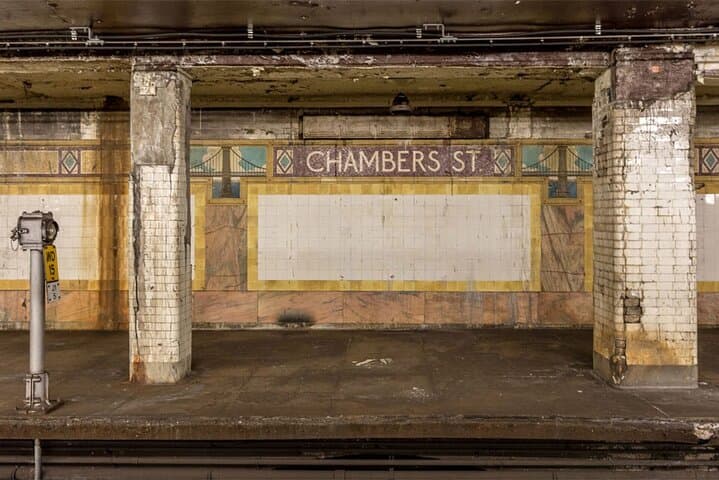
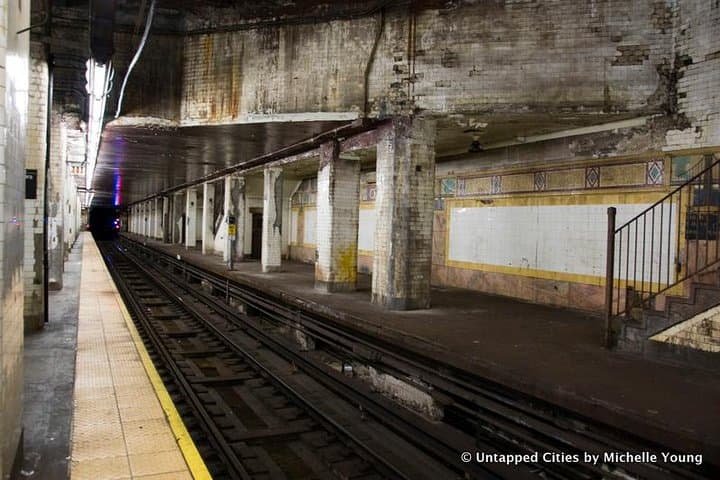
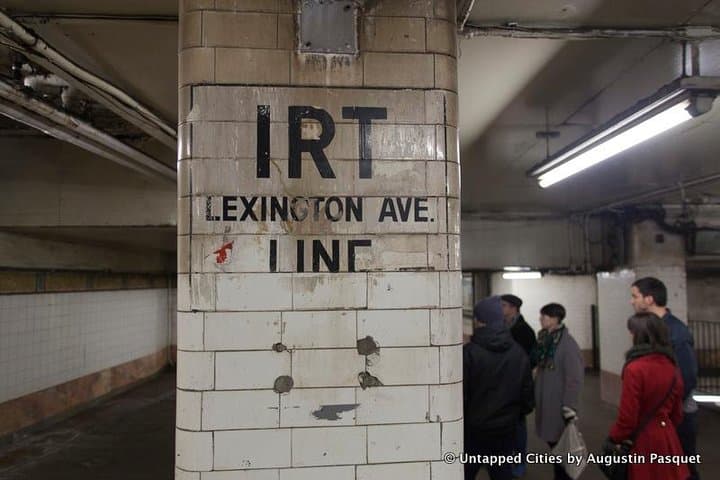
The tour stitches together the technological audacity of Alfred Ely Beach’s 19th-century pneumatic prototype and the city-led craze that built the IRT, BMT, and IND lines. You’ll pass the shell of Chambers Street — once called the "Grand Central of Downtown" — and ride corridors where abandoned platforms press up against active tracks, visible but off-limits; the MTA does not permit public access to closed stations.
Cultural notes surface in the tiles and mosaics: stations as civic stages where immigration, labor, and design intersect. Geology matters too — the bedrock and fill that dictated tunnel depths and vault construction and still influence station layouts today.
Practical guidance: bring a valid MetroCard or OMNY tap to board, wear grippy shoes for stairs and uneven platforms, and use the provided earpieces to hear the guide in noisy stations. The route is mostly flat but includes stairs; it’s stroller- and service-animal accessible in parts but blocked areas remain.
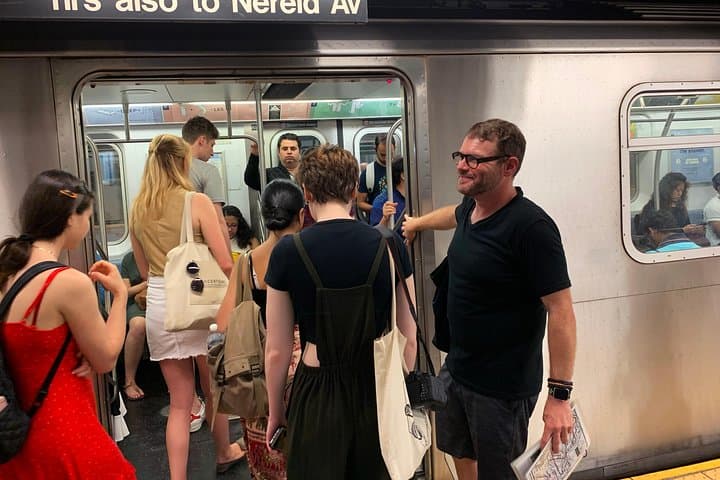
Expect frequent stops for photos, archival images, and local lore. This is an urban exploration that mixes transit history with present-day commuting energy — a compact, sensory-rich way to read the city beneath your feet.
easy.
2 hours.
Suitable for most fitness levels; requires stair navigation and 1–2 miles of walking at an urban pace
You can use a MetroCard or OMNY tap; buy or set up your payment method before the tour to avoid delays.
No — you’ll see abandoned platforms from passing trains or platform edges; MTA policy prohibits public access to closed stations.
The tour is stroller-accessible in many sections and service animals are allowed, but some stations involve stairs and aren’t fully wheelchair accessible.
The operator allows full refunds if you cancel at least 24 hours before the start time; check booking terms for last-minute policies.
The NYC subway grew rapidly after the 1904 opening of the original IRT; earlier experiments like Alfred Ely Beach’s 1870 pneumatic tunnel illustrated the city’s appetite for transit innovation.
Respect MTA rules and avoid littering platforms; staying on permitted walkways helps protect fragile historic finishes and keeps legacy infrastructure safe.
Untapped New York operates guided outdoor trips and adventures with an emphasis on safety, stewardship, and memorable experiences.
You step off Fulton Street into a corridor of tiled light and the low hum of a city in motion. The guide raises an "Untapped New York" sign and the subway’s rhythm becomes your metronome: trains breathing through metal ribs, platforms that remember a different century. Over two hours you move between street-level stories and below-ground fragments of the system that remade New York.
You step off Fulton Street into a corridor of tiled light and the low hum of a city in motion. The guide raises an "Untapped New York" sign and the subway’s rhythm becomes your metronome: trains breathing through metal ribs, platforms that remember a different century. Over two hours you move between street-level stories and below-ground fragments of the system that remade New York.
The tour stitches together the technological audacity of Alfred Ely Beach’s 19th-century pneumatic prototype and the city-led craze that built the IRT, BMT, and IND lines. You’ll pass the shell of Chambers Street — once called the "Grand Central of Downtown" — and ride corridors where abandoned platforms press up against active tracks, visible but off-limits; the MTA does not permit public access to closed stations.
Cultural notes surface in the tiles and mosaics: stations as civic stages where immigration, labor, and design intersect. Geology matters too — the bedrock and fill that dictated tunnel depths and vault construction and still influence station layouts today.
Practical guidance: bring a valid MetroCard or OMNY tap to board, wear grippy shoes for stairs and uneven platforms, and use the provided earpieces to hear the guide in noisy stations. The route is mostly flat but includes stairs; it’s stroller- and service-animal accessible in parts but blocked areas remain.
Expect frequent stops for photos, archival images, and local lore. This is an urban exploration that mixes transit history with present-day commuting energy — a compact, sensory-rich way to read the city beneath your feet.