THE ADVENTURE COLLECTIVE® · Independent discovery and booking for outdoor travel

An evening photography walk that turns Times Square’s neon chaos into deliberate light and motion. Learn long exposure, flash techniques, and composition in one of the world’s busiest public stages.
An evening photography walk that turns Times Square’s neon chaos into deliberate light and motion. Learn long exposure, flash techniques, and composition in one of the world’s busiest public stages.
The city lights rearrange their rules after sunset; billboards pulse, taxis carve streaks of gold, and the plaza at Times Square becomes a theater of motion and color. Standing at the Bryant Park fountain as the tour begins, you feel the rhythm of midtown night—pedestrians flowing, neon blinking, and shutter clicks answering in kind.
Verified experiences and guided adventures in the surrounding area.
Operated by New York City Photo Safari · New York City, New York
The city lights rearrange their rules after sunset; billboards pulse, taxis carve streaks of gold, and the plaza at Times Square becomes a theater of motion and color. Standing at the Bryant Park fountain as the tour begins, you feel the rhythm of midtown night—pedestrians flowing, neon blinking, and shutter clicks answering in kind.
Times Square rose from Longacre Square after the New York Times moved in 1904; the corner later became Broadway’s electric heart. Geologically, Manhattan sits on Manhattan Schist and glacially scoured bedrock—solid enough to support the cathedral of signage that defines the area. Culturally, this is Broadway country and advertising theater: every billboard is curated performance and the sidewalks hold a rotating cast of street life.
The tour moves through Bryant Park and into the core of Times Square, stopping at vantage points for long exposures of moving traffic, LED displays, and the ABC News ticker. Guides demonstrate balancing ISO, aperture and shutter speed and how to use flash without flattening faces or disturbing performers. Expect crowded sidewalks and bright contrasts; composition becomes about isolating subjects against the visual noise.
Practical notes: meet at the Bryant Park fountain (41st & 6th), arrive with charged batteries and a cleaned sensor, and consider a compact tripod or stable surface for long exposures—tripod use can be limited by crowds. The route is paved and wheelchair accessible; wear comfortable shoes, bring a small light for gear checks, and plan for 4 hours of standing and walking. With the right settings, the city's chaos becomes intentional light and motion in your frame.
easy.
4 hours.
Light urban walking and standing for several hours; suitable for most fitness levels.
A tripod helps for long exposures but may be impractical in crowded spots; a compact model is best and guides will suggest stable surfaces when tripods aren’t usable.
Yes — meeting point and most stops are on paved, wheelchair-accessible surfaces; confirm any special assistance needs when booking.
Expect hands-on guidance for ISO, shutter speed, aperture balancing, and using flash and long exposures in bright, mixed-light environments.
Small-group format with up to four travelers, allowing personalized instruction and quicker movement through locations.
Times Square was renamed after the New York Times moved its headquarters there in 1904; the area later evolved into the concentrated advertising and theater district seen today.
Night photography in busy urban cores can contribute to light pollution and foot traffic; minimize flash on performers, stay on sidewalks, and pack out any trash to reduce impact.
New York City Photo Safari operates guided outdoor trips and adventures with an emphasis on safety, stewardship, and memorable experiences.


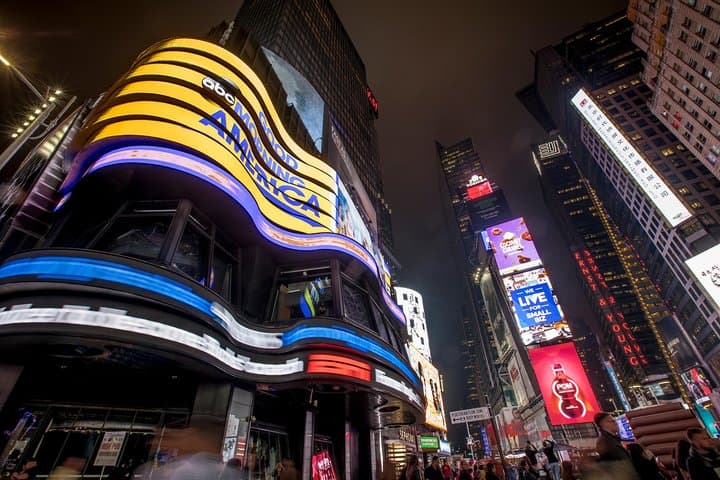
The city lights rearrange their rules after sunset; billboards pulse, taxis carve streaks of gold, and the plaza at Times Square becomes a theater of motion and color. Standing at the Bryant Park fountain as the tour begins, you feel the rhythm of midtown night—pedestrians flowing, neon blinking, and shutter clicks answering in kind.
The city lights rearrange their rules after sunset; billboards pulse, taxis carve streaks of gold, and the plaza at Times Square becomes a theater of motion and color. Standing at the Bryant Park fountain as the tour begins, you feel the rhythm of midtown night—pedestrians flowing, neon blinking, and shutter clicks answering in kind.
Times Square rose from Longacre Square after the New York Times moved in 1904; the corner later became Broadway’s electric heart. Geologically, Manhattan sits on Manhattan Schist and glacially scoured bedrock—solid enough to support the cathedral of signage that defines the area. Culturally, this is Broadway country and advertising theater: every billboard is curated performance and the sidewalks hold a rotating cast of street life.
The tour moves through Bryant Park and into the core of Times Square, stopping at vantage points for long exposures of moving traffic, LED displays, and the ABC News ticker. Guides demonstrate balancing ISO, aperture and shutter speed and how to use flash without flattening faces or disturbing performers. Expect crowded sidewalks and bright contrasts; composition becomes about isolating subjects against the visual noise.
Practical notes: meet at the Bryant Park fountain (41st & 6th), arrive with charged batteries and a cleaned sensor, and consider a compact tripod or stable surface for long exposures—tripod use can be limited by crowds. The route is paved and wheelchair accessible; wear comfortable shoes, bring a small light for gear checks, and plan for 4 hours of standing and walking. With the right settings, the city's chaos becomes intentional light and motion in your frame.