THE ADVENTURE COLLECTIVE® · Independent discovery and booking for outdoor travel

Three guided dives around Nusa Penida deliver steep coral walls, manta ray encounters and healthy reef life in a single day. Small groups and local divemasters make this a focused option for certified divers who want big marine biodiversity without long travel.
Three guided dives around Nusa Penida deliver steep coral walls, manta ray encounters and healthy reef life in a single day. Small groups and local divemasters make this a focused option for certified divers who want big marine biodiversity without long travel.
A small dive boat slips away from Sanur at first light and the island of Nusa Penida grows from a silhouette into a low, rocky spine. The swell rocks the hull, the wind skims the water, and the dive team briefs the group while seabirds wheel overhead. Below, currents cradle steep coral walls and sandy channels where mantas sweep like shadowed sails and turtles pick at the reef.
Verified experiences and guided adventures in the surrounding area.
A small dive boat slips away from Sanur at first light and the island of Nusa Penida grows from a silhouette into a low, rocky spine. The swell rocks the hull, the wind skims the water, and the dive team briefs the group while seabirds wheel overhead. Below, currents cradle steep coral walls and sandy channels where mantas sweep like shadowed sails and turtles pick at the reef.
Nusa Penida’s reefs sit along the edges of a volcanic plateau carved by currents from the Indian Ocean. The island’s rough limestone cliffs and submerged pinnacles create dramatic drop-offs and nutrient-rich upwellings that feed dense fish life. Culturally, the island remains traditionally Balinese — small fishing villages, coastal temples and a slower pace that contrasts with busy Bali to the west.
Practically, expect three guided dives across sites chosen for sea conditions; sites vary daily to prioritize safety and sightings. Groups are deliberately small — up to four divers per Divemaster or PADI instructor — so briefings focus on drift techniques, entry/exit procedures and safe ascent profiles. Bring your certification card and a dive computer if you have one, and plan for a 7-hour outing that includes transit, surface intervals and topside comforts.
Conditions can be current-heavy; good buoyancy control and basic drift-diving experience increase enjoyment. On the boat, hydrate, use reef-safe sunscreen and respect anchoring and marine-protection rules. For certified divers wanting dramatic walls, manta encounters and healthy coral gardens, this is a concentrated, efficient day on one of Indonesia’s most compelling dive fronts.
moderate.
7 hours.
Moderately fit—comfortable with repeated dives, ability to handle currents and stairs at many shore exits.
Yes—this trip is for certified divers only; you must present your certification card (C-card) and any required log evidence for recent dives.
No—manta sightings depend on currents and plankton; operators choose sites to maximize chances but cannot guarantee wildlife encounters.
Depths vary by site; many dives range 10–30 meters with possible strong currents and drift sections, so experience with drift diving is helpful.
Notify staff immediately—boats carry basic remedies and will prioritize safety; they can skip dives or return to shore if conditions or health dictate.
Nusa Penida is volcanic in origin and historically more isolated than Bali; its villages maintain traditional Balinese Hindu practices and coastal temples integral to local life.
Parts of the surrounding waters are marine protected areas and manta sanctuaries; divers should avoid touching coral, use reef-safe sunscreen and follow operator anchoring and mooring practices.
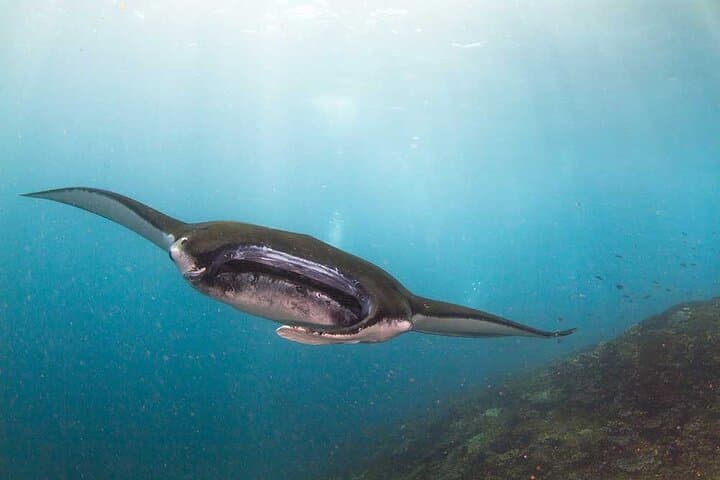
A small dive boat slips away from Sanur at first light and the island of Nusa Penida grows from a silhouette into a low, rocky spine. The swell rocks the hull, the wind skims the water, and the dive team briefs the group while seabirds wheel overhead. Below, currents cradle steep coral walls and sandy channels where mantas sweep like shadowed sails and turtles pick at the reef.
A small dive boat slips away from Sanur at first light and the island of Nusa Penida grows from a silhouette into a low, rocky spine. The swell rocks the hull, the wind skims the water, and the dive team briefs the group while seabirds wheel overhead. Below, currents cradle steep coral walls and sandy channels where mantas sweep like shadowed sails and turtles pick at the reef.
Nusa Penida’s reefs sit along the edges of a volcanic plateau carved by currents from the Indian Ocean. The island’s rough limestone cliffs and submerged pinnacles create dramatic drop-offs and nutrient-rich upwellings that feed dense fish life. Culturally, the island remains traditionally Balinese — small fishing villages, coastal temples and a slower pace that contrasts with busy Bali to the west.
Practically, expect three guided dives across sites chosen for sea conditions; sites vary daily to prioritize safety and sightings. Groups are deliberately small — up to four divers per Divemaster or PADI instructor — so briefings focus on drift techniques, entry/exit procedures and safe ascent profiles. Bring your certification card and a dive computer if you have one, and plan for a 7-hour outing that includes transit, surface intervals and topside comforts.
Conditions can be current-heavy; good buoyancy control and basic drift-diving experience increase enjoyment. On the boat, hydrate, use reef-safe sunscreen and respect anchoring and marine-protection rules. For certified divers wanting dramatic walls, manta encounters and healthy coral gardens, this is a concentrated, efficient day on one of Indonesia’s most compelling dive fronts.