THE ADVENTURE COLLECTIVE® · Independent discovery and booking for outdoor travel

Walk Nuremberg’s medieval streets in 2.5 hours, from the Hauptmarkt fountain to the imperial castle and Dürer’s house. This English-language tour mixes Golden Age craft history with honest accounts of 20th-century destruction and reconstruction.
Walk Nuremberg’s medieval streets in 2.5 hours, from the Hauptmarkt fountain to the imperial castle and Dürer’s house. This English-language tour mixes Golden Age craft history with honest accounts of 20th-century destruction and reconstruction.
A late-morning sun warms the cobbles of the Hauptmarkt as the guide gathers the group beside the Gothic fountain — a late 14th-century landmark that has watched markets, processions and the city’s reinventions for centuries.
Verified experiences and guided adventures in the surrounding area.
Operated by Nuremberg Free Walking Tour · Nuremberg, Bavaria
A late-morning sun warms the cobbles of the Hauptmarkt as the guide gathers the group beside the Gothic fountain — a late 14th-century landmark that has watched markets, processions and the city’s reinventions for centuries.
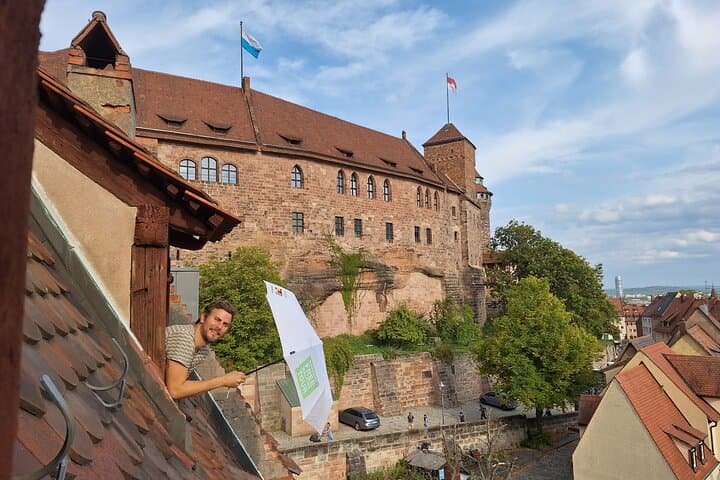
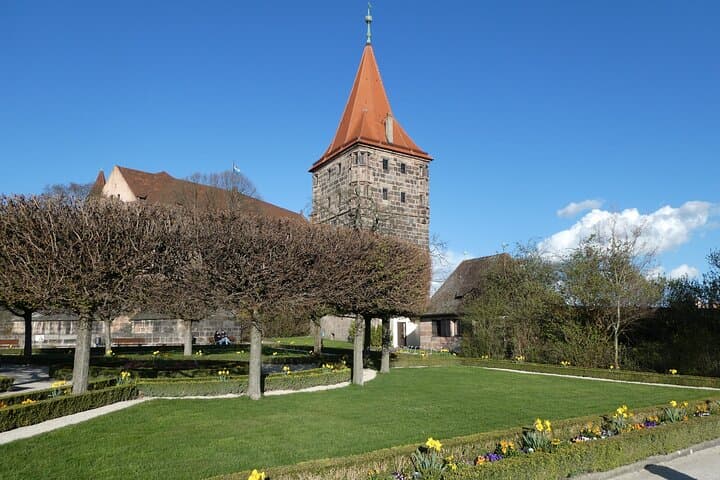
The 2.5-hour walk threads through narrow lanes and half-timbered façades toward the triple silhouette of Nuremberg Castle perched on its sandstone ridge above the Pegnitz River. Guides highlight the city’s Golden Age: craftsmen’s guilds, traders and patrons like Albrecht Dürer, whose house still opens a window onto early-16th-century life.
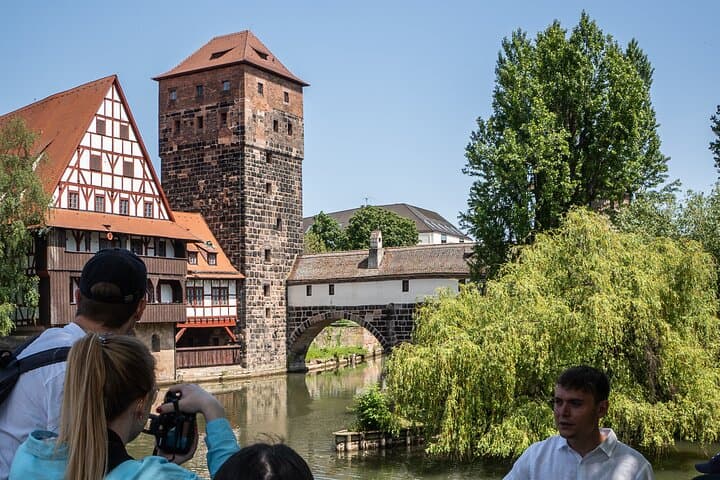
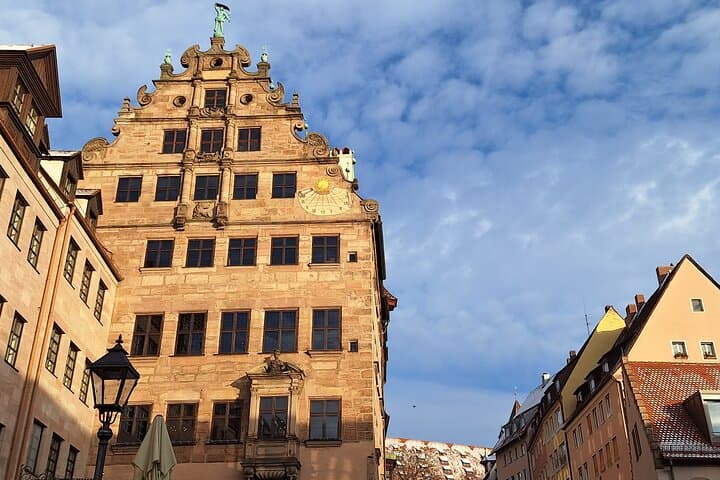
Geology shows in the castle’s stone and bridges spanning the Pegnitz; culture appears in market rhythms and the Frauenkirche’s Männleinslaufen clock. The tour does not shy from darker chapters — the Nazi Party Rallies and WWII destruction — but frames them in the story of postwar reconstruction that rebuilt streets with traditional materials and preserved medieval patterns.
Expect a mix of plazas (Hauptmarkt), churches (St. Sebald, St. Lorenz), hidden corners (Executioner’s House) and the Albrecht Dürer House. The pace is easy, with stops for history, legend and local tips on food and museums.
Practicalities: wear comfortable walking shoes and layers, bring water and a compact umbrella in unpredictable weather, and arrive 10 minutes early to hear the meeting-place history. Morning tours avoid peak crowds; the route is largely paved and accessible, but cobbles and short stair sections are typical. Guides will offer restaurant and museum recommendations to extend your stay.
easy.
2–3 hours.
Suitable for most fitness levels; able to stand and walk on uneven cobbles for 2–3 hours.
The tour typically starts at the Hauptmarkt near the late 14th-century Gothic fountain (Schöner Brunnen); the guide will be identifiable and asks guests to arrive 10 minutes early.
Yes—this is rated physically easy; many sections are stroller-accessible but cobbles may be bumpy and some short stairways are unavoidable.
Full refunds are available if you cancel at least 24 hours before the scheduled departure; policies may vary for group bookings.
Yes, the tour is offered in English by a local guide; shared tours can include up to 50 people but typically remain smaller for better engagement.
Nuremberg rose as a medieval trade and craft center in the late Middle Ages, later gaining cultural significance through figures like Albrecht Dürer; the city was heavily bombed in WWII and painstakingly reconstructed afterward.
Visitors are asked to stick to paved paths, respect historic façades and avoid touching fragile architectural details; local preservation groups manage restoration and sustainable tourism in the old town.
Nuremberg Free Walking Tour operates guided outdoor trips and adventures with an emphasis on safety, stewardship, and memorable experiences.
A late-morning sun warms the cobbles of the Hauptmarkt as the guide gathers the group beside the Gothic fountain — a late 14th-century landmark that has watched markets, processions and the city’s reinventions for centuries.
A late-morning sun warms the cobbles of the Hauptmarkt as the guide gathers the group beside the Gothic fountain — a late 14th-century landmark that has watched markets, processions and the city’s reinventions for centuries.
The 2.5-hour walk threads through narrow lanes and half-timbered façades toward the triple silhouette of Nuremberg Castle perched on its sandstone ridge above the Pegnitz River. Guides highlight the city’s Golden Age: craftsmen’s guilds, traders and patrons like Albrecht Dürer, whose house still opens a window onto early-16th-century life.
Geology shows in the castle’s stone and bridges spanning the Pegnitz; culture appears in market rhythms and the Frauenkirche’s Männleinslaufen clock. The tour does not shy from darker chapters — the Nazi Party Rallies and WWII destruction — but frames them in the story of postwar reconstruction that rebuilt streets with traditional materials and preserved medieval patterns.
Expect a mix of plazas (Hauptmarkt), churches (St. Sebald, St. Lorenz), hidden corners (Executioner’s House) and the Albrecht Dürer House. The pace is easy, with stops for history, legend and local tips on food and museums.
Practicalities: wear comfortable walking shoes and layers, bring water and a compact umbrella in unpredictable weather, and arrive 10 minutes early to hear the meeting-place history. Morning tours avoid peak crowds; the route is largely paved and accessible, but cobbles and short stair sections are typical. Guides will offer restaurant and museum recommendations to extend your stay.