THE ADVENTURE COLLECTIVE® · Independent discovery and booking for outdoor travel

Explore Nuremberg’s old town on a focused 90‑minute guided walk that hits the Hangman’s House, Hauptmarkt, Frauenkirche, Sebalduskirche and Weißgerbergasse. Expect concise historical context, riverfront views, and accessible routes suited to most visitors.
Explore Nuremberg’s old town on a focused 90‑minute guided walk that hits the Hangman’s House, Hauptmarkt, Frauenkirche, Sebalduskirche and Weißgerbergasse. Expect concise historical context, riverfront views, and accessible routes suited to most visitors.
You step out from beneath a stone arch and the Pegnitz pushes past, cool and quick, as the city unfolds in layers: timber-framed houses, gothic spires, and the clack of a tram in the distance. The guide points across the river to the Hangman's House, and for the next 90 minutes the medieval city loosens its stories — craftsmen, markets, and the difficult chapters of the 20th century — into plainspoken insight.
Verified experiences and guided adventures in the surrounding area.
Operated by Geschichte Für Alle e.V. · Nuremberg, Bavaria
You step out from beneath a stone arch and the Pegnitz pushes past, cool and quick, as the city unfolds in layers: timber-framed houses, gothic spires, and the clack of a tram in the distance. The guide points across the river to the Hangman's House, and for the next 90 minutes the medieval city loosens its stories — craftsmen, markets, and the difficult chapters of the 20th century — into plainspoken insight.
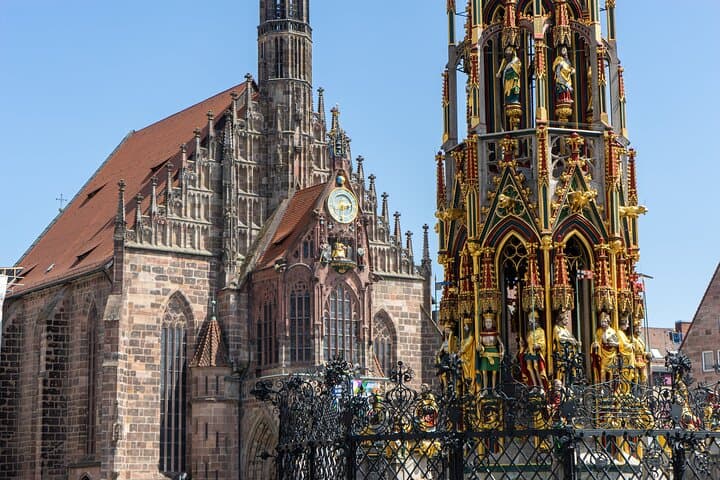
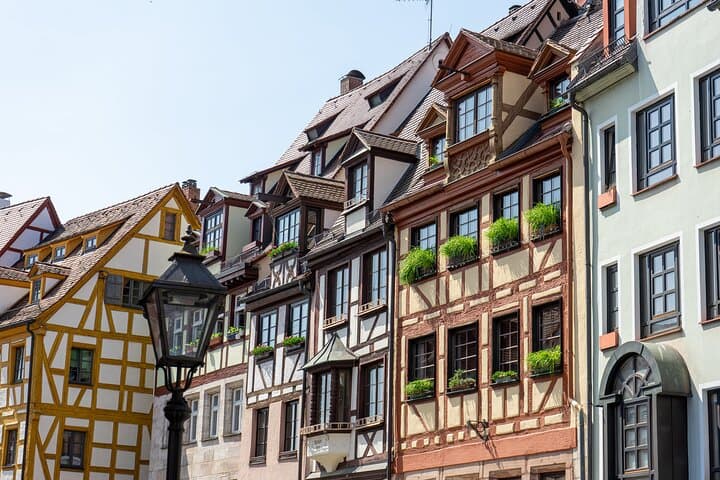
Nuremberg’s center grew wealthy on trade routes between Italy and Northern Europe; its Hauptmarkt hosted merchants for centuries and now hosts the one-of-a-kind Christkindlesmarkt in winter. The Frauenkirche and the Beautiful Fountain display late-Gothic civic pride, while Sebalduskirche holds carved altarpieces and relic stories that date back to the Middle Ages. Weißgerbergasse preserves the narrow, practical housing of tanners and shoemakers — a tactile reminder of craft economies that shaped the city’s fabric.
The stones here are Franconian sandstone and the river’s course helped determine the town’s footprint; bridges like the Maxbrücke are small engineering statements — the oldest metal suspension bridge in Europe — connecting histories on either bank.
Practical side: the tour is a relatively flat, accessible walk of about 1.5 hours, suitable for most visitors and doable in most weather with a light jacket. Bring a reusable water bottle, comfortable shoes, and a camera with spare battery — the viewpoints over the Pegnitz are compact but photogenic. Aim for morning or late afternoon light to avoid crowded market stalls, and give yourself extra time after the tour to explore alleys and a café terrace.
easy.
1.5 hours.
Suitable for most fitness levels; mostly flat walking with occasional cobbles and short stair sections.
The guided walk lasts approximately 90 minutes and covers the main sights of the old town on foot.
Yes — the route is described as wheelchair and stroller accessible, though cobblestones can be bumpy in places.
No — this is a walking tour focused on exterior sights and interpretation; entry fees to churches or museums are extra.
This specific offering is an English-language tour led by a professional guide.
Nuremberg rose as a medieval trade and crafts hub and later played central roles in early modern German culture; the old town preserves buildings that survived wartime destruction alongside reconstructed civic landmarks.
Respect historic surfaces by staying on paths and avoiding leaning or placing weight on fragile stonework; local guides encourage small-group etiquette to limit wear on narrow alleys.
Geschichte Für Alle e.V. operates guided outdoor trips and adventures with an emphasis on safety, stewardship, and memorable experiences.
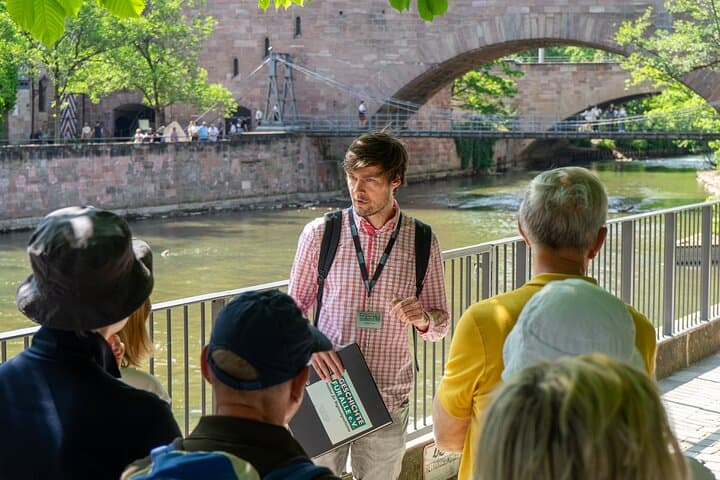
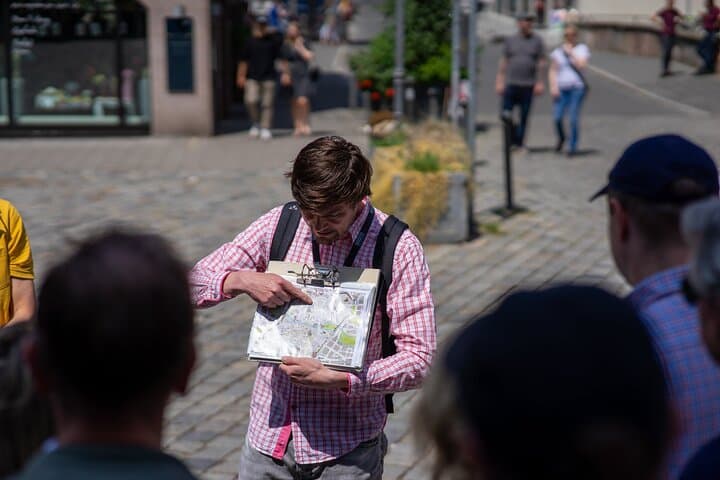
You step out from beneath a stone arch and the Pegnitz pushes past, cool and quick, as the city unfolds in layers: timber-framed houses, gothic spires, and the clack of a tram in the distance. The guide points across the river to the Hangman's House, and for the next 90 minutes the medieval city loosens its stories — craftsmen, markets, and the difficult chapters of the 20th century — into plainspoken insight.
You step out from beneath a stone arch and the Pegnitz pushes past, cool and quick, as the city unfolds in layers: timber-framed houses, gothic spires, and the clack of a tram in the distance. The guide points across the river to the Hangman's House, and for the next 90 minutes the medieval city loosens its stories — craftsmen, markets, and the difficult chapters of the 20th century — into plainspoken insight.
Nuremberg’s center grew wealthy on trade routes between Italy and Northern Europe; its Hauptmarkt hosted merchants for centuries and now hosts the one-of-a-kind Christkindlesmarkt in winter. The Frauenkirche and the Beautiful Fountain display late-Gothic civic pride, while Sebalduskirche holds carved altarpieces and relic stories that date back to the Middle Ages. Weißgerbergasse preserves the narrow, practical housing of tanners and shoemakers — a tactile reminder of craft economies that shaped the city’s fabric.
The stones here are Franconian sandstone and the river’s course helped determine the town’s footprint; bridges like the Maxbrücke are small engineering statements — the oldest metal suspension bridge in Europe — connecting histories on either bank.
Practical side: the tour is a relatively flat, accessible walk of about 1.5 hours, suitable for most visitors and doable in most weather with a light jacket. Bring a reusable water bottle, comfortable shoes, and a camera with spare battery — the viewpoints over the Pegnitz are compact but photogenic. Aim for morning or late afternoon light to avoid crowded market stalls, and give yourself extra time after the tour to explore alleys and a café terrace.