THE ADVENTURE COLLECTIVE® · Independent discovery and booking for outdoor travel

A one-day outing from Dushanbe takes you to the vast Nurek Reservoir and the world’s tallest earth-fill dam. Expect museum visits, shoreline viewpoints, a boatable lake and crisp, glacier-fed water.
A one-day outing from Dushanbe takes you to the vast Nurek Reservoir and the world’s tallest earth-fill dam. Expect museum visits, shoreline viewpoints, a boatable lake and crisp, glacier-fed water.
A morning drive from Dushanbe drops the road into a narrow Vakhsh River gorge and then opens onto a long blue ribbon of water — the Nurek Reservoir — framed by serrated ridgelines and snow-flecked peaks. The air tastes of cold melt and diesel; the water lies mirror-flat in sheltered coves and stretches into distant gorges where houseboats cling to rocky inlets.
Verified experiences and guided adventures in the surrounding area.
Operated by Bunyod-Tour · Nurek, Districts of Republican Subordination
A morning drive from Dushanbe drops the road into a narrow Vakhsh River gorge and then opens onto a long blue ribbon of water — the Nurek Reservoir — framed by serrated ridgelines and snow-flecked peaks. The air tastes of cold melt and diesel; the water lies mirror-flat in sheltered coves and stretches into distant gorges where houseboats cling to rocky inlets.
The reservoir was created behind the colossal Nurek earth-fill dam (304 m tall), built between 1961 and 1980 as a Soviet-era hydroelectric project. At roughly 885 m above sea level the lake runs some 70 km in length, averages 107 m in depth and covers about 98 km2. The dam provides most of Tajikistan’s electricity and reshaped local settlement and irrigation, sending water through tunnels to support hundreds of square kilometers of farmland.
Visitors typically combine a short museum stop with shoreline viewpoints, a walk along service roads by the dam, and a chance to swim or board small boats into quieter coves. The water is glacier-fed and remains brisk even in summer; currents near the dam are strong and off-limits for casual swimmers. Local guides can explain engineering details in the museum and point to rarely-visited inlets where fishermen and seasonal houseboats cluster.
Practicalities: the round-trip drive from Dushanbe is about 90 minutes each way; the full outing runs roughly eight hours. Bring sun protection, layered clothing for winds off the water, sturdy shoes for uneven service roads, and small change for village vendors. Follow local regulations around the dam, respect private houseboats, and treat shoreline areas as fragile — pack out what you bring in.
easy.
8 hours.
Suitable for most fitness levels; participants should be comfortable boarding a small boat and walking on uneven service roads.
The tour typically includes about a 90-minute drive each way, depending on traffic and exact pickup point.
Swimming is permitted in sheltered coves away from the dam; the water is glacier-fed and very cold—follow guide instructions and avoid areas near outflow.
There are viewpoints and a museum with details about the hydroelectric station; access to operational areas is restricted for safety.
Basic facilities and local food stops are available in Nurek city and at small lakeside stalls; the tour usually includes lunch.
Constructed between 1961 and 1980 during the Soviet period, the Nurek dam reshaped local settlement patterns and became a cornerstone of Tajikistan’s electricity supply.
The reservoir supports irrigation and power but has altered riverine ecosystems; visitors should avoid shore erosion, carry out waste, and respect private moorings.
Bunyod-Tour operates guided outdoor trips and adventures with an emphasis on safety, stewardship, and memorable experiences.
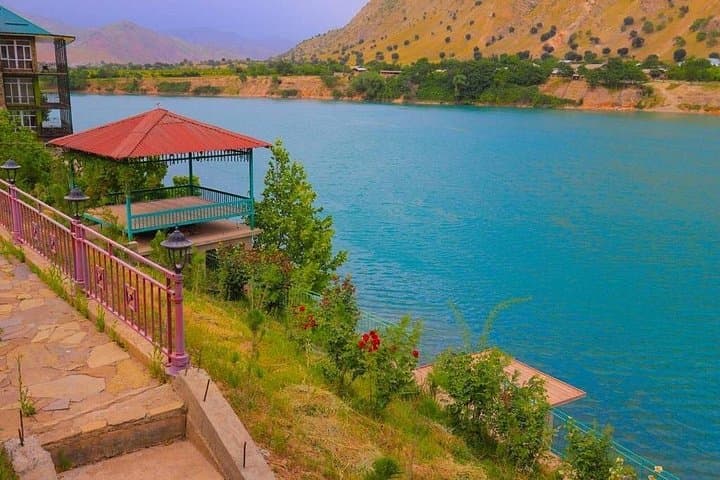
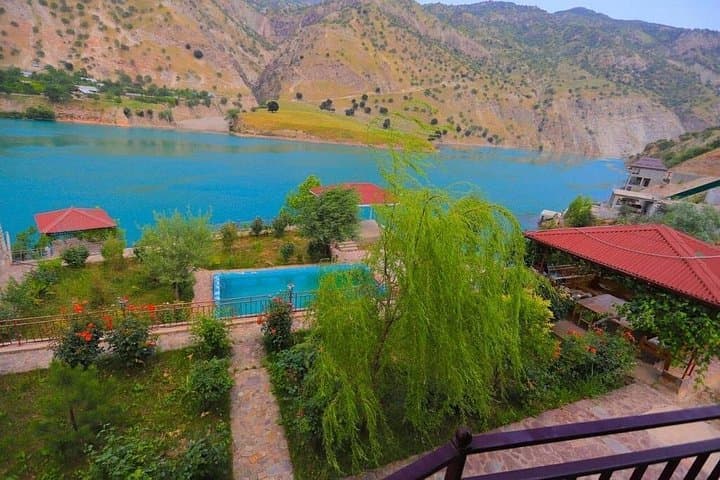
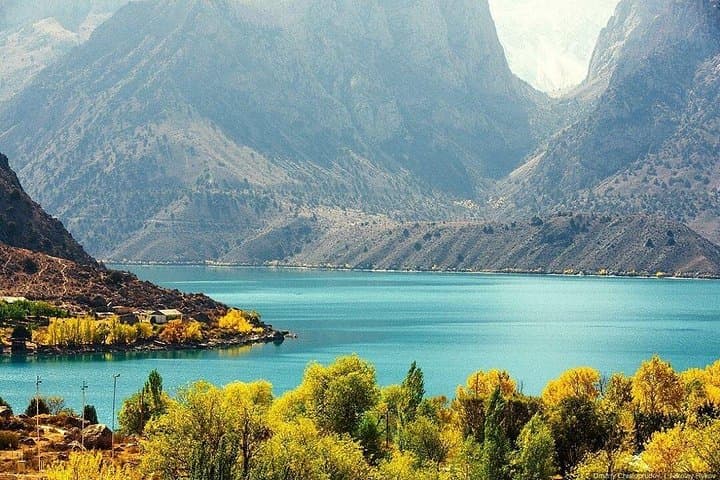
A morning drive from Dushanbe drops the road into a narrow Vakhsh River gorge and then opens onto a long blue ribbon of water — the Nurek Reservoir — framed by serrated ridgelines and snow-flecked peaks. The air tastes of cold melt and diesel; the water lies mirror-flat in sheltered coves and stretches into distant gorges where houseboats cling to rocky inlets.
A morning drive from Dushanbe drops the road into a narrow Vakhsh River gorge and then opens onto a long blue ribbon of water — the Nurek Reservoir — framed by serrated ridgelines and snow-flecked peaks. The air tastes of cold melt and diesel; the water lies mirror-flat in sheltered coves and stretches into distant gorges where houseboats cling to rocky inlets.
The reservoir was created behind the colossal Nurek earth-fill dam (304 m tall), built between 1961 and 1980 as a Soviet-era hydroelectric project. At roughly 885 m above sea level the lake runs some 70 km in length, averages 107 m in depth and covers about 98 km2. The dam provides most of Tajikistan’s electricity and reshaped local settlement and irrigation, sending water through tunnels to support hundreds of square kilometers of farmland.
Visitors typically combine a short museum stop with shoreline viewpoints, a walk along service roads by the dam, and a chance to swim or board small boats into quieter coves. The water is glacier-fed and remains brisk even in summer; currents near the dam are strong and off-limits for casual swimmers. Local guides can explain engineering details in the museum and point to rarely-visited inlets where fishermen and seasonal houseboats cluster.
Practicalities: the round-trip drive from Dushanbe is about 90 minutes each way; the full outing runs roughly eight hours. Bring sun protection, layered clothing for winds off the water, sturdy shoes for uneven service roads, and small change for village vendors. Follow local regulations around the dam, respect private houseboats, and treat shoreline areas as fragile — pack out what you bring in.