THE ADVENTURE COLLECTIVE® · Independent discovery and booking for outdoor travel

Two days from Bukhara lead into the folded limestone of the Nuratau Mountains and the slow rhythms of Sentob village. Expect petroglyph canyons, short ridge walks with panoramic views, and a night in a family guesthouse.
Two days from Bukhara lead into the folded limestone of the Nuratau Mountains and the slow rhythms of Sentob village. Expect petroglyph canyons, short ridge walks with panoramic views, and a night in a family guesthouse.
A wind from the Nuratau ridges cuts across the valley as the minivan slides out of Bukhara and into dry steppe. By late morning the road narrows and the landscape changes—low, serrated limestone ridges give way to terraced orchards and the scatter of stone houses that mark Sentob village. On arrival the village feels deliberately slow; goats and village dogs set the pace while the mountains watch and occasionally shift light across the slopes.
Verified experiences and guided adventures in the surrounding area.
Operated by Silk Road Tours · Bukhara, Bukhara Region
A wind from the Nuratau ridges cuts across the valley as the minivan slides out of Bukhara and into dry steppe. By late morning the road narrows and the landscape changes—low, serrated limestone ridges give way to terraced orchards and the scatter of stone houses that mark Sentob village. On arrival the village feels deliberately slow; goats and village dogs set the pace while the mountains watch and occasionally shift light across the slopes.
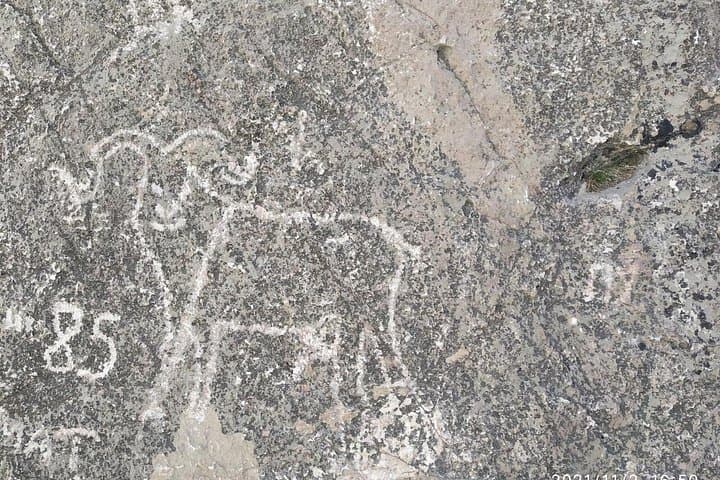
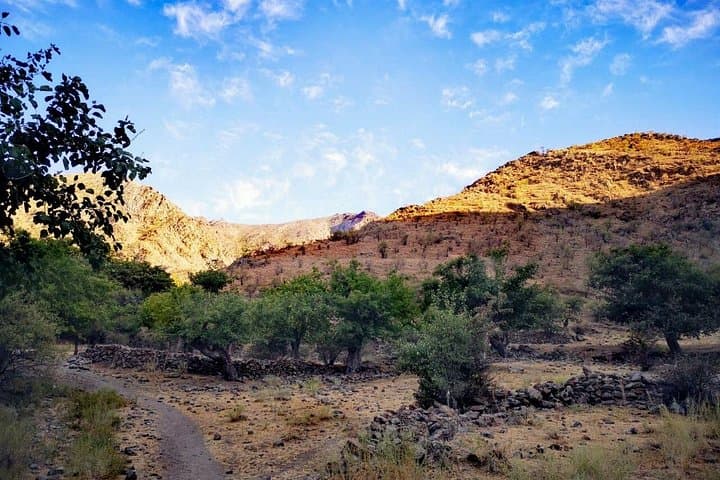
The route threads cultural layers: Sarmishsay Gorge holds petroglyph panels that may be millennia old, while Nurata’s ancient fortress and Chashma spring reflect a settlement history that traders and Alexander-era campaigns shaped. Geologically, the Nuratau range is a compact uplift of sedimentary limestone and red-brown schist, with short, steep gullies and wind-polished ridgelines. Local families keep small orchards and centuries-old water channels—an intimate living landscape rather than a remote wilderness.
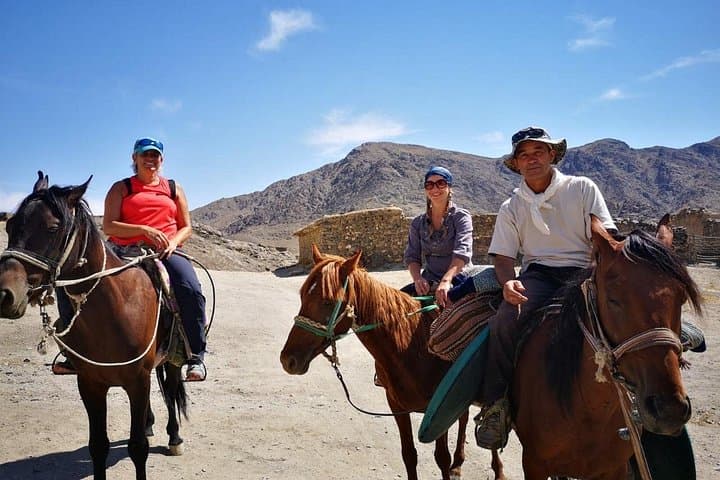
Practically, the tour mixes vehicle transfers with short village hikes—expect 1–5 km walks on uneven dirt and rocky tracks, occasional 150–300 m short climbs for views, and long roadside drives between highlights. Overnight stays are in a guesthouse; meals are local and often family-prepared. Bring sturdy walking shoes, sun protection, and a light wind layer for ridge exposure. Plan for early starts to avoid heat and to catch the best light on petroglyphs and terraces. Respect private yards, pack out waste, and tip guides and hosts for home-cooked hospitality.
easy.
2 days.
Light to moderate; suitable for travelers who can walk 1–3 hours on uneven terrain and handle short climbs.
Walks are short and interspersed with drives—typically 1–5 km of walking per day, focused on village streets, short ridge viewpoints, and the Sarmishsay petroglyph area.
Overnight accommodation is in a local guesthouse with basic private rooms and family meals rather than camping under canvas.
Yes—the tour operator notes it can be customized to begin in Samarkand; confirm pickup and transfer logistics at booking.
The itinerary states entrance tickets for monuments are included; check your voucher or confirmation for any site-specific fees.
Nurata and surrounding settlements sit on ancient transit routes; Nurata’s citadel and Chashma spring were stops for Silk Road travelers and later gained strategic notice during Alexander-era movements.
The Nuratau foothills are ecologically fragile—stay on tracks, minimize waste, and support local guesthouses to help preserve both cultural sites and grazing landscapes.
Silk Road Tours operates guided outdoor trips and adventures with an emphasis on safety, stewardship, and memorable experiences.
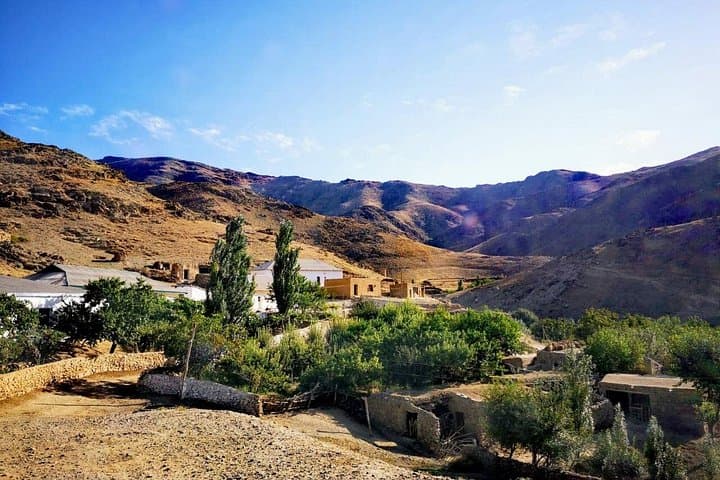
A wind from the Nuratau ridges cuts across the valley as the minivan slides out of Bukhara and into dry steppe. By late morning the road narrows and the landscape changes—low, serrated limestone ridges give way to terraced orchards and the scatter of stone houses that mark Sentob village. On arrival the village feels deliberately slow; goats and village dogs set the pace while the mountains watch and occasionally shift light across the slopes.
A wind from the Nuratau ridges cuts across the valley as the minivan slides out of Bukhara and into dry steppe. By late morning the road narrows and the landscape changes—low, serrated limestone ridges give way to terraced orchards and the scatter of stone houses that mark Sentob village. On arrival the village feels deliberately slow; goats and village dogs set the pace while the mountains watch and occasionally shift light across the slopes.
The route threads cultural layers: Sarmishsay Gorge holds petroglyph panels that may be millennia old, while Nurata’s ancient fortress and Chashma spring reflect a settlement history that traders and Alexander-era campaigns shaped. Geologically, the Nuratau range is a compact uplift of sedimentary limestone and red-brown schist, with short, steep gullies and wind-polished ridgelines. Local families keep small orchards and centuries-old water channels—an intimate living landscape rather than a remote wilderness.
Practically, the tour mixes vehicle transfers with short village hikes—expect 1–5 km walks on uneven dirt and rocky tracks, occasional 150–300 m short climbs for views, and long roadside drives between highlights. Overnight stays are in a guesthouse; meals are local and often family-prepared. Bring sturdy walking shoes, sun protection, and a light wind layer for ridge exposure. Plan for early starts to avoid heat and to catch the best light on petroglyphs and terraces. Respect private yards, pack out waste, and tip guides and hosts for home-cooked hospitality.