THE ADVENTURE COLLECTIVE® · Independent discovery and booking for outdoor travel

A four-day, 50 km expedition from Nupstaðarskógar to Skaftafell that crosses volcanic ash fields, braided rivers, and one of Iceland’s largest glaciers. Small groups, certified guides, and full camping support make this a demanding but accessible interior crossing.
A four-day, 50 km expedition from Nupstaðarskógar to Skaftafell that crosses volcanic ash fields, braided rivers, and one of Iceland’s largest glaciers. Small groups, certified guides, and full camping support make this a demanding but accessible interior crossing.
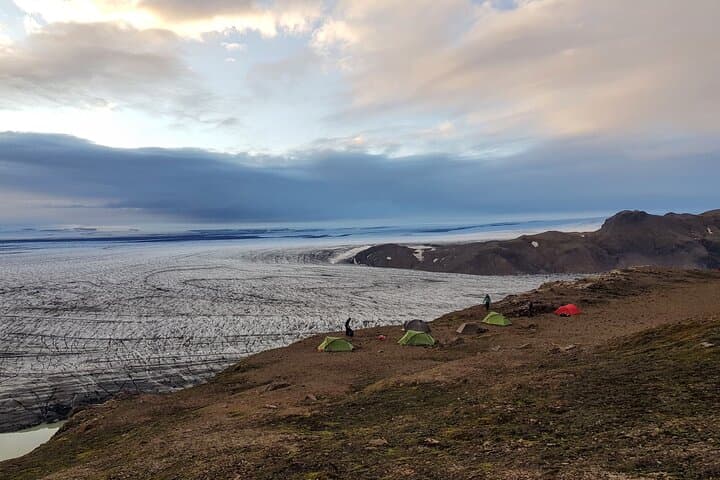
The first morning light in southern Iceland feels like a soft ignition: the low clouds lift, revealing a long ridge of black ash and green moss, and a guide clips a harness into a rope team. You step off from Nupstaðarskógar with a pack that feels light for what it must carry — four nights of food, a sleeping bag, and layers meant to fight sudden wind and drizzle. The trail does not pander. It pushes across old lava, skims braided rivers that dare you to find the right stones, and climbs toward a glacier that, on good days, will glint like a slab of compressed sky.
Verified experiences and guided adventures in the surrounding area.
Operated by Pict expeditions · Skaftafell, Southern Region
The first morning light in southern Iceland feels like a soft ignition: the low clouds lift, revealing a long ridge of black ash and green moss, and a guide clips a harness into a rope team. You step off from Nupstaðarskógar with a pack that feels light for what it must carry — four nights of food, a sleeping bag, and layers meant to fight sudden wind and drizzle. The trail does not pander. It pushes across old lava, skims braided rivers that dare you to find the right stones, and climbs toward a glacier that, on good days, will glint like a slab of compressed sky.
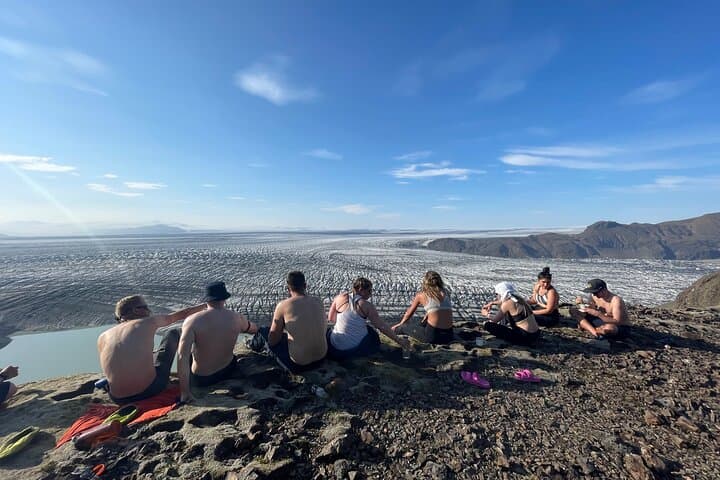
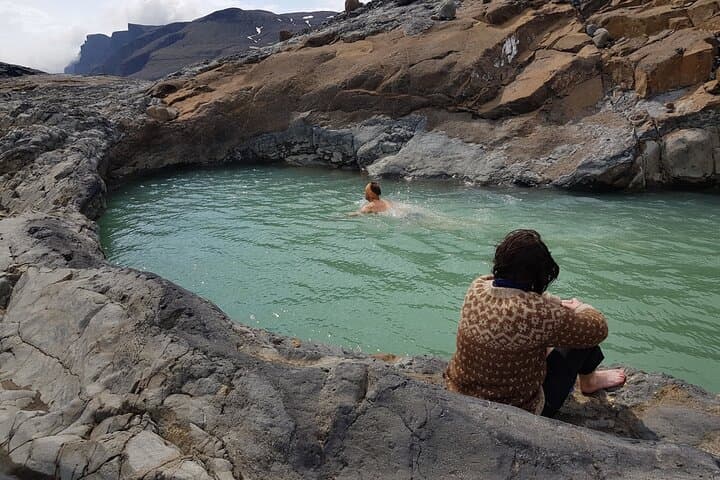
This 50 km expedition finishes at Skaftafell, the southeastern doorstep of Vatnajökull National Park. Iceland’s geology is immediate here: volcanic ash fields sit beside smoothed glacial moraines, and rivers braided by meltwater cut through pumice and basalt. Historically, the area is marked by the interplay of ice and fire — glaciers sculpt valleys while eruptions lay ash across the land, a pairing that has shaped rural farmsteads and the stories passed down by local families.
Culture on this route is low-key but tangible. Small farms and seasonal shepherding dot the wider landscape; guides point out turf walls and old sheep paths, artifacts of a people who moved with the land’s moods. The guides on this trip are certified and small-group focused, which means the route leans toward authentic exploration rather than tourist congestion.
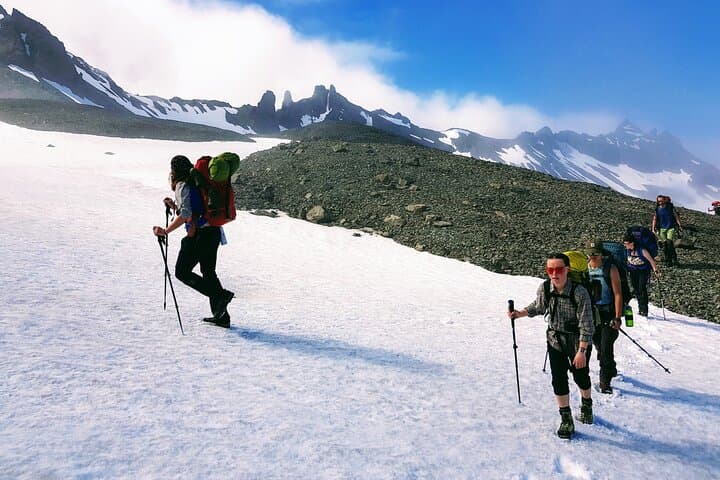
Practically: the trek runs four days and nights with daily hikes up to eight hours, covering roughly 50 km. Expect varied terrain — soft moss, rocky scree, river crossings, and a guided glacier traverse requiring roped travel. The operator supplies tents, stoves, fuel, and glacier-crossing gear; you must bring a suitable sleeping bag, waterproof layers, and rugged boots.
This itinerary demands fitness and attention to weather. Plan for wind and sudden rain even in summer; daylight is generous in the high season, but conditions can change fast. Hydrate before river fords, use gaiters in wet ash, and pace on long scree sections to conserve energy for the glacier approach.
Small-group dynamics matter: packs are pared down, shared tasks mean everyone tents and cooks, and guides teach efficient glacier travel — crampon technique, roped walking, and crevasse awareness. For photographers, early mornings and late evenings offer the best light; for wildlife observers, keep an eye out for ptarmigan and the occasional Arctic fox along quieter ridgelines.
In short, the Nupstaðarskógar-to-Skaftafell expedition is not a comfort walk. It’s a deliberate push into the elements — elemental landscapes, tactile geology, and hands-on camping — rewarding travelers who come prepared for weather, mileage, and an uncompromised encounter with Iceland’s raw interior.
challenging.
4 days (up to 8 hours per day).
You should have a high level of cardiovascular fitness and experience with multi-day hikes; comfortable carrying a 10–14 kg pack.
A high fitness level is required—expect long days with elevation change and uneven terrain; prior multi-day trekking experience is strongly recommended.
Yes—guides supply tents, stoves, fuel, and all glacier-crossing equipment including ropes, harnesses, and crampons when needed.
No extensive experience is required, but you must be comfortable following rope-team instructions and basic crampon technique taught by guides.
Groups are kept small, usually under 10 participants, to maintain safety and an engaged guide-to-client ratio.
The route starts near Nupstaðarskógar and finishes at Skaftafell; parking is available next to a large barn marked by the operator’s sign at the meeting point.
Dinner, breakfast, tea/coffee, tents, stoves, fuel, and glacier equipment are included; participants are responsible for daily lunches and personal gear.
The route sits where volcanic eruptions and glacier movements have intersected for centuries; local farms adapted with turf walls and seasonal grazing paths shaped by those cycles.
This is fragile terrain—stick to worn routes, pack out all waste, and follow guide instructions to minimize erosion and protect meltwater streams.
Pict expeditions operates guided outdoor trips and adventures with an emphasis on safety, stewardship, and memorable experiences.
The first morning light in southern Iceland feels like a soft ignition: the low clouds lift, revealing a long ridge of black ash and green moss, and a guide clips a harness into a rope team. You step off from Nupstaðarskógar with a pack that feels light for what it must carry — four nights of food, a sleeping bag, and layers meant to fight sudden wind and drizzle. The trail does not pander. It pushes across old lava, skims braided rivers that dare you to find the right stones, and climbs toward a glacier that, on good days, will glint like a slab of compressed sky.
The first morning light in southern Iceland feels like a soft ignition: the low clouds lift, revealing a long ridge of black ash and green moss, and a guide clips a harness into a rope team. You step off from Nupstaðarskógar with a pack that feels light for what it must carry — four nights of food, a sleeping bag, and layers meant to fight sudden wind and drizzle. The trail does not pander. It pushes across old lava, skims braided rivers that dare you to find the right stones, and climbs toward a glacier that, on good days, will glint like a slab of compressed sky.
This 50 km expedition finishes at Skaftafell, the southeastern doorstep of Vatnajökull National Park. Iceland’s geology is immediate here: volcanic ash fields sit beside smoothed glacial moraines, and rivers braided by meltwater cut through pumice and basalt. Historically, the area is marked by the interplay of ice and fire — glaciers sculpt valleys while eruptions lay ash across the land, a pairing that has shaped rural farmsteads and the stories passed down by local families.
Culture on this route is low-key but tangible. Small farms and seasonal shepherding dot the wider landscape; guides point out turf walls and old sheep paths, artifacts of a people who moved with the land’s moods. The guides on this trip are certified and small-group focused, which means the route leans toward authentic exploration rather than tourist congestion.
Practically: the trek runs four days and nights with daily hikes up to eight hours, covering roughly 50 km. Expect varied terrain — soft moss, rocky scree, river crossings, and a guided glacier traverse requiring roped travel. The operator supplies tents, stoves, fuel, and glacier-crossing gear; you must bring a suitable sleeping bag, waterproof layers, and rugged boots.
This itinerary demands fitness and attention to weather. Plan for wind and sudden rain even in summer; daylight is generous in the high season, but conditions can change fast. Hydrate before river fords, use gaiters in wet ash, and pace on long scree sections to conserve energy for the glacier approach.
Small-group dynamics matter: packs are pared down, shared tasks mean everyone tents and cooks, and guides teach efficient glacier travel — crampon technique, roped walking, and crevasse awareness. For photographers, early mornings and late evenings offer the best light; for wildlife observers, keep an eye out for ptarmigan and the occasional Arctic fox along quieter ridgelines.
In short, the Nupstaðarskógar-to-Skaftafell expedition is not a comfort walk. It’s a deliberate push into the elements — elemental landscapes, tactile geology, and hands-on camping — rewarding travelers who come prepared for weather, mileage, and an uncompromised encounter with Iceland’s raw interior.