THE ADVENTURE COLLECTIVE® · Independent discovery and booking for outdoor travel

Walk Nottingham’s medieval lanes with a private guide who stitches together Robin Hood lore, Lord Byron anecdotes, and local architecture. This accessible two-hour tour covers Old Market Square, the Lace Market and Ye Olde Trip to Jerusalem with practical tips for planning your visit.
Walk Nottingham’s medieval lanes with a private guide who stitches together Robin Hood lore, Lord Byron anecdotes, and local architecture. This accessible two-hour tour covers Old Market Square, the Lace Market and Ye Olde Trip to Jerusalem with practical tips for planning your visit.
The tour opens in Old Market Square, where traffic hums and pigeons wheel above the Robin Hood statue — a starting point that immediately shifts attention from the modern city to its medieval stories.
Verified experiences and guided adventures in the surrounding area.
Operated by Tournava · Nottingham, Nottinghamshire
The tour opens in Old Market Square, where traffic hums and pigeons wheel above the Robin Hood statue — a starting point that immediately shifts attention from the modern city to its medieval stories.
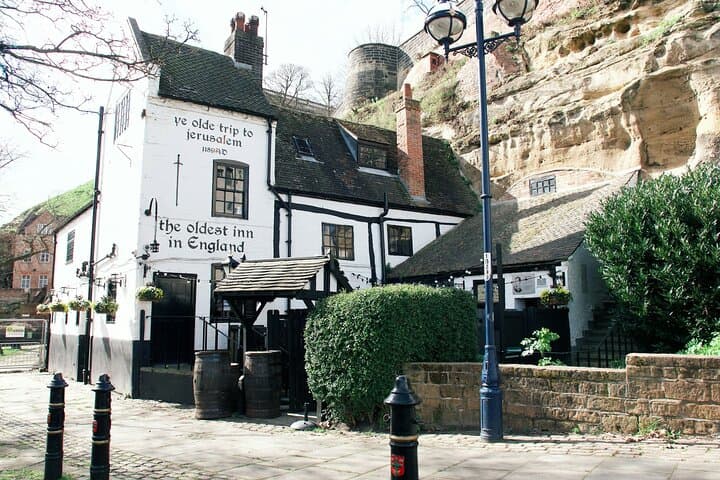
A local guide leads the group down narrow lanes of the Lace Market, past carved stone facades and the low, worn doorway of Ye Olde Trip to Jerusalem. The walk moves at a human pace: short climbs up cobbled alleys, pauses at plaques that mark Lord Byron’s early verses, and a deliberate stop to read the skyline from the castle grounds. Geologically, Nottingham sits on Triassic sandstones and Mercia Mudstone that have shaped its river valleys and the sandstone façades that give the city its warm tones.
History is constant company — from Roman traces and medieval merchants to the industrial lace industry that made the Lace Market famous — and the guide translates those layers into readable stories. Cultural notes on local pubs, contemporary street art, and tips for visiting Newstead Abbey add context to the legends.
Practical guidance is woven in: expect about two hours on foot and roughly 2–3 km of walking with only modest elevation changes. Wear grippy, comfortable shoes for cobbles and bring a compact rain jacket; Nottingham weather can change fast. The tour is wheelchair-accessible where routes permit and works well as a first-day orientation. Aim for morning departures to avoid crowds at the castle and to catch softer light on the stonework; finish with a recommended local pub or café to sample Nottinghamshire ale and refuel.
easy.
2 hours.
Suitable for most fitness levels—low aerobic demand, mostly level city walking with brief, gentle inclines.
The private tour runs about two hours and covers roughly 2–3 km on mostly level city streets with short cobbled inclines.
Yes—this private tour is suitable for families and routes are chosen to be as wheelchair-accessible as city streets allow; note some historic alleys have uneven surfaces.
This itinerary typically includes viewpoints and exterior history of the castle; paid entry to indoor exhibits or attractions is not usually included unless specified.
Yes—the private format allows the guide to tailor stops and focus (literary history, Robin Hood lore, architecture) based on your preferences.
Nottingham’s urban fabric mixes medieval street patterns with 18th–19th century industrial wealth from the lace trade; Lord Byron lived in the city briefly and Newstead Abbey nearby is linked to his family.
City walking produces low environmental impact, but visitors are encouraged to stick to paved routes, avoid littering, and support local conservation groups that manage riverbanks and historic buildings.
Tournava operates guided outdoor trips and adventures with an emphasis on safety, stewardship, and memorable experiences.
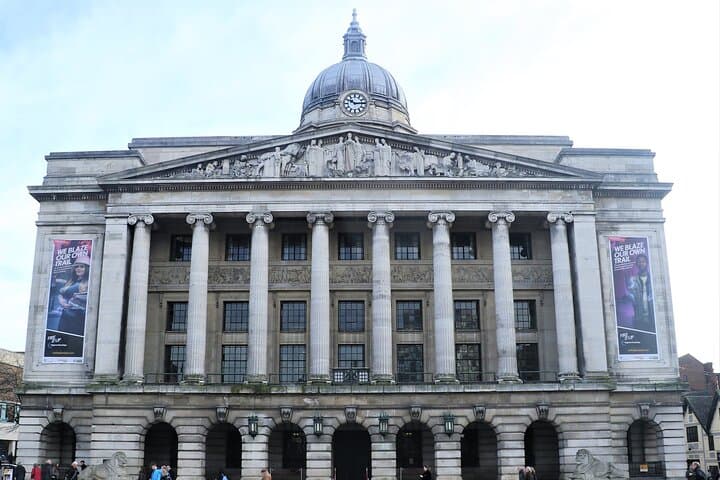
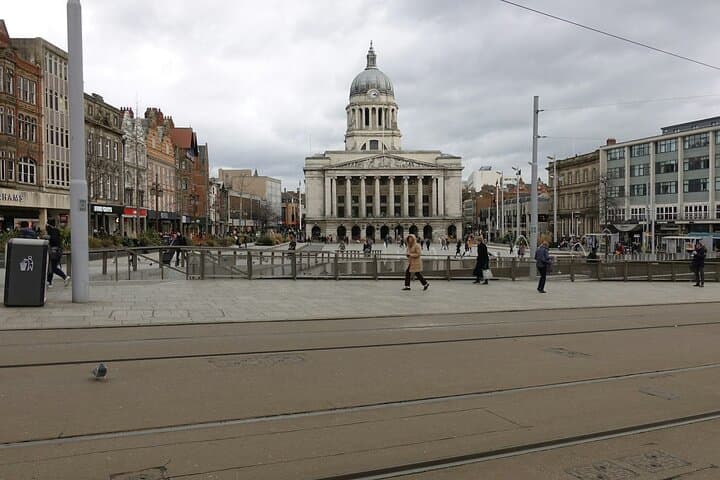
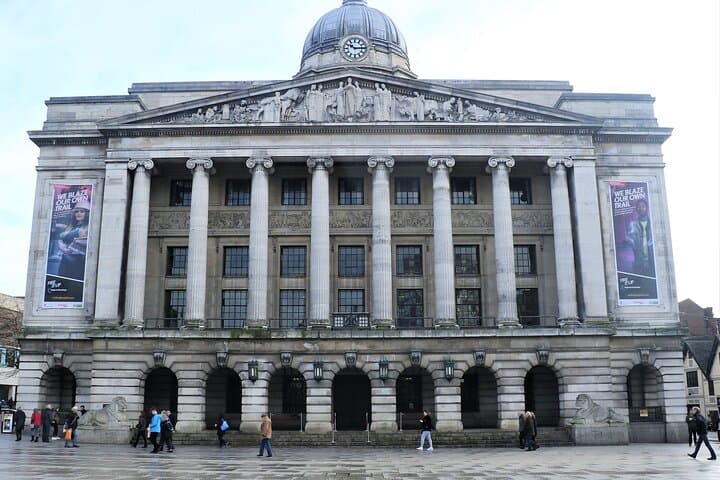
The tour opens in Old Market Square, where traffic hums and pigeons wheel above the Robin Hood statue — a starting point that immediately shifts attention from the modern city to its medieval stories.
The tour opens in Old Market Square, where traffic hums and pigeons wheel above the Robin Hood statue — a starting point that immediately shifts attention from the modern city to its medieval stories.
A local guide leads the group down narrow lanes of the Lace Market, past carved stone facades and the low, worn doorway of Ye Olde Trip to Jerusalem. The walk moves at a human pace: short climbs up cobbled alleys, pauses at plaques that mark Lord Byron’s early verses, and a deliberate stop to read the skyline from the castle grounds. Geologically, Nottingham sits on Triassic sandstones and Mercia Mudstone that have shaped its river valleys and the sandstone façades that give the city its warm tones.
History is constant company — from Roman traces and medieval merchants to the industrial lace industry that made the Lace Market famous — and the guide translates those layers into readable stories. Cultural notes on local pubs, contemporary street art, and tips for visiting Newstead Abbey add context to the legends.
Practical guidance is woven in: expect about two hours on foot and roughly 2–3 km of walking with only modest elevation changes. Wear grippy, comfortable shoes for cobbles and bring a compact rain jacket; Nottingham weather can change fast. The tour is wheelchair-accessible where routes permit and works well as a first-day orientation. Aim for morning departures to avoid crowds at the castle and to catch softer light on the stonework; finish with a recommended local pub or café to sample Nottinghamshire ale and refuel.