THE ADVENTURE COLLECTIVE® · Independent discovery and booking for outdoor travel

Cover Nottingham’s highlights in an efficient, local-led walk: from Old Market Square and the Robin Hood statue to the lace district and sandstone caves. This private, small-group tour delivers history, local tips, and a clear route for further exploration.
Cover Nottingham’s highlights in an efficient, local-led walk: from Old Market Square and the Robin Hood statue to the lace district and sandstone caves. This private, small-group tour delivers history, local tips, and a clear route for further exploration.
You step off the tram into Old Market Square and the city takes the first step toward you: bells, buskers, and the quick shuffle of commuters. A local guide falls into step, voice low and fast, pointing out a carved stone here, a patched Georgian façade there—each marker a shard of Nottingham’s long public story.
Verified experiences and guided adventures in the surrounding area.
Operated by LocalBini - The go-to platform for Experiences by Locals in the United Kingdom · Nottingham, Nottinghamshire
You step off the tram into Old Market Square and the city takes the first step toward you: bells, buskers, and the quick shuffle of commuters. A local guide falls into step, voice low and fast, pointing out a carved stone here, a patched Georgian façade there—each marker a shard of Nottingham’s long public story.
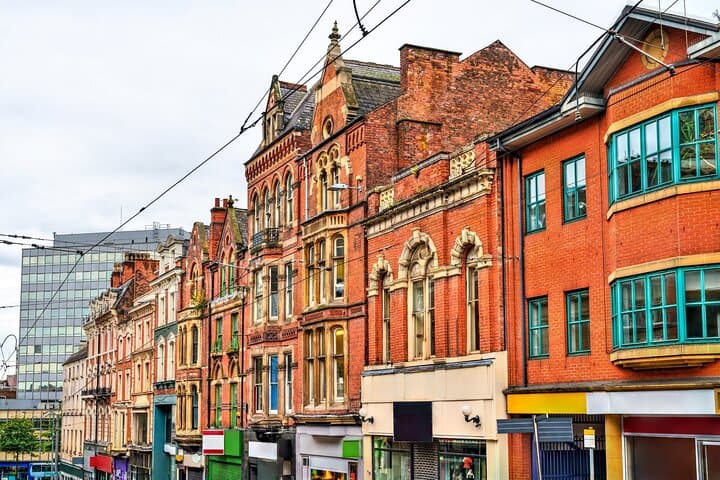
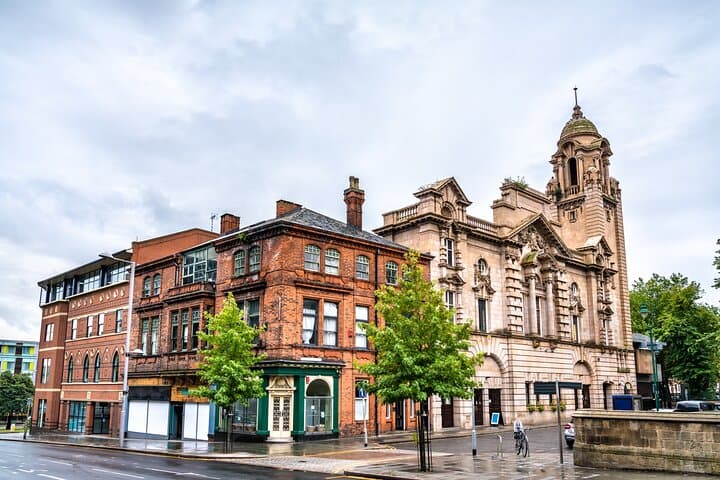
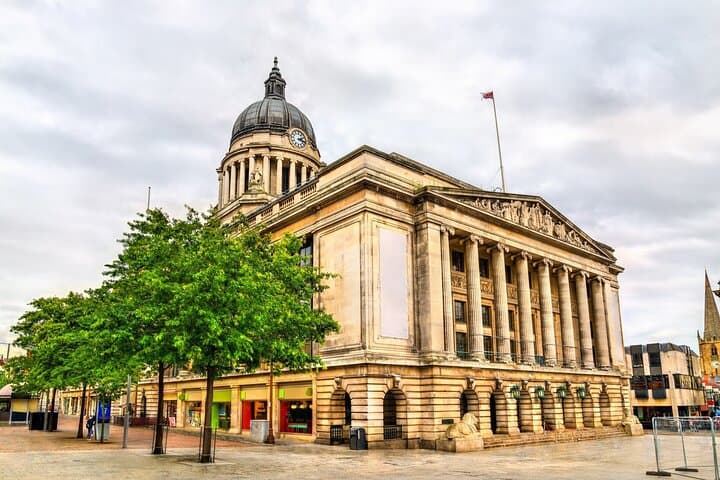
The route threads through the lace quarter and past the Robin Hood statue, across streets that grew from a medieval market and into areas cut into Triassic sandstone where the City of Caves began to form centuries ago. Nottingham’s industrial age—lace, coal and bicycle manufacture—left both handsome townhouses and working-class terraces; traces of that history show in narrow alleys and in the neoclassical outline of the Council House with its bell “Little John.”
Culturally, the city is direct and convivial: indie cafés in Hockley, punk-to-period pubs, and a students’ pulse that keeps corners lively. Geological quirks—sandstone escarpments and man-carved cave chambers—give the center an underground second act that a local will point you toward.
Practical guidance: this is a brisk urban walk of roughly 1–2 miles over mostly paved surfaces with short stair sections; expect frequent stops for photos and local stories. Wear supportive shoes, bring a light layer and a small water bottle, and plan to arrive 10 minutes early to make the most of the hour. If you want museum entries or castle access, budget extra time—the walking tour orients you to what’s worth a return visit.
easy.
1 hour.
Suitable for most fitness levels; requires the ability to walk up short flights of steps and stand for brief explanations.
The guided walk lasts approximately 60 minutes and covers about 1–2 miles of city center streets on mostly level pavement.
No—entry fees to museums or city attractions are not included; the guide will point out sites worth returning to on your own.
Yes—strollers are usable on most parts of the route, though there are a few short stair sections and some uneven pavement.
The tour adapts to group interests within the time available, but being a short, private tour limits how many stops can be added.
Nottingham grew from a medieval market town into an industrial center noted for lace-making and manufacturing; the city’s folklore connection to Robin Hood enhances its historic identity.
Many central streets are conservation areas protecting historic facades and cave systems—respect signage, stick to public walkways, and support local businesses to minimize impact.
LocalBini - The go-to platform for Experiences by Locals in the United Kingdom operates guided outdoor trips and adventures with an emphasis on safety, stewardship, and memorable experiences.

You step off the tram into Old Market Square and the city takes the first step toward you: bells, buskers, and the quick shuffle of commuters. A local guide falls into step, voice low and fast, pointing out a carved stone here, a patched Georgian façade there—each marker a shard of Nottingham’s long public story.
You step off the tram into Old Market Square and the city takes the first step toward you: bells, buskers, and the quick shuffle of commuters. A local guide falls into step, voice low and fast, pointing out a carved stone here, a patched Georgian façade there—each marker a shard of Nottingham’s long public story.
The route threads through the lace quarter and past the Robin Hood statue, across streets that grew from a medieval market and into areas cut into Triassic sandstone where the City of Caves began to form centuries ago. Nottingham’s industrial age—lace, coal and bicycle manufacture—left both handsome townhouses and working-class terraces; traces of that history show in narrow alleys and in the neoclassical outline of the Council House with its bell “Little John.”
Culturally, the city is direct and convivial: indie cafés in Hockley, punk-to-period pubs, and a students’ pulse that keeps corners lively. Geological quirks—sandstone escarpments and man-carved cave chambers—give the center an underground second act that a local will point you toward.
Practical guidance: this is a brisk urban walk of roughly 1–2 miles over mostly paved surfaces with short stair sections; expect frequent stops for photos and local stories. Wear supportive shoes, bring a light layer and a small water bottle, and plan to arrive 10 minutes early to make the most of the hour. If you want museum entries or castle access, budget extra time—the walking tour orients you to what’s worth a return visit.