
Noryangjin Fish Market Gastroventure: A Two-Hour Deep Dive into Seoul’s Seafood Scene
Explore Korea’s largest seafood market on a focused two-hour guided walk that decodes auctions, freshness cues, and street-side tasting. Arrive hungry—this gastroventure pairs market culture with hands-on food discovery.
An Adventure In Seoul.
Explore Korea’s largest seafood market on a focused two-hour guided walk that decodes auctions, freshness cues, and street-side tasting. Arrive hungry—this gastroventure pairs market culture with hands-on food discovery.
Read the full experience
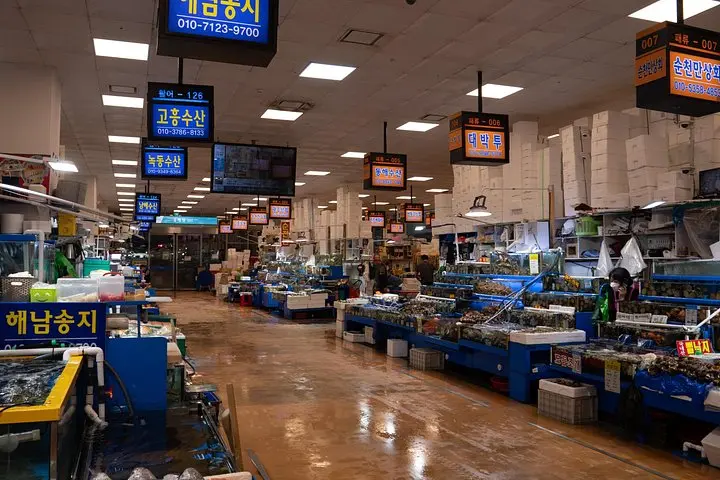
You step off the subway into a city of brisk voices and sharp salt: covered aisles, vendors calling prices, knives flashing as fish are filleted to order. Noryangjin Market moves with quiet urgency—trucks arriving at dawn, auction paddles tapping decisions, and shoppers scanning mountains of glinting seafood.
You step off the subway into a city of brisk voices and sharp salt: covered aisles, vendors calling prices, knives flashing as fish are filleted to order. Noryangjin Market moves with quiet urgency—trucks arriving at dawn, auction paddles tapping decisions, and shoppers scanning mountains of glinting seafood.
The market has been a central node in Seoul’s food chain since the early 20th century, growing into the metropolis’ largest wholesale seafood hub. Geologically, the market sits on reclaimed land near the Han River estuary; culturally it reflects Korea’s long relationship with the sea—from salted anchovy stocks to sashimi-grade halibut.
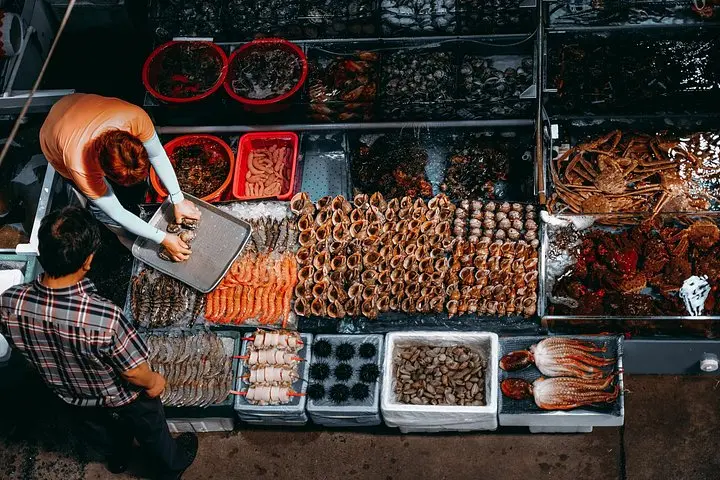
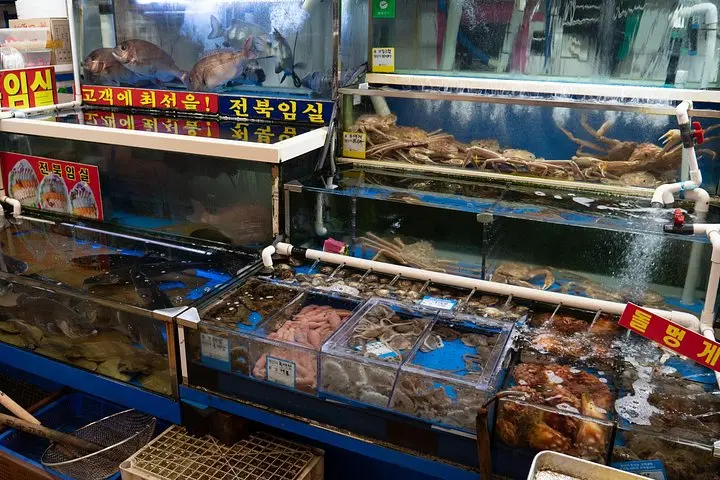
A guided two-hour walk here decodes the trading rituals: how prices are set at auction, how freshness is judged by smell and texture, and why certain species dominate Korean tables. Expect stalls stacked with live crabs, whole flounder, squid, and trays of prepared banchan ready to eat. Vendors often offer quick tastings; the experience is sensory and efficient.
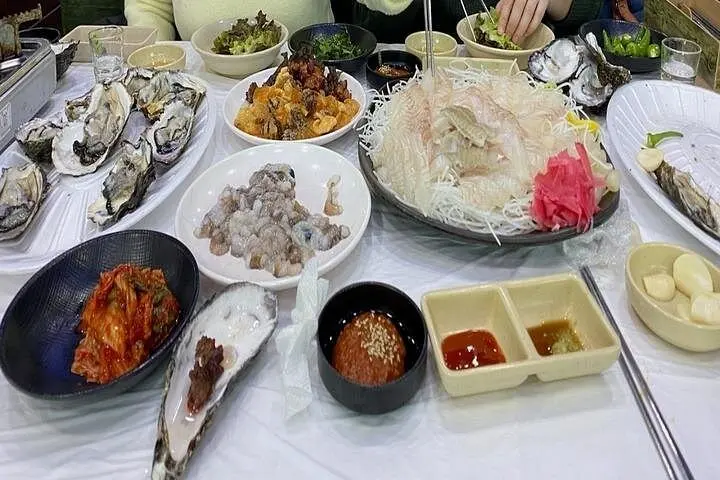
Practical edge: arrive with small bills, a hunger for umami, and comfortable shoes for standing and walking. Tours run roughly two hours and usually finish at a sit-down counter where your chosen catch can be prepared. Morning light and cooler hours are best for auctions and calmer crowds; evenings are livelier and better for trying cooked seafood.
This is urban exploration with a culinary pulse—part market anthropology, part street food crawl—ideal for travelers who want to understand Seoul through what Koreans eat and how they sell it.
Frequently asked questions
Expect mostly short-distance walking and standing inside covered market aisles; the tour is suitable for most mobility levels.
Yes—many stalls or nearby restaurants will prepare your purchase for an additional fee; your guide can point you to options.
Most public tours are offered in English; verify language when booking if you need another language.
Children are welcome but the environment can be busy and wet; keep them close and supervise around tanks and cutting stations.
About This Experience
koreaguidetour operates guided outdoor trips and adventures with an emphasis on safety, stewardship, and memorable experiences.
Adventure tips
Recommended gear
- Comfortable walking shoes: Non-slip soles help on wet market floors and crowded aisles.
- Small-denomination cash: Many stalls prefer cash for small purchases and tipping your guide.
- Light rain jacket or windbreaker: Market areas can be damp from ice melt or wet floors—light protection keeps you dry.
- Reusable tote bag: Useful for carrying small purchases or packaged food to eat later.
Photos of the experience
Related adventures & guides
Read the full experience
You step off the subway into a city of brisk voices and sharp salt: covered aisles, vendors calling prices, knives flashing as fish are filleted to order. Noryangjin Market moves with quiet urgency—trucks arriving at dawn, auction paddles tapping decisions, and shoppers scanning mountains of glinting seafood.
You step off the subway into a city of brisk voices and sharp salt: covered aisles, vendors calling prices, knives flashing as fish are filleted to order. Noryangjin Market moves with quiet urgency—trucks arriving at dawn, auction paddles tapping decisions, and shoppers scanning mountains of glinting seafood.
The market has been a central node in Seoul’s food chain since the early 20th century, growing into the metropolis’ largest wholesale seafood hub. Geologically, the market sits on reclaimed land near the Han River estuary; culturally it reflects Korea’s long relationship with the sea—from salted anchovy stocks to sashimi-grade halibut.
A guided two-hour walk here decodes the trading rituals: how prices are set at auction, how freshness is judged by smell and texture, and why certain species dominate Korean tables. Expect stalls stacked with live crabs, whole flounder, squid, and trays of prepared banchan ready to eat. Vendors often offer quick tastings; the experience is sensory and efficient.
Practical edge: arrive with small bills, a hunger for umami, and comfortable shoes for standing and walking. Tours run roughly two hours and usually finish at a sit-down counter where your chosen catch can be prepared. Morning light and cooler hours are best for auctions and calmer crowds; evenings are livelier and better for trying cooked seafood.
This is urban exploration with a culinary pulse—part market anthropology, part street food crawl—ideal for travelers who want to understand Seoul through what Koreans eat and how they sell it.
Make a day of it nearby.
Verified experiences and guided adventures in the surrounding area.