THE ADVENTURE COLLECTIVE® · Independent discovery and booking for outdoor travel

Two days of rock towers, Paleolithic cave art and a Danube-side fortress: this guided loop from Sofia threads geology and medieval history across Northwest Bulgaria. Expect dramatic viewpoints, compact cave walks, and a night by the river in Vidin.
Two days of rock towers, Paleolithic cave art and a Danube-side fortress: this guided loop from Sofia threads geology and medieval history across Northwest Bulgaria. Expect dramatic viewpoints, compact cave walks, and a night by the river in Vidin.
By the time the minivan slips out of Sofia at dawn the air has a crispness that feels like the region itself waking up. Low foothills flatten into fields and, an hour or two later, the road turns and the Belogradchik rocks appear—raw walls and sculpted towers that seem to push the sky aside. The cliffs rise in shapes locals have named for decades: the Schoolgirl, the Madonna, the Dervish. Rivers below dare you to look down; the Danube waits in the distance, patient and boundary-making.
Verified experiences and guided adventures in the surrounding area.
Operated by Bulgarian Fairy Tale · Vidin, Vidin Province
By the time the minivan slips out of Sofia at dawn the air has a crispness that feels like the region itself waking up. Low foothills flatten into fields and, an hour or two later, the road turns and the Belogradchik rocks appear—raw walls and sculpted towers that seem to push the sky aside. The cliffs rise in shapes locals have named for decades: the Schoolgirl, the Madonna, the Dervish. Rivers below dare you to look down; the Danube waits in the distance, patient and boundary-making.
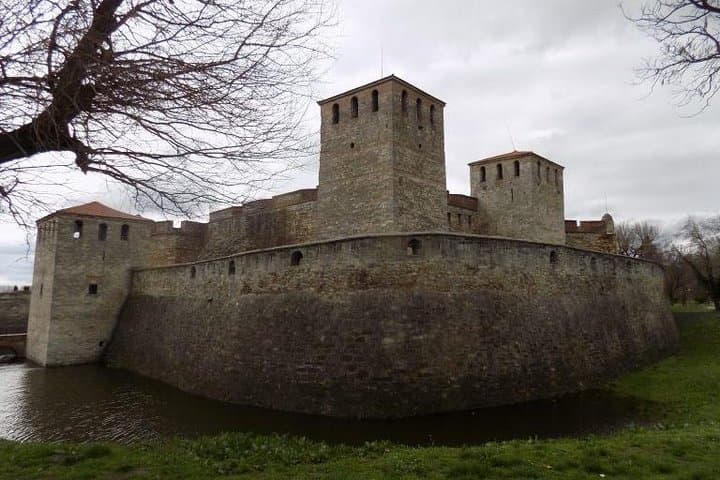
This two-day loop folds together geology and history. The red and gray Belogradchik formations are weathered sandstone and conglomerate, eroded over millions of years into pillars as tall as 200 meters. Nearby Magura cave keeps darker, human-scale secrets: Parietal paintings in its chambers date back to the Upper Paleolithic and Bronze Age, picturing hunting scenes and ritual symbols. Further toward the Danube sits Vidin, once a Roman frontier post on the Danubian Limes and later the center of a medieval Bulgarian realm under Ivan Sratsimir; the fortress Baba Vida still reads like a military ledger carved in stone.
On day two the tour moves into caves that act and react to seasons. Venetsa cave was cataloged in the 1970s and only opened to visitors in recent years; Ledenika cave produces winter ice formations that catch colored lights, making stalactites and columns look like props on a stage. The God’s Bridge natural arch is Cretaceous limestone that remembers shallow seas and later Roman patrols—the stone itself has seen tides of empires.
Practical guide: the itinerary runs roughly 48 hours with about 3–3.5 hours of driving on the first morning from Sofia to Belogradchik (≈170–190 km), with shorter hops—20–45 minutes—between rock formations, caves, and Vidin. Expect cave tours of 30–60 minutes each, with 500–1,000 meters of walking per cave on uneven steps and low passages. Elevations are modest; Belogradchik town sits around 430 m while Vidin sits close to the Danube floodplain. The tour includes one night in a riverside hotel in Vidin and museum and cave entrance fees as listed.
Pack good walking shoes, a light waterproof layer, and a refillable water bottle. Caves are cool year-round; bring a warm layer. Photography rewards early-morning or late-afternoon light at Kaleto fortress and the Baba Vida ramparts. If you want thinner crowds, request early departures and avoid national holidays. The route is welcoming to most fitness levels, but note the tour is not recommended for pregnant travelers and involves some stairs and uneven terrain.
easy.
2 days.
Suitable for travelers in average physical condition; involves walking up stairs and on uneven surfaces but no technical exertion.
Expect about 3–3.5 hours from Sofia to Belogradchik on day one, with shorter drives of 20–60 minutes between subsequent sites; total driving time over two days is approximately 6–7 hours.
Yes—entrance tickets for three caves are included in the tour price as listed in the inclusions.
The operator notes infants and small children can use a stroller in some spots, but caves have stairs and narrow passages—be prepared to carry children where necessary.
Guides are typically local and may speak English; confirm language needs at booking to ensure your guide can accommodate you.
Parts of the itinerary, like fortress ramparts and caves, require stair climbing and uneven walking—those with limited mobility should check specific site accessibility before booking.
The tour includes two dinners and suggests trying local Danube fish specialties and regional Bulgarian dishes; breakfasts are generally at your hotel or arranged locally.
This route traces the Danubian Limes of the Roman Empire and later served as the capital area of Ivan Sratsimir’s medieval Bulgarian realm; archaeological layers are visible in fortresses, museums, and cave art.
Caves and rock formations are sensitive to foot traffic and lighting; stick to marked paths, avoid touching cave formations, and support local guides who follow site-protection rules.
Bulgarian Fairy Tale operates guided outdoor trips and adventures with an emphasis on safety, stewardship, and memorable experiences.
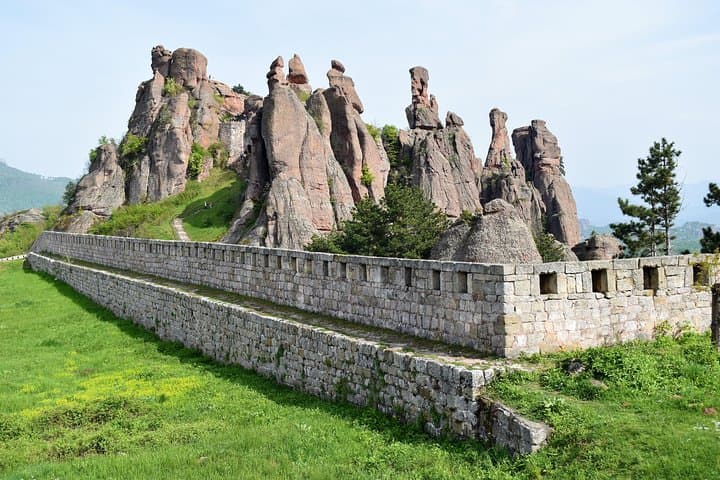
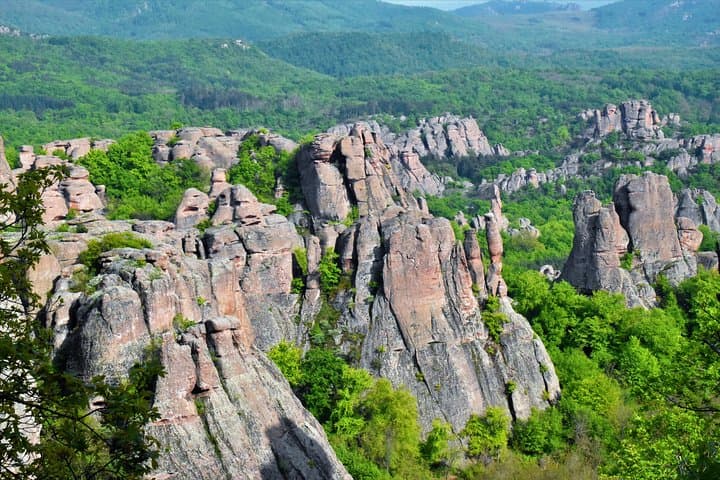
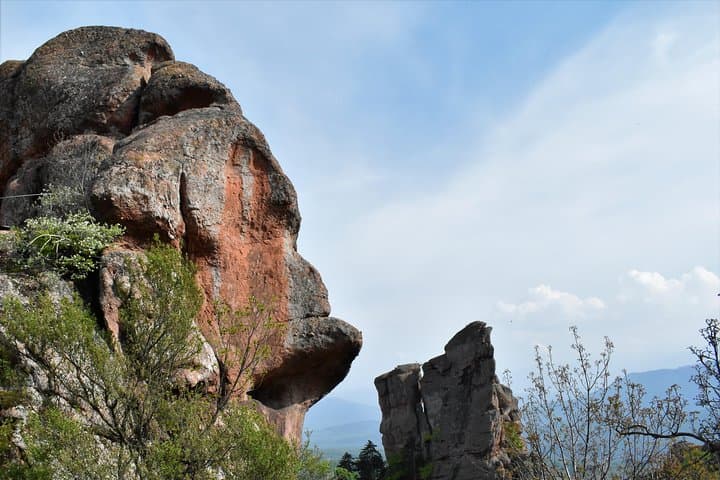
By the time the minivan slips out of Sofia at dawn the air has a crispness that feels like the region itself waking up. Low foothills flatten into fields and, an hour or two later, the road turns and the Belogradchik rocks appear—raw walls and sculpted towers that seem to push the sky aside. The cliffs rise in shapes locals have named for decades: the Schoolgirl, the Madonna, the Dervish. Rivers below dare you to look down; the Danube waits in the distance, patient and boundary-making.
By the time the minivan slips out of Sofia at dawn the air has a crispness that feels like the region itself waking up. Low foothills flatten into fields and, an hour or two later, the road turns and the Belogradchik rocks appear—raw walls and sculpted towers that seem to push the sky aside. The cliffs rise in shapes locals have named for decades: the Schoolgirl, the Madonna, the Dervish. Rivers below dare you to look down; the Danube waits in the distance, patient and boundary-making.
This two-day loop folds together geology and history. The red and gray Belogradchik formations are weathered sandstone and conglomerate, eroded over millions of years into pillars as tall as 200 meters. Nearby Magura cave keeps darker, human-scale secrets: Parietal paintings in its chambers date back to the Upper Paleolithic and Bronze Age, picturing hunting scenes and ritual symbols. Further toward the Danube sits Vidin, once a Roman frontier post on the Danubian Limes and later the center of a medieval Bulgarian realm under Ivan Sratsimir; the fortress Baba Vida still reads like a military ledger carved in stone.
On day two the tour moves into caves that act and react to seasons. Venetsa cave was cataloged in the 1970s and only opened to visitors in recent years; Ledenika cave produces winter ice formations that catch colored lights, making stalactites and columns look like props on a stage. The God’s Bridge natural arch is Cretaceous limestone that remembers shallow seas and later Roman patrols—the stone itself has seen tides of empires.
Practical guide: the itinerary runs roughly 48 hours with about 3–3.5 hours of driving on the first morning from Sofia to Belogradchik (≈170–190 km), with shorter hops—20–45 minutes—between rock formations, caves, and Vidin. Expect cave tours of 30–60 minutes each, with 500–1,000 meters of walking per cave on uneven steps and low passages. Elevations are modest; Belogradchik town sits around 430 m while Vidin sits close to the Danube floodplain. The tour includes one night in a riverside hotel in Vidin and museum and cave entrance fees as listed.
Pack good walking shoes, a light waterproof layer, and a refillable water bottle. Caves are cool year-round; bring a warm layer. Photography rewards early-morning or late-afternoon light at Kaleto fortress and the Baba Vida ramparts. If you want thinner crowds, request early departures and avoid national holidays. The route is welcoming to most fitness levels, but note the tour is not recommended for pregnant travelers and involves some stairs and uneven terrain.