THE ADVENTURE COLLECTIVE® · Independent discovery and booking for outdoor travel

Spend a full day exploring Northland’s native forest near Broadwood with a guide. Walk winding trails, learn cultural and ecological history, enjoy a forest-camp lunch, and opt into birding, orchid seeking, or catch-and-release koura spotting.
Spend a full day exploring Northland’s native forest near Broadwood with a guide. Walk winding trails, learn cultural and ecological history, enjoy a forest-camp lunch, and opt into birding, orchid seeking, or catch-and-release koura spotting.
Morning light slices between rimu trunks as you step off the forest track near Broadwood and into a green hush. Moss softens each footfall; a stream calls, daring you to peer beneath its stones. Over eight hours your guide leads a compact group along winding trails, pausing where native birds chorus and where the understory opens to orchids and fern groves.
Verified experiences and guided adventures in the surrounding area.
Operated by Forest of Ruru · Broadwood, Northland
Morning light slices between rimu trunks as you step off the forest track near Broadwood and into a green hush. Moss softens each footfall; a stream calls, daring you to peer beneath its stones. Over eight hours your guide leads a compact group along winding trails, pausing where native birds chorus and where the understory opens to orchids and fern groves.
This part of Northland sits on ancient, weathered volcanic soils and pockets of sedimentary terraces—ground that helped support large kauri and podocarp stands before logging and farming changed the landscape. Māori have long used these forests for food, fiber and seasonal foraging; today guides often point out cultural plant uses and local place names while explaining ongoing kauri protection efforts.
Expect a mix of single-track forest, streamside scrambles of under a kilometre at a stretch, and soft, sometimes muddy footing. After roughly 0.6 miles (1 km) you’ll stop at a simple forest camp for hot tea and lunch, then choose activities: focused bird-watching for tūī and kererū, searching for native orchids, or low-impact crayfish (koura) spotting and catch-and-release in clear pools.
Practical edge: wear waterproof boots with good tread, bring layered rain protection, a headlamp if you plan pre-dawn starts, and binoculars for bird identification. The route is moderate—steady walking with some short hills—and suited to anyone with reasonable fitness. Guides prioritize low-impact techniques: stay on trails, clean boots for kauri dieback prevention, and follow instructions when handling wildlife. Leave with knowledge of the forest’s ecology and a clearer sense of how to explore Northland responsibly.
moderate.
8 hours.
Suitable for people with moderate fitness who can manage several hours of walking on uneven trails and short stream crossings
The walk is rated moderate: several hours of walking on uneven, sometimes muddy terrain with short hills and occasional streamside scrambles; a reasonable level of fitness is required.
Children can join if they are comfortable walking for several hours and supervised—check with the operator about minimum ages and group size limits.
No—koura are catch-and-release only; guides demonstrate low-impact handling and local regulations are followed to protect populations.
Pickup is often arranged at the rainforest entrance near Broadwood; booking questions include pickup point—confirm details with the operator when reserving.
The forests of Northland were important resource areas for Māori and later saw selective logging and land conversion; many local guides interpret both cultural plant uses and the ecological impacts of early industry.
Kauri dieback and habitat fragmentation are active concerns—visitors should clean footwear, stay on marked tracks, and follow guide instructions to reduce impact.
Forest of Ruru operates guided outdoor trips and adventures with an emphasis on safety, stewardship, and memorable experiences.
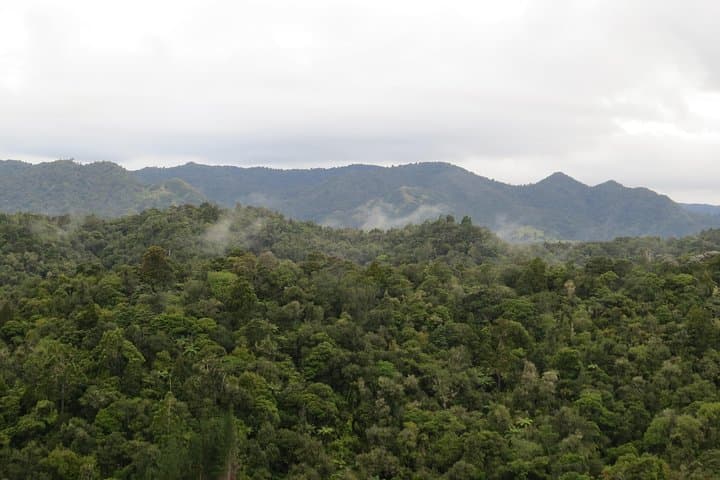

Morning light slices between rimu trunks as you step off the forest track near Broadwood and into a green hush. Moss softens each footfall; a stream calls, daring you to peer beneath its stones. Over eight hours your guide leads a compact group along winding trails, pausing where native birds chorus and where the understory opens to orchids and fern groves.
Morning light slices between rimu trunks as you step off the forest track near Broadwood and into a green hush. Moss softens each footfall; a stream calls, daring you to peer beneath its stones. Over eight hours your guide leads a compact group along winding trails, pausing where native birds chorus and where the understory opens to orchids and fern groves.
This part of Northland sits on ancient, weathered volcanic soils and pockets of sedimentary terraces—ground that helped support large kauri and podocarp stands before logging and farming changed the landscape. Māori have long used these forests for food, fiber and seasonal foraging; today guides often point out cultural plant uses and local place names while explaining ongoing kauri protection efforts.
Expect a mix of single-track forest, streamside scrambles of under a kilometre at a stretch, and soft, sometimes muddy footing. After roughly 0.6 miles (1 km) you’ll stop at a simple forest camp for hot tea and lunch, then choose activities: focused bird-watching for tūī and kererū, searching for native orchids, or low-impact crayfish (koura) spotting and catch-and-release in clear pools.
Practical edge: wear waterproof boots with good tread, bring layered rain protection, a headlamp if you plan pre-dawn starts, and binoculars for bird identification. The route is moderate—steady walking with some short hills—and suited to anyone with reasonable fitness. Guides prioritize low-impact techniques: stay on trails, clean boots for kauri dieback prevention, and follow instructions when handling wildlife. Leave with knowledge of the forest’s ecology and a clearer sense of how to explore Northland responsibly.