THE ADVENTURE COLLECTIVE® · Independent discovery and booking for outdoor travel

Step beyond St. Mark’s to explore the Northern Venice Lagoon aboard a traditional bragozzo. This four-hour private tour visits Burano and Murano, weaving history, craft and shallow-water navigation into a quiet, authentic Venetian experience.
Step beyond St. Mark’s to explore the Northern Venice Lagoon aboard a traditional bragozzo. This four-hour private tour visits Burano and Murano, weaving history, craft and shallow-water navigation into a quiet, authentic Venetian experience.
You push off from the Fondamenta Nove and the lagoon opens like a living map—salt flats bare and silver, reed-lined channels narrowing and widening as the bragozzo glides over them. The boat’s flat bottom hums; an awning throws cool shade while the pilot reads currents and shallow shoals as if they were pages.
Verified experiences and guided adventures in the surrounding area.
Operated by Il Bragozzo di Serantoni Tommaso · Venice, Veneto
You push off from the Fondamenta Nove and the lagoon opens like a living map—salt flats bare and silver, reed-lined channels narrowing and widening as the bragozzo glides over them. The boat’s flat bottom hums; an awning throws cool shade while the pilot reads currents and shallow shoals as if they were pages.
This is not the gondola’s picture-book Venice but the older, working lagoon. The bragozzo predates the gondola and appears in Renaissance canvases—built for hauling and navigating shallow marshes where Venice first took shape. As you pass Burano’s candy-colored facades and Murano’s glass chimneys, guides point out islands that once quarantined ships, monastic refuges, and communal vegetable gardens that still supply the city.
Geologically the lagoon is a shallow lagoonal plain, a patchwork of salt marshes, tidal channels and mudflats shaped by tides and rivers. Culturally it’s where artisanal glassmaking and lacemaking developed alongside fishermen’s traditions; your stop at a Murano furnace and a Burano lace shop ties craft to place.
Practical guidance: expect calm, low-impact cruising but bring sun protection and a light wind layer—sea breezes turn cool quickly. Comfortable shoes are fine—you’ll board a stable flat-deck boat and step ashore on wooden piers or uneven island paths.
Timing matters: mornings offer softer light and fewer boats; late afternoon brings warm color. Respect fragile saltmarshes by staying on board unless directed, and follow your guide’s advice on where to walk and photograph.
easy.
4 hours.
Suitable for all fitness levels; requires short walks ashore on uneven surfaces and stable boat boarding.
The meeting point is outside the ACTV OSPEDALE stop on the Fondamenta Nove; the tour returns to the same location.
Yes—standard itinerary includes stops on Burano and Murano with time to explore; some smaller islets are passed without stopping.
Yes—prams are accommodated and the tour is described as physically easy; families should still watch children on docks and piers.
Smaller traditional bragozzi may not have full restrooms; plan accordingly and check with the operator if this is required.
The bragozzo is an older working boat type than the gondola; the lagoon’s islands served varied roles—artisanal centers, monastic retreats and quarantine stations important to Venice’s maritime history.
The Venice Lagoon is ecologically fragile; low-wake navigation and sticking to marked landing points help protect salt marshes and nesting birds—support local guides who practice sustainable boating.
Il Bragozzo di Serantoni Tommaso operates guided outdoor trips and adventures with an emphasis on safety, stewardship, and memorable experiences.
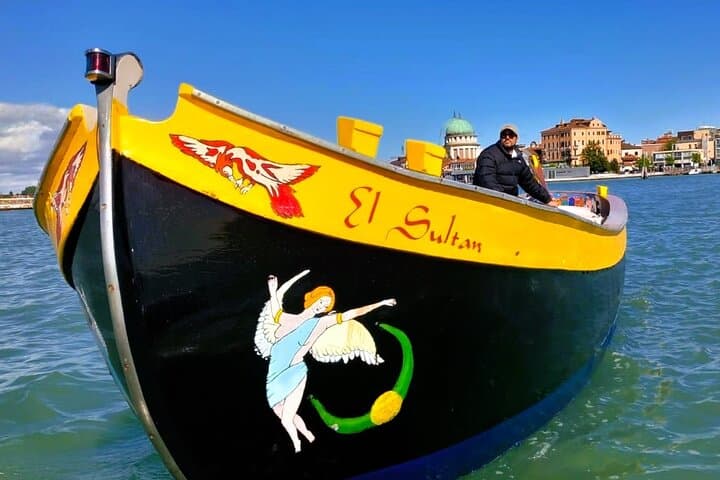
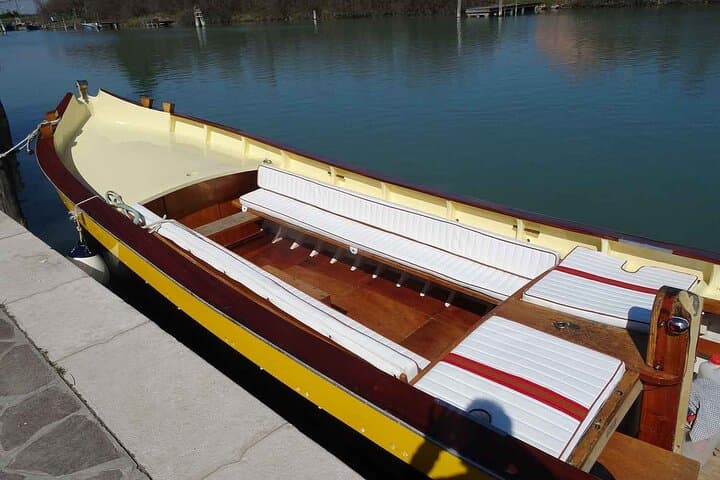

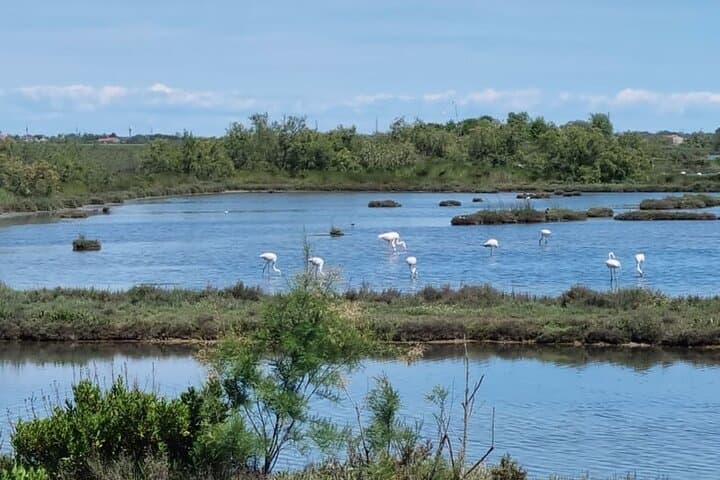
You push off from the Fondamenta Nove and the lagoon opens like a living map—salt flats bare and silver, reed-lined channels narrowing and widening as the bragozzo glides over them. The boat’s flat bottom hums; an awning throws cool shade while the pilot reads currents and shallow shoals as if they were pages.
You push off from the Fondamenta Nove and the lagoon opens like a living map—salt flats bare and silver, reed-lined channels narrowing and widening as the bragozzo glides over them. The boat’s flat bottom hums; an awning throws cool shade while the pilot reads currents and shallow shoals as if they were pages.
This is not the gondola’s picture-book Venice but the older, working lagoon. The bragozzo predates the gondola and appears in Renaissance canvases—built for hauling and navigating shallow marshes where Venice first took shape. As you pass Burano’s candy-colored facades and Murano’s glass chimneys, guides point out islands that once quarantined ships, monastic refuges, and communal vegetable gardens that still supply the city.
Geologically the lagoon is a shallow lagoonal plain, a patchwork of salt marshes, tidal channels and mudflats shaped by tides and rivers. Culturally it’s where artisanal glassmaking and lacemaking developed alongside fishermen’s traditions; your stop at a Murano furnace and a Burano lace shop ties craft to place.
Practical guidance: expect calm, low-impact cruising but bring sun protection and a light wind layer—sea breezes turn cool quickly. Comfortable shoes are fine—you’ll board a stable flat-deck boat and step ashore on wooden piers or uneven island paths.
Timing matters: mornings offer softer light and fewer boats; late afternoon brings warm color. Respect fragile saltmarshes by staying on board unless directed, and follow your guide’s advice on where to walk and photograph.