THE ADVENTURE COLLECTIVE® · Independent discovery and booking for outdoor travel

Ride through silent snowfields behind sturdy Finnhorses, warm beneath blankets as the Lapland sky hunts for the aurora. This three-hour evening tour blends traditional harnessing stories, campfire time, and a chance to see the Northern Lights near Rovaniemi.
Ride through silent snowfields behind sturdy Finnhorses, warm beneath blankets as the Lapland sky hunts for the aurora. This three-hour evening tour blends traditional harnessing stories, campfire time, and a chance to see the Northern Lights near Rovaniemi.
Snow compresses under the wooden runners and the forest exhales a silence so complete the sleigh sounds like a metronome in the dark. Wrapped in wool blankets, you slide between rows of spruce as the cold air nips at your cheeks and the horses' breath fogs the lamp glow. Above, the sky waits — a canvas that may flare to green and purple if the aurora answers.
Verified experiences and guided adventures in the surrounding area.
Snow compresses under the wooden runners and the forest exhales a silence so complete the sleigh sounds like a metronome in the dark. Wrapped in wool blankets, you slide between rows of spruce as the cold air nips at your cheeks and the horses' breath fogs the lamp glow. Above, the sky waits — a canvas that may flare to green and purple if the aurora answers.
This experience sits inside classic Lapland: boreal pines, peatlands, and a short human history of horse husbandry and Sámi presence. The Finnhorse itself is a national breed historically used for farm work and forestry; seeing them harnessed recalls a practical past where animals and people moved across winter landscapes together. Geology here is gentle — glaciated bedrock, shallow soils and rivers that freeze into glassy ribbons — shaping trails that the sleigh follows.
Culturally, the night pairs practical warmth with quiet storytelling: campfire sausages, tales of reindeer routes, and demonstrations of traditional harnessing.
Practically, expect a three-hour outing starting from near Rovaniemi, temperatures well below freezing in winter, and low light conditions that favor aurora viewing. Dress in insulated layers, bring a headlamp and a thermal drink, and prepare for simple trail surfaces — packed snow, occasional ice. Photographers should use a tripod and long exposures; remember that the aurora isn’t guaranteed. Be respectful of animals, keep noise modest, and plan post-tour warm-up time back in town.
easy.
2–3 hours.
Minimal fitness required; participants should be able to step into a low sleigh and sit for the duration
No — the aurora is a natural phenomenon and sightings depend on solar activity and clear skies; operators maximize chances by choosing dark, open locations.
Yes — children can join when supervised; check age or lap-sitting policies with the operator and dress kids warmly for extended cold exposure.
Winter temperatures commonly range from −5°C to −30°C; wear moisture-wicking base layers, an insulating mid-layer, a windproof outer shell, warm boots, hat, gloves, and hand warmers.
Yes — Finnhorses used on tours are typically trained for passenger sleighs; guides will demonstrate harnessing and follow animal welfare best practices.
Finnhorses were long-used in Finnish agriculture and forestry; traditional harnessing techniques you may see reflect practical work rhythms from the 19th–20th centuries.
Operators often avoid cutting new trails and limit group sizes to reduce disturbance; keep to provided paths and minimize artificial light to protect nocturnal wildlife and aurora visibility.
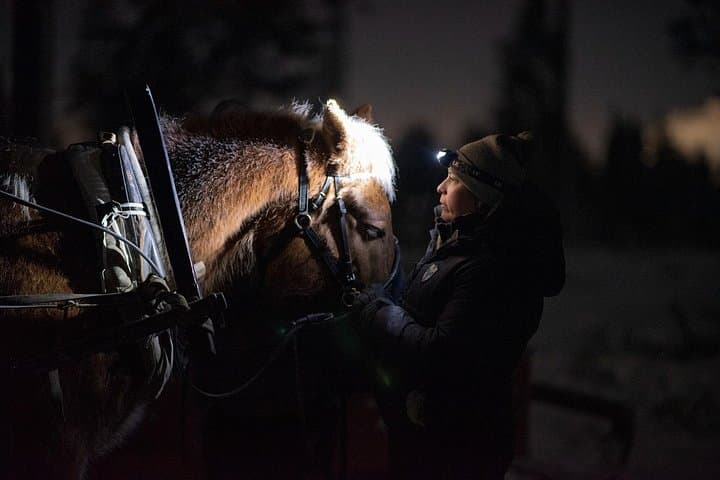
Snow compresses under the wooden runners and the forest exhales a silence so complete the sleigh sounds like a metronome in the dark. Wrapped in wool blankets, you slide between rows of spruce as the cold air nips at your cheeks and the horses' breath fogs the lamp glow. Above, the sky waits — a canvas that may flare to green and purple if the aurora answers.
Snow compresses under the wooden runners and the forest exhales a silence so complete the sleigh sounds like a metronome in the dark. Wrapped in wool blankets, you slide between rows of spruce as the cold air nips at your cheeks and the horses' breath fogs the lamp glow. Above, the sky waits — a canvas that may flare to green and purple if the aurora answers.
This experience sits inside classic Lapland: boreal pines, peatlands, and a short human history of horse husbandry and Sámi presence. The Finnhorse itself is a national breed historically used for farm work and forestry; seeing them harnessed recalls a practical past where animals and people moved across winter landscapes together. Geology here is gentle — glaciated bedrock, shallow soils and rivers that freeze into glassy ribbons — shaping trails that the sleigh follows.
Culturally, the night pairs practical warmth with quiet storytelling: campfire sausages, tales of reindeer routes, and demonstrations of traditional harnessing.
Practically, expect a three-hour outing starting from near Rovaniemi, temperatures well below freezing in winter, and low light conditions that favor aurora viewing. Dress in insulated layers, bring a headlamp and a thermal drink, and prepare for simple trail surfaces — packed snow, occasional ice. Photographers should use a tripod and long exposures; remember that the aurora isn’t guaranteed. Be respectful of animals, keep noise modest, and plan post-tour warm-up time back in town.