THE ADVENTURE COLLECTIVE® · Independent discovery and booking for outdoor travel

Ride the Northern Explorer through the North Island’s changing landscapes, overnight in Whakapapa Village, and learn to snowshoe beneath Ruapehu. This guided winter escape pairs comfortable rail travel with accessible alpine exploration.
Ride the Northern Explorer through the North Island’s changing landscapes, overnight in Whakapapa Village, and learn to snowshoe beneath Ruapehu. This guided winter escape pairs comfortable rail travel with accessible alpine exploration.
The train whistles out of Auckland and the North Island opens up: patchwork farmland, dark native forest, and then the volcanic skyline punctured by Ruapehu’s snowy cone. Arrival at Whakapapa Village puts you under the teeth of the volcanoes—wind that scours the slopes and silence thick with snow—and the day’s rhythm becomes measured footsteps in white.
Verified experiences and guided adventures in the surrounding area.
Operated by Social Nature Movement · Whakapapa Village, Manawatū-Whanganui
The train whistles out of Auckland and the North Island opens up: patchwork farmland, dark native forest, and then the volcanic skyline punctured by Ruapehu’s snowy cone. Arrival at Whakapapa Village puts you under the teeth of the volcanoes—wind that scours the slopes and silence thick with snow—and the day’s rhythm becomes measured footsteps in white.
Tongariro is both geologic theatre and living cultural place. The volcanic peaks—Ruapehu, Ngauruhoe and Tongariro—are products of the Taupō Volcanic Zone; their lava flows, ash beds and craggy ridges tell a recent, restless story. The park was gifted to the nation in the 19th century and holds deep significance for Ngāti Tūwharetoa, whose connection to the land shapes access and respect here.
On a guided snowshoe outing the landscape takes on personality: wind-driven cornices dare the unwary, and gullies push you toward broad panorama points that look over frozen scree and blue sky. Guides break the route into manageable legs, emphasizing route-finding and avalanche-awareness where appropriate.
Practically, expect a full overnight: Northern Explorer train passage, one night in Whakapapa-style accommodation, meals, and specialized snowshoe gear. Weather changes fast—pack waterproof, insulated layers, a sturdy pair of boots and eye protection. Timing favors daylight hours for route safety and photo light; follow guide briefings, maintain hydration and conserve energy on soft snow. For travelers who want winter alpine exposure without technical crampon work, this trip pairs the romance of rail travel with accessible backcountry movement and a grounded local perspective.
moderate.
2 days (approx. 48 hours).
Suitable for most people with basic fitness—able to walk 2–5 km on snowy, uneven ground with breaks.
Yes—the trip includes Northern Explorer rail passage between Auckland and National Park, with panoramic seating and onboard services.
No—this tour is guided and designed for people with basic fitness; guides provide instruction and equipment is supplied.
Accommodation is alpine-style lodges or cabins near park services, offering warm rooms and easy access to trailheads.
Temperatures can drop below freezing with wind chill—bring warm base layers, an insulating mid-layer, waterproof shell, warm socks and insulated boots.
Tongariro National Park was the first national park in New Zealand and was gifted to the nation by Ngāti Tūwharetoa chiefs; the peaks hold deep cultural importance.
Alpine plants recover slowly from trampling—stay on marked routes, clean gear to prevent pest spread, and follow guide guidance to limit impact.
Social Nature Movement operates guided outdoor trips and adventures with an emphasis on safety, stewardship, and memorable experiences.


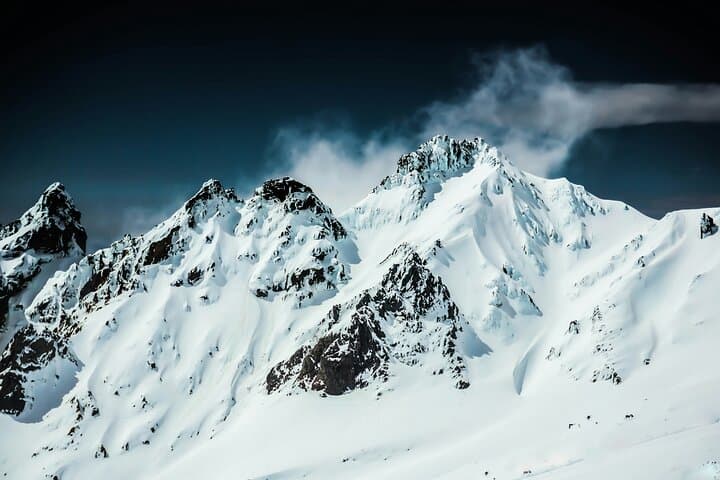
The train whistles out of Auckland and the North Island opens up: patchwork farmland, dark native forest, and then the volcanic skyline punctured by Ruapehu’s snowy cone. Arrival at Whakapapa Village puts you under the teeth of the volcanoes—wind that scours the slopes and silence thick with snow—and the day’s rhythm becomes measured footsteps in white.
The train whistles out of Auckland and the North Island opens up: patchwork farmland, dark native forest, and then the volcanic skyline punctured by Ruapehu’s snowy cone. Arrival at Whakapapa Village puts you under the teeth of the volcanoes—wind that scours the slopes and silence thick with snow—and the day’s rhythm becomes measured footsteps in white.
Tongariro is both geologic theatre and living cultural place. The volcanic peaks—Ruapehu, Ngauruhoe and Tongariro—are products of the Taupō Volcanic Zone; their lava flows, ash beds and craggy ridges tell a recent, restless story. The park was gifted to the nation in the 19th century and holds deep significance for Ngāti Tūwharetoa, whose connection to the land shapes access and respect here.
On a guided snowshoe outing the landscape takes on personality: wind-driven cornices dare the unwary, and gullies push you toward broad panorama points that look over frozen scree and blue sky. Guides break the route into manageable legs, emphasizing route-finding and avalanche-awareness where appropriate.
Practically, expect a full overnight: Northern Explorer train passage, one night in Whakapapa-style accommodation, meals, and specialized snowshoe gear. Weather changes fast—pack waterproof, insulated layers, a sturdy pair of boots and eye protection. Timing favors daylight hours for route safety and photo light; follow guide briefings, maintain hydration and conserve energy on soft snow. For travelers who want winter alpine exposure without technical crampon work, this trip pairs the romance of rail travel with accessible backcountry movement and a grounded local perspective.