THE ADVENTURE COLLECTIVE® · Independent discovery and booking for outdoor travel

Walk through working pineapple fields, sample fresh Dole fruit, and visit Haleiwa and North Shore beaches on a seven-hour guided tour. Expect agricultural demonstrations, tasting stops, and short coastal photo ops—ideal for travelers who want an easy, informative day away from Waikiki.
Walk through working pineapple fields, sample fresh Dole fruit, and visit Haleiwa and North Shore beaches on a seven-hour guided tour. Expect agricultural demonstrations, tasting stops, and short coastal photo ops—ideal for travelers who want an easy, informative day away from Waikiki.
You step off the coach into rows of low, spiky plants—green crowns puncturing red Hawaiian soil—while a tractor hums in the distance. Warm trade winds carry the sharp-sweet scent of ripe pineapple and the salt tang from the nearby North Shore; the day unfolds as a paced survey of Oahu's agricultural heart, coastal highlights, and plantation-era towns.
Verified experiences and guided adventures in the surrounding area.
Operated by Roberts Hawaii · Wahiawa, Hawaii
You step off the coach into rows of low, spiky plants—green crowns puncturing red Hawaiian soil—while a tractor hums in the distance. Warm trade winds carry the sharp-sweet scent of ripe pineapple and the salt tang from the nearby North Shore; the day unfolds as a paced survey of Oahu's agricultural heart, coastal highlights, and plantation-era towns.
The Dole operation here is part of a century-long story: pineapple and sugar reshaped the island’s economy, brought immigrant labor communities, and created places like Haleiwa that grew around plantation transport and trade. Geologically, these fields sit on old volcanic soils drained toward the Waialua plain, framed by the shadow of Mt. Kaʻala to the west—terrain that favors the pineapple varieties grown for sweetness rather than size.
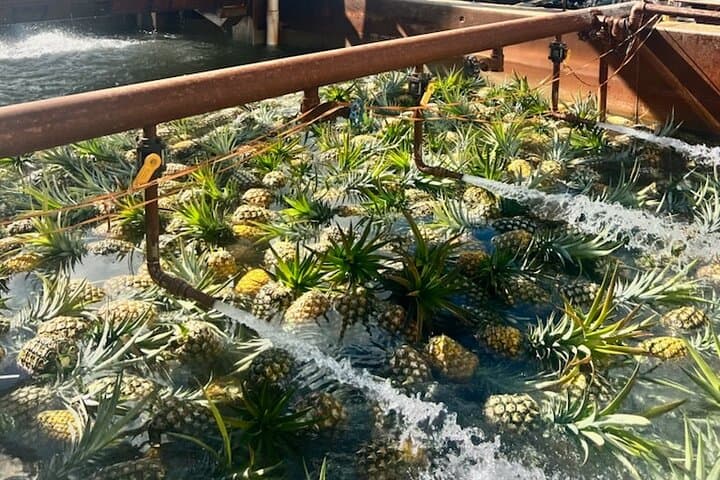
Culturally the tour links tasting to technique: you’ll see planting rows, watch harvesting machinery, and visit a pack house where fruit is graded and boxed. The route commonly stops at a North Shore beach—where monk seals and honu (green sea turtles) occasionally sunbathe—and drops you in Old Haleiwa for shaved ice and surf-shop browsing.
Practical guidance: the full tour runs about seven hours with mostly flat walking on farm paths and paved town streets. Wear closed-toe shoes for the plantation, bring sun protection and water, and set expectations for a mix of demonstration, sampling, and brief coastal stops. Respect wildlife viewing distances at beaches and budget time at Haleiwa if you want to explore independently afterward.
easy.
7 hours.
Suitable for most fitness levels—light walking on flat farm paths and short strolls on beach and town sidewalks.
The itinerary runs approximately seven hours, including farm visits, a North Shore beach stop, and time in Haleiwa.
Yes—pineapple tastings are part of the visit and a souvenir boxed pineapple is included as noted in the tour inclusions.
Yes—tour information lists the experience as physically easy; infants must sit on an adult’s lap but the route is family-friendly.
Wildlife such as monk seals and green sea turtles are occasionally seen on North Shore beaches, but sightings are unpredictable; maintain respectful distance if you encounter them.
Pineapple cultivation and the Dole brand played a major role in Hawaii’s plantation economy, shifting land use from native ecosystems and former sugarcane fields to commercial fruit production in the 20th century.
Coastal and agricultural areas here are managed with increasing attention to reef-friendly practices and wildlife protection; visitors are asked to avoid single-use plastics and to observe wildlife from a distance.
Roberts Hawaii operates guided outdoor trips and adventures with an emphasis on safety, stewardship, and memorable experiences.

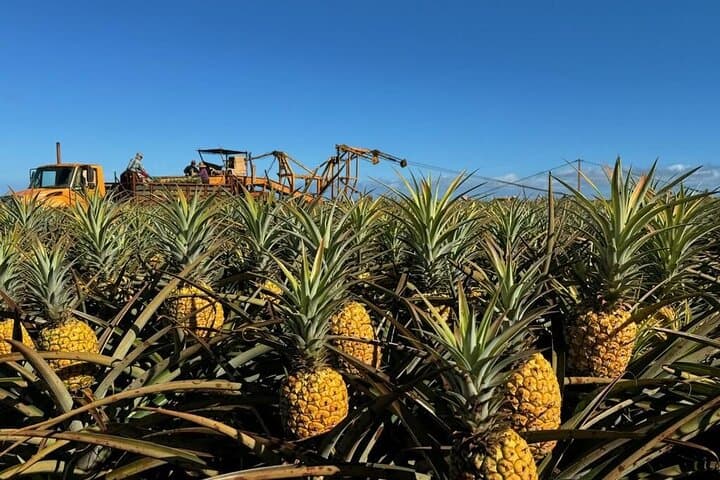
You step off the coach into rows of low, spiky plants—green crowns puncturing red Hawaiian soil—while a tractor hums in the distance. Warm trade winds carry the sharp-sweet scent of ripe pineapple and the salt tang from the nearby North Shore; the day unfolds as a paced survey of Oahu's agricultural heart, coastal highlights, and plantation-era towns.
You step off the coach into rows of low, spiky plants—green crowns puncturing red Hawaiian soil—while a tractor hums in the distance. Warm trade winds carry the sharp-sweet scent of ripe pineapple and the salt tang from the nearby North Shore; the day unfolds as a paced survey of Oahu's agricultural heart, coastal highlights, and plantation-era towns.
The Dole operation here is part of a century-long story: pineapple and sugar reshaped the island’s economy, brought immigrant labor communities, and created places like Haleiwa that grew around plantation transport and trade. Geologically, these fields sit on old volcanic soils drained toward the Waialua plain, framed by the shadow of Mt. Kaʻala to the west—terrain that favors the pineapple varieties grown for sweetness rather than size.
Culturally the tour links tasting to technique: you’ll see planting rows, watch harvesting machinery, and visit a pack house where fruit is graded and boxed. The route commonly stops at a North Shore beach—where monk seals and honu (green sea turtles) occasionally sunbathe—and drops you in Old Haleiwa for shaved ice and surf-shop browsing.
Practical guidance: the full tour runs about seven hours with mostly flat walking on farm paths and paved town streets. Wear closed-toe shoes for the plantation, bring sun protection and water, and set expectations for a mix of demonstration, sampling, and brief coastal stops. Respect wildlife viewing distances at beaches and budget time at Haleiwa if you want to explore independently afterward.