THE ADVENTURE COLLECTIVE® · Independent discovery and booking for outdoor travel

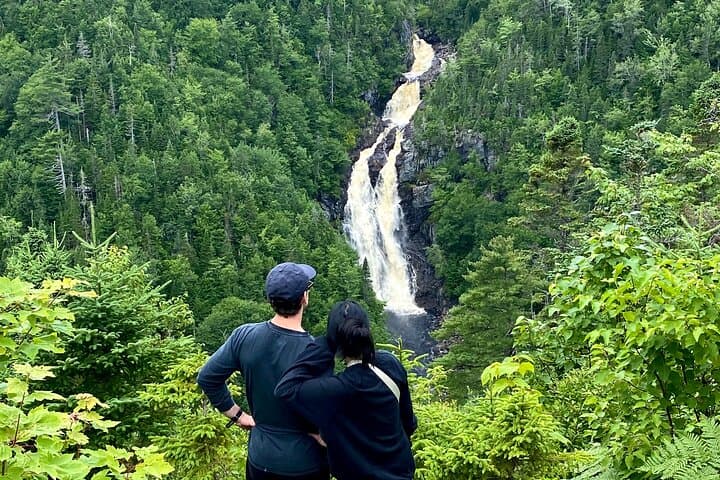
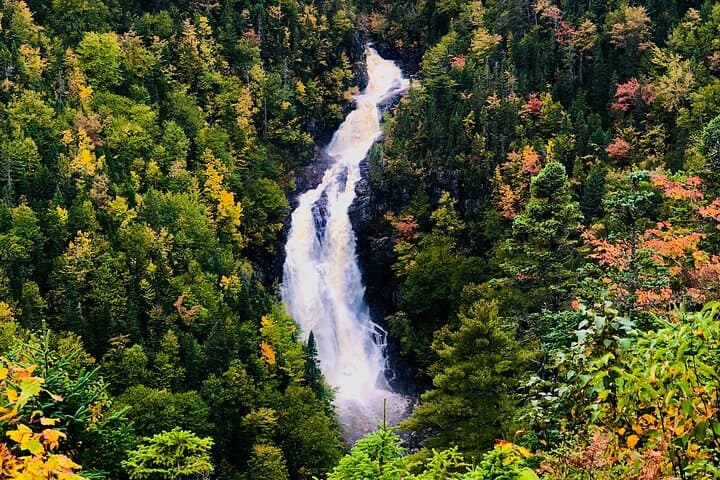
Drive forest service roads into the Cape Breton Highlands, spot moose and abandoned farmsteads, then hike to a cliff-top lookout over North River Falls—the highest waterfall in Nova Scotia. Choose to descend to the spray for a closer, more challenging experience.
Drive forest service roads into the Cape Breton Highlands, spot moose and abandoned farmsteads, then hike to a cliff-top lookout over North River Falls—the highest waterfall in Nova Scotia. Choose to descend to the spray for a closer, more challenging experience.
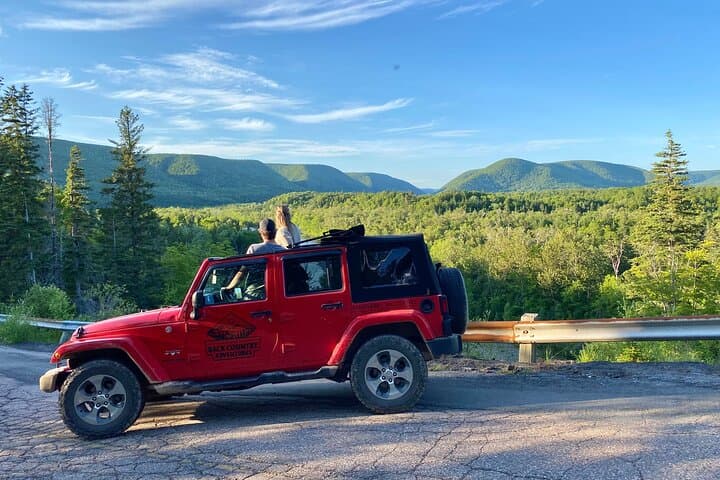
Fog thins off the Cabot Trail as the red Jeep grumbles onto a graded forest service road. The guide eases the vehicle past spruce and birch; sunlight ropes through trunks and the road narrows to a single lane, the kind of track that dares you to look away. Quiet opens up—only the rattle of the engine, the call of a raven, and the distant suggestion of water. This is the Margaree country: raw, high, and weather-worked, and within an hour of cruising past a gallery door you can be standing on a thin ridge watching the largest waterfall in Nova Scotia pour over three tiers of bedrock.
Verified experiences and guided adventures in the surrounding area.
Operated by Cape Breton Backcountry Adventures · Margaree Forks, Nova Scotia
Fog thins off the Cabot Trail as the red Jeep grumbles onto a graded forest service road. The guide eases the vehicle past spruce and birch; sunlight ropes through trunks and the road narrows to a single lane, the kind of track that dares you to look away. Quiet opens up—only the rattle of the engine, the call of a raven, and the distant suggestion of water. This is the Margaree country: raw, high, and weather-worked, and within an hour of cruising past a gallery door you can be standing on a thin ridge watching the largest waterfall in Nova Scotia pour over three tiers of bedrock.
Geology here reads like a long, slow argument between fire and ice. The Cape Breton Highlands are the eastern edge of the ancient Appalachian system, scoured by Pleistocene glaciers; the falls spill over resistant bedrock carved into steps by glacial abrasion and stream erosion. The human story is layered too: Mi’kmaq people traveled and fished these rivers for generations before Scottish settlers cleared valley farms in the 18th and 19th centuries. Guides on the Jeep tour point out old foundations and tell of families who shaped the land, and of loggers who used these service roads to reach remote stands of timber.
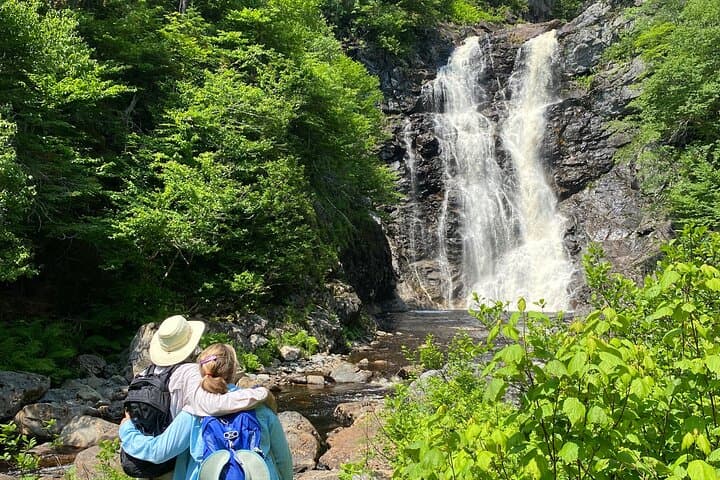
The core of the excursion is straightforward: a jeep ride along graded dirt roads across the high plateau, a short guided walk—about 15 minutes downhill on an ATV trail—to a trapezoid lookout over North River Falls, and an optional 30–40 minute descent to the base for intermediate to advanced hikers who want the spray and the river’s thunder close up. Watch for moose along the mountaintops, and for stone walls that mark old farm boundaries as the guide winds the Jeep into hidden corners of the Margaree Valley.
Practical note: the lookout walk is roughly 0.5–0.8 km with an approximate 100–150 m elevation change; the full trip to the base adds another 1–1.5 km and up to 200–300 m round-trip gain depending on route. Trails can be muddy after rain and the ATV tread is uneven—sturdy footwear and a steady cadence on the descent matter. Bring layers; the plateau throws temperature changes at you. If you plan the bottom-of-falls option, allow extra time to ascend: the climb back to the Jeep is steeper than it looks.
For photographers, morning light slants into the gorge and creates rainbows in the spray; late afternoon offers warmer tones for the valley outlooks. The tour’s private-transport format and local insight make it a compact way to see wilderness, learn regional history, and get off the Cabot Trail without committing to a multi-day backcountry route. Leave no trace, respect private lands and seasonal nesting areas, and let the falls do the rest—push you forward with a wet, ancient insistence.
moderate.
5–6 hours.
Moderate endurance; able to hike 1–3 miles on uneven terrain with short steep sections
The walk from the Jeep to the lookout is about 15 minutes (roughly 0.5–0.8 km) on an ATV trail with moderate grade.
The base hike is steeper and more technical—best for older children used to hiking and under close supervision; evaluate ability on the day.
Yes—moose, white-tailed deer, and forest birds are commonly seen from the jeep; sightings are never guaranteed but the guide watches for them.
No formal facilities at the trailhead or lookout—plan accordingly and follow Leave No Trace principles.
The meeting point is near Two Macs Gallery; special pick-up from the cruise port can be requested in advance but is not standard.
A moderate level of fitness is required—comfortable walking on uneven ground and climbing a short, steep return is necessary for the base option.
The Margaree Valley bears both Mi’kmaq heritage and 200-year-old Scottish settler sites; abandoned foundations and stone walls mark early agricultural life.
The area is sensitive to erosion and invasive plant spread—stay on defined roads and trails, and avoid trampling riparian vegetation near the falls.
Cape Breton Backcountry Adventures operates guided outdoor trips and adventures with an emphasis on safety, stewardship, and memorable experiences.
Fog thins off the Cabot Trail as the red Jeep grumbles onto a graded forest service road. The guide eases the vehicle past spruce and birch; sunlight ropes through trunks and the road narrows to a single lane, the kind of track that dares you to look away. Quiet opens up—only the rattle of the engine, the call of a raven, and the distant suggestion of water. This is the Margaree country: raw, high, and weather-worked, and within an hour of cruising past a gallery door you can be standing on a thin ridge watching the largest waterfall in Nova Scotia pour over three tiers of bedrock.
Fog thins off the Cabot Trail as the red Jeep grumbles onto a graded forest service road. The guide eases the vehicle past spruce and birch; sunlight ropes through trunks and the road narrows to a single lane, the kind of track that dares you to look away. Quiet opens up—only the rattle of the engine, the call of a raven, and the distant suggestion of water. This is the Margaree country: raw, high, and weather-worked, and within an hour of cruising past a gallery door you can be standing on a thin ridge watching the largest waterfall in Nova Scotia pour over three tiers of bedrock.
Geology here reads like a long, slow argument between fire and ice. The Cape Breton Highlands are the eastern edge of the ancient Appalachian system, scoured by Pleistocene glaciers; the falls spill over resistant bedrock carved into steps by glacial abrasion and stream erosion. The human story is layered too: Mi’kmaq people traveled and fished these rivers for generations before Scottish settlers cleared valley farms in the 18th and 19th centuries. Guides on the Jeep tour point out old foundations and tell of families who shaped the land, and of loggers who used these service roads to reach remote stands of timber.
The core of the excursion is straightforward: a jeep ride along graded dirt roads across the high plateau, a short guided walk—about 15 minutes downhill on an ATV trail—to a trapezoid lookout over North River Falls, and an optional 30–40 minute descent to the base for intermediate to advanced hikers who want the spray and the river’s thunder close up. Watch for moose along the mountaintops, and for stone walls that mark old farm boundaries as the guide winds the Jeep into hidden corners of the Margaree Valley.
Practical note: the lookout walk is roughly 0.5–0.8 km with an approximate 100–150 m elevation change; the full trip to the base adds another 1–1.5 km and up to 200–300 m round-trip gain depending on route. Trails can be muddy after rain and the ATV tread is uneven—sturdy footwear and a steady cadence on the descent matter. Bring layers; the plateau throws temperature changes at you. If you plan the bottom-of-falls option, allow extra time to ascend: the climb back to the Jeep is steeper than it looks.
For photographers, morning light slants into the gorge and creates rainbows in the spray; late afternoon offers warmer tones for the valley outlooks. The tour’s private-transport format and local insight make it a compact way to see wilderness, learn regional history, and get off the Cabot Trail without committing to a multi-day backcountry route. Leave no trace, respect private lands and seasonal nesting areas, and let the falls do the rest—push you forward with a wet, ancient insistence.