THE ADVENTURE COLLECTIVE® · Independent discovery and booking for outdoor travel

A single day that traverses Montenegro’s coastline, alpine plateaus and sacred cliffs — from the blue of Kotor Bay to the depth of Tara Canyon and the cliffside calm of Ostrog Monastery. Long driving stretches reward you with short, vivid walks and unforgettable viewpoints.
A single day that traverses Montenegro’s coastline, alpine plateaus and sacred cliffs — from the blue of Kotor Bay to the depth of Tara Canyon and the cliffside calm of Ostrog Monastery. Long driving stretches reward you with short, vivid walks and unforgettable viewpoints.
You step out of the minivan with salt still on your lips and a different kind of air pressing at your face — cooler, thinner, edged with pine. The day begins along the sheltered curve of Kotor Bay, where old stone houses lean into the Adriatic, and then moves inland, climbing into the skeletal gray of the Dinaric Alps. Over the next 12–14 hours you’ll travel coastal fiords and high karst plateaus, walk a short loop around an alpine lake, peer down into Europe’s deepest river gorge and finish at a monastery carved into a cliff face that looks like it grew there by accident.
Verified experiences and guided adventures in the surrounding area.
You step out of the minivan with salt still on your lips and a different kind of air pressing at your face — cooler, thinner, edged with pine. The day begins along the sheltered curve of Kotor Bay, where old stone houses lean into the Adriatic, and then moves inland, climbing into the skeletal gray of the Dinaric Alps. Over the next 12–14 hours you’ll travel coastal fiords and high karst plateaus, walk a short loop around an alpine lake, peer down into Europe’s deepest river gorge and finish at a monastery carved into a cliff face that looks like it grew there by accident.
This loop stitches together Montenegro’s major chapters. Kotor and Risan tell a maritime story of Venetian carving and Ottoman passage; Durmitor, a UNESCO-protected massif, records glacial sculpting in its cirques and jagged ridges. The Tara River has gouged a canyon up to 1,300 meters deep — a raw cut through limestone and black pine that made rafting here famous. Ostrog Monastery, founded in the 17th century, sits high on a vertical face and draws pilgrims for its miraculous icons and simple, ascetic architecture.
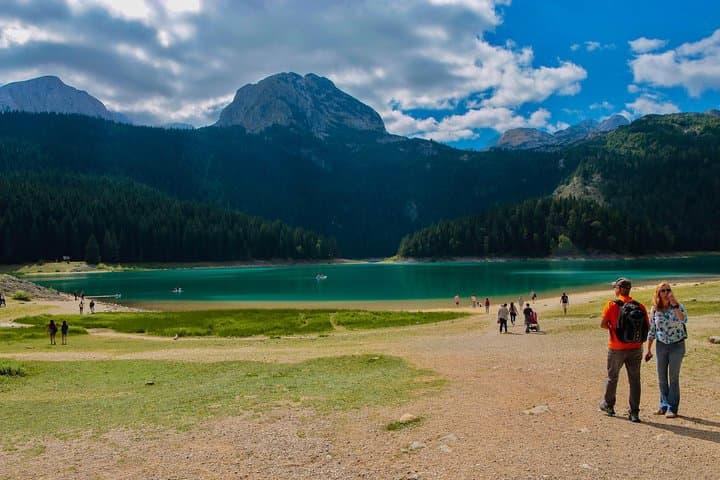
Expect a day heavy on scenery and light on strenuous climbing. Drives between stops range from quiet coastal ribbon roads to fast switchbacks through mountain passes; total travel covers roughly 150–200 km round trip depending on routing. The most active part of the itinerary is the Black Lake (Crno Jezero) — a 3–4 km loop on well-maintained trails with modest elevation gain (50–150 m) and boardwalk sections. Viewpoints at Đurđevića Tara Bridge and the Durmitor ridge lines require short, easy walks to gain perspective.
Practical edge: bring layered clothing for big temperature swings, a refillable water bottle (mountain air dries you out), and sturdy walking shoes for wet boardwalks and gravel viewpoints. Time is the real currency on this tour — the balance is between soaking in each stop and keeping to the schedule, so arrive rested and ready for a long day. Photography rewards patience: reflections on Black Lake come alive in calm morning light, while the Tara’s depth and contrast pop in late afternoon.
Local rhythm matters. Taste Njeguši prosciutto in a roadside hamlet, step lightly at Ostrog to respect pilgrims, and follow park rules in Durmitor to protect fragile alpine plants. Whether you’re chasing panoramic peaks or intimate cultural moments, this is a full-throttle primer on why Montenegro feels small on the map and vast in experience.
moderate.
12–14 hours.
Good general fitness for a long day of travel and short hikes; stamina for several hours on your feet and getting on/off transport.
The tour runs about 12–14 hours (operator lists 13 hours); expect early departure from Kotor and a return the same evening with multiple photo and walking stops.
No sustained hikes — the main walking is a 3–4 km loop at Black Lake and short walks to viewpoints and the monastery; trails are generally easy to moderate.
Visitors can enter some parts of Ostrog, but interior access is subject to pilgrimage traffic and seasonal restrictions; modest dress and quiet behavior are expected.
Yes — stops include small cafes and viewpoints with facilities, but bring snacks and cash for rural vendors as services can be basic.
Generally yes for those who can manage a long day of travel and some walking; notify the operator about mobility concerns to arrange easier access where possible.
Coastal areas are milder and sunnier while Durmitor is significantly cooler; check forecasts for mountain snow or heavy rain, especially in spring and autumn.
Ostrog Monastery dates to the 17th century and was built into a vertical cliff-face; Durmitor’s ridgelines were carved by Pleistocene glaciers.
Durmitor and Tara are protected areas; stay on marked trails, avoid disturbing wildlife and pack out waste to help fragile alpine ecosystems.
You step out of the minivan with salt still on your lips and a different kind of air pressing at your face — cooler, thinner, edged with pine. The day begins along the sheltered curve of Kotor Bay, where old stone houses lean into the Adriatic, and then moves inland, climbing into the skeletal gray of the Dinaric Alps. Over the next 12–14 hours you’ll travel coastal fiords and high karst plateaus, walk a short loop around an alpine lake, peer down into Europe’s deepest river gorge and finish at a monastery carved into a cliff face that looks like it grew there by accident.
You step out of the minivan with salt still on your lips and a different kind of air pressing at your face — cooler, thinner, edged with pine. The day begins along the sheltered curve of Kotor Bay, where old stone houses lean into the Adriatic, and then moves inland, climbing into the skeletal gray of the Dinaric Alps. Over the next 12–14 hours you’ll travel coastal fiords and high karst plateaus, walk a short loop around an alpine lake, peer down into Europe’s deepest river gorge and finish at a monastery carved into a cliff face that looks like it grew there by accident.
This loop stitches together Montenegro’s major chapters. Kotor and Risan tell a maritime story of Venetian carving and Ottoman passage; Durmitor, a UNESCO-protected massif, records glacial sculpting in its cirques and jagged ridges. The Tara River has gouged a canyon up to 1,300 meters deep — a raw cut through limestone and black pine that made rafting here famous. Ostrog Monastery, founded in the 17th century, sits high on a vertical face and draws pilgrims for its miraculous icons and simple, ascetic architecture.
Expect a day heavy on scenery and light on strenuous climbing. Drives between stops range from quiet coastal ribbon roads to fast switchbacks through mountain passes; total travel covers roughly 150–200 km round trip depending on routing. The most active part of the itinerary is the Black Lake (Crno Jezero) — a 3–4 km loop on well-maintained trails with modest elevation gain (50–150 m) and boardwalk sections. Viewpoints at Đurđevića Tara Bridge and the Durmitor ridge lines require short, easy walks to gain perspective.
Practical edge: bring layered clothing for big temperature swings, a refillable water bottle (mountain air dries you out), and sturdy walking shoes for wet boardwalks and gravel viewpoints. Time is the real currency on this tour — the balance is between soaking in each stop and keeping to the schedule, so arrive rested and ready for a long day. Photography rewards patience: reflections on Black Lake come alive in calm morning light, while the Tara’s depth and contrast pop in late afternoon.
Local rhythm matters. Taste Njeguši prosciutto in a roadside hamlet, step lightly at Ostrog to respect pilgrims, and follow park rules in Durmitor to protect fragile alpine plants. Whether you’re chasing panoramic peaks or intimate cultural moments, this is a full-throttle primer on why Montenegro feels small on the map and vast in experience.