THE ADVENTURE COLLECTIVE® · Independent discovery and booking for outdoor travel

This full-day private tour links Jatiluwih’s UNESCO rice terraces, the serene Pura Ulun Danu on Lake Bratan, and the jungle-fringed Bayumala Waterfall. Expect 8–10 hours of driving, short walks on stepped fields, and a rocky descent to a hidden lagoon.
This full-day private tour links Jatiluwih’s UNESCO rice terraces, the serene Pura Ulun Danu on Lake Bratan, and the jungle-fringed Bayumala Waterfall. Expect 8–10 hours of driving, short walks on stepped fields, and a rocky descent to a hidden lagoon.
A cool morning mist lifts above stepped fields as the van winds out of Ubud toward Bali’s western highlands. At Jatiluwih the rice terraces unfold like a living map, terraces cutting the slopes around 600–800 m above sea level; you step onto narrow earthen paths where water from the Subak irrigation system threads the landscape and the air smells faintly of wet earth and young rice.
Verified experiences and guided adventures in the surrounding area.
Operated by Bali Tours Ubud · Ubud, Bali
A cool morning mist lifts above stepped fields as the van winds out of Ubud toward Bali’s western highlands. At Jatiluwih the rice terraces unfold like a living map, terraces cutting the slopes around 600–800 m above sea level; you step onto narrow earthen paths where water from the Subak irrigation system threads the landscape and the air smells faintly of wet earth and young rice.
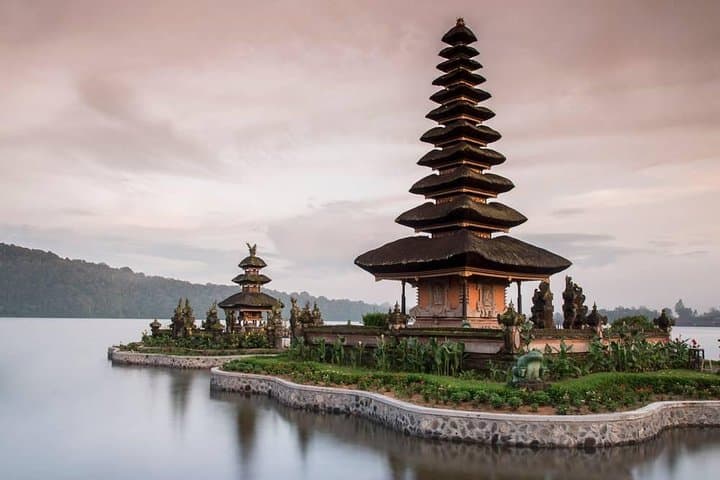
History is visible here: the terraces are part of the island’s Subak cooperative system, a centuries-old water-management tradition recognized by UNESCO. Higher up, Lake Bratan holds Pura Ulun Danu, a 17th-century water temple whose multi-tiered shrines hover at the lake edge and reflect volcanic peaks on clear days. Geologically, this region sits on volcanic soils—rich and well drained—giving rise to both intensive rice agriculture and steep, rocky stream channels that feed waterfalls like Bayumala.
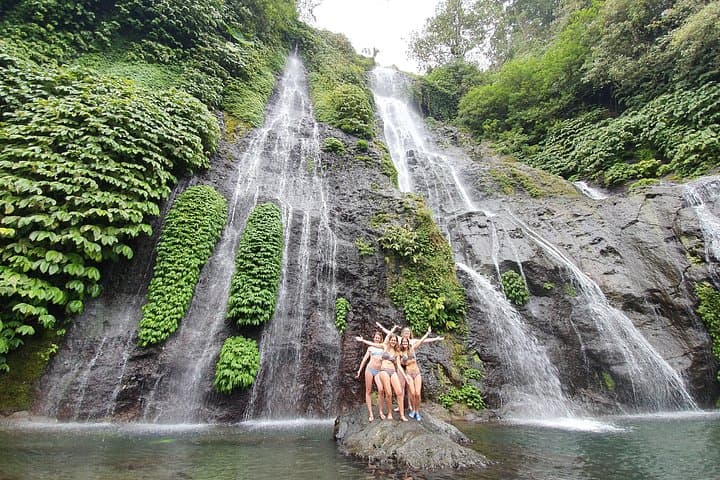
Bayumala requires a short descent over uneven volcanic rock to reach its hidden lagoon; currents can be strong and the entry is rocky, but the reward is a quiet pool framed by jungle.
Practical guidance: plan for an 8–10 hour day with multiple stops; wear sturdy shoes (good tread for wet steps), bring sun protection, and pack swimwear if you plan to enter the lagoon. Expect moderate walking at Jatiluwih (1–3 km on rolling, stepped trails) and a steeper, shorter scramble at Bayumala with ~20–40 m of elevation change. Start early to avoid midday crowds and rain squalls during the wet season, carry cash for small local fees and refreshments, and follow local guidance near temple sites (modest dress required).
moderate.
8–10 hours.
Suitable for travelers with reasonable mobility and basic fitness; expect short hikes and stair-like terrace paths
The excursion runs about 8–10 hours with pickup typically from central Ubud or nearby accommodations—confirm timing with your operator.
Some local parking fees and guide services may be included, but small site admissions or parking contributions are often paid on-site—carry cash (IDR).
Yes—there’s a lagoon suitable for swimming, but entry is over uneven volcanic rock and currents vary; follow local staff advice and supervise children closely.
The tour is family-friendly overall, but the waterfall descent is steep; travelers with mobility issues or pregnant guests should avoid that section.
The Jatiluwih terraces are part of Bali’s Subak cooperative irrigation system, a communal water-management practice central to Balinese agriculture and listed as UNESCO cultural heritage; Pura Ulun Danu was established in the 17th century as a temple to the lake goddess.
Visitors should stick to trails in the terraces to avoid trampling crops; support local villages by using licensed guides and purchasing refreshments locally to sustain conservation-friendly tourism.
Bali Tours Ubud operates guided outdoor trips and adventures with an emphasis on safety, stewardship, and memorable experiences.
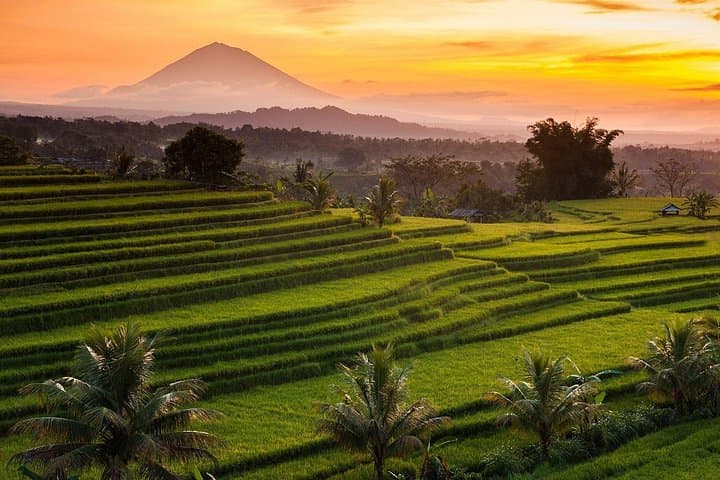
A cool morning mist lifts above stepped fields as the van winds out of Ubud toward Bali’s western highlands. At Jatiluwih the rice terraces unfold like a living map, terraces cutting the slopes around 600–800 m above sea level; you step onto narrow earthen paths where water from the Subak irrigation system threads the landscape and the air smells faintly of wet earth and young rice.
A cool morning mist lifts above stepped fields as the van winds out of Ubud toward Bali’s western highlands. At Jatiluwih the rice terraces unfold like a living map, terraces cutting the slopes around 600–800 m above sea level; you step onto narrow earthen paths where water from the Subak irrigation system threads the landscape and the air smells faintly of wet earth and young rice.
History is visible here: the terraces are part of the island’s Subak cooperative system, a centuries-old water-management tradition recognized by UNESCO. Higher up, Lake Bratan holds Pura Ulun Danu, a 17th-century water temple whose multi-tiered shrines hover at the lake edge and reflect volcanic peaks on clear days. Geologically, this region sits on volcanic soils—rich and well drained—giving rise to both intensive rice agriculture and steep, rocky stream channels that feed waterfalls like Bayumala.
Bayumala requires a short descent over uneven volcanic rock to reach its hidden lagoon; currents can be strong and the entry is rocky, but the reward is a quiet pool framed by jungle.
Practical guidance: plan for an 8–10 hour day with multiple stops; wear sturdy shoes (good tread for wet steps), bring sun protection, and pack swimwear if you plan to enter the lagoon. Expect moderate walking at Jatiluwih (1–3 km on rolling, stepped trails) and a steeper, shorter scramble at Bayumala with ~20–40 m of elevation change. Start early to avoid midday crowds and rain squalls during the wet season, carry cash for small local fees and refreshments, and follow local guidance near temple sites (modest dress required).