THE ADVENTURE COLLECTIVE® · Independent discovery and booking for outdoor travel

Two days from Paris bring medieval Rouen, the D‑Day beaches and the rising silhouette of Mont Saint‑Michel into a single, tightly paced itinerary. Expect guided walks, wartime sites, coastal ramparts and an overnight in Caen with included meals and transport.
Two days from Paris bring medieval Rouen, the D‑Day beaches and the rising silhouette of Mont Saint‑Michel into a single, tightly paced itinerary. Expect guided walks, wartime sites, coastal ramparts and an overnight in Caen with included meals and transport.
The coach pulls out of Paris at dawn and the countryside opens up—miles of green hedgerows and low chalk cliffs rolling toward the Channel. By late morning you’re walking the medieval streets of Rouen, where the cathedral towers and cobblestones keep the past close beneath your boots. The sea arrives as a presence: wind that pushes hard against the ramparts at Saint‑Malo, tides that race to claim Mont Saint‑Michel’s approaches.
Verified experiences and guided adventures in the surrounding area.
Operated by Paris CityVision · Caen, Normandy
The coach pulls out of Paris at dawn and the countryside opens up—miles of green hedgerows and low chalk cliffs rolling toward the Channel. By late morning you’re walking the medieval streets of Rouen, where the cathedral towers and cobblestones keep the past close beneath your boots. The sea arrives as a presence: wind that pushes hard against the ramparts at Saint‑Malo, tides that race to claim Mont Saint‑Michel’s approaches.
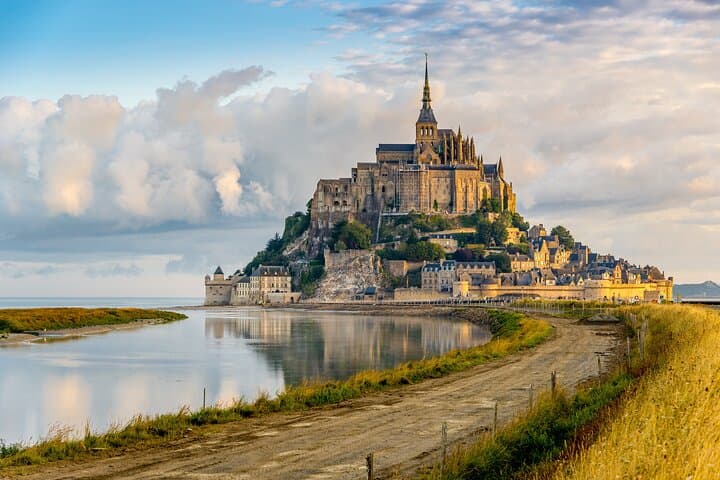
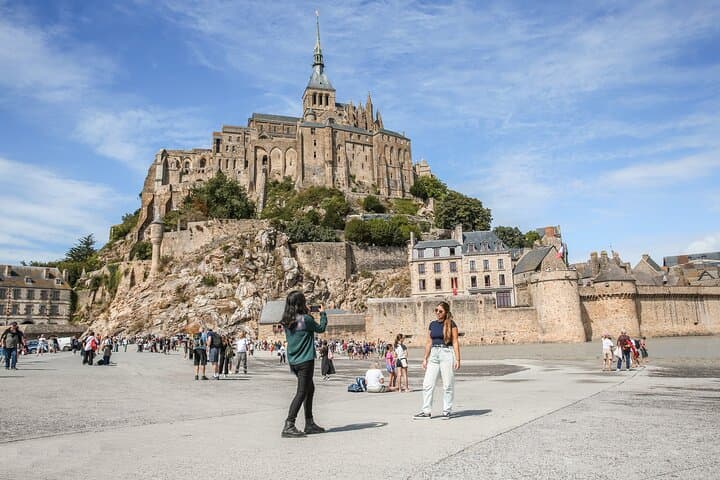
This two‑day circuit threads together Norman and Breton history. Rouen’s Gothic spine, Honfleur’s painters’ harbor and the wartime contours of Omaha Beach and the Normandy American Cemetery present layers of medieval power, Impressionist art and 20th‑century conflict. Mont Saint‑Michel sits on a granite outcrop in a vast tidal bay formed by post‑glacial marine flooding—its Abbey evolved from a pilgrimage site to a fortress and prison before becoming a UNESCO World Heritage site.
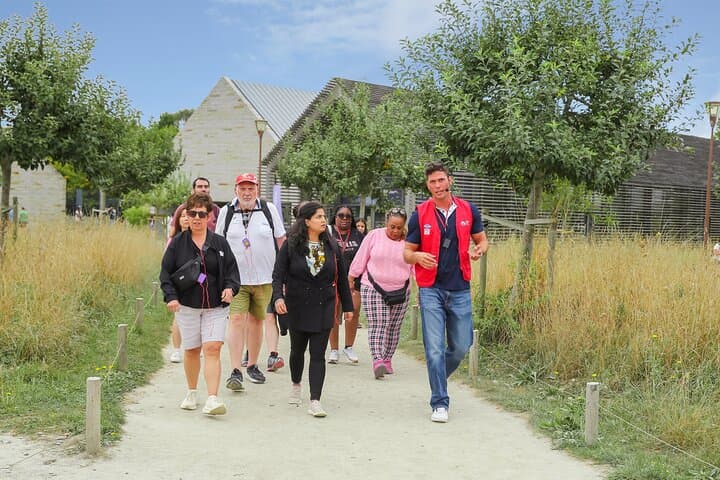
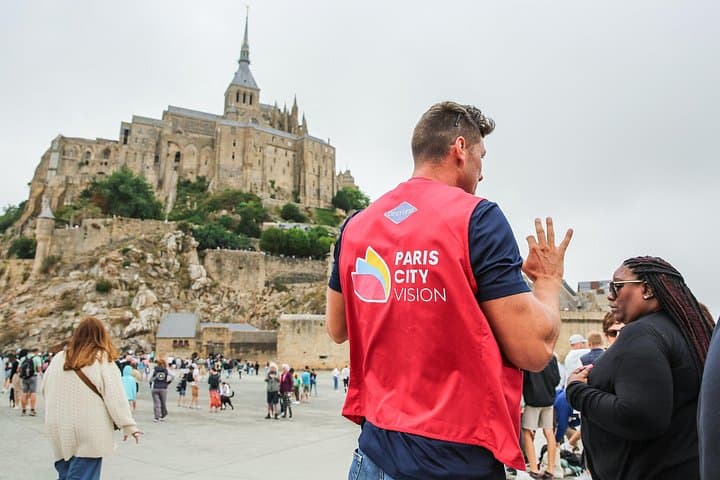
Expect guided walking tours, short film or museum stops at the D‑Day sites, and an overnight in Caen with one included dinner and breakfast.
Practical notes: wear sturdy shoes for cobbles and Abbey steps, bring a lightweight rain layer and a small daypack. Tides at Mont Saint‑Michel are dramatic—plan photography and timings around the saltwater advance. The itinerary is brisk: you’ll be on and off the coach often and should be prepared for multiple short walks and stairs. Luggage is limited to one piece per person; if you need single‑room accommodation an extra fee applies. For travelers seeking an intense, grounded encounter with Normandy’s coastline and history, this compact route covers the highlights without the need to navigate transport independently.
moderate.
2 days.
Suitable for travelers with moderate fitness; expect several short to medium walks, stairs and periods of standing during guided tours.
Yes, a hotel pick‑up service is offered from Paris residences; you’ll be driven to the main departure point to meet the guide and coach.
Expect multiple short walks in towns and historic sites and a climb up to the Abbey at Mont Saint‑Michel; the tour isn’t suitable for those with significant walking difficulties.
The tour includes entrance fees listed in the itinerary plus one dinner and one breakfast; lunches are typically at your own expense.
Return to Paris is expected around 9:30 PM on the second day; drop‑off at hotels is not guaranteed (the tour ends near Hôtel Pullman Paris Tour Eiffel).
The route links medieval Norman power centers and Impressionist seaports with the decisive WWII landing beaches; Mont Saint‑Michel itself evolved from an 8th‑century priory into a fortified cultural site over centuries.
Tidal flats around Mont Saint‑Michel are ecologically sensitive—stay on marked paths and avoid disturbing shorebird feeding zones; local sites encourage respectful visitation to preserve fragile coastal habitats.
Paris CityVision operates guided outdoor trips and adventures with an emphasis on safety, stewardship, and memorable experiences.
The coach pulls out of Paris at dawn and the countryside opens up—miles of green hedgerows and low chalk cliffs rolling toward the Channel. By late morning you’re walking the medieval streets of Rouen, where the cathedral towers and cobblestones keep the past close beneath your boots. The sea arrives as a presence: wind that pushes hard against the ramparts at Saint‑Malo, tides that race to claim Mont Saint‑Michel’s approaches.
The coach pulls out of Paris at dawn and the countryside opens up—miles of green hedgerows and low chalk cliffs rolling toward the Channel. By late morning you’re walking the medieval streets of Rouen, where the cathedral towers and cobblestones keep the past close beneath your boots. The sea arrives as a presence: wind that pushes hard against the ramparts at Saint‑Malo, tides that race to claim Mont Saint‑Michel’s approaches.
This two‑day circuit threads together Norman and Breton history. Rouen’s Gothic spine, Honfleur’s painters’ harbor and the wartime contours of Omaha Beach and the Normandy American Cemetery present layers of medieval power, Impressionist art and 20th‑century conflict. Mont Saint‑Michel sits on a granite outcrop in a vast tidal bay formed by post‑glacial marine flooding—its Abbey evolved from a pilgrimage site to a fortress and prison before becoming a UNESCO World Heritage site.
Expect guided walking tours, short film or museum stops at the D‑Day sites, and an overnight in Caen with one included dinner and breakfast.
Practical notes: wear sturdy shoes for cobbles and Abbey steps, bring a lightweight rain layer and a small daypack. Tides at Mont Saint‑Michel are dramatic—plan photography and timings around the saltwater advance. The itinerary is brisk: you’ll be on and off the coach often and should be prepared for multiple short walks and stairs. Luggage is limited to one piece per person; if you need single‑room accommodation an extra fee applies. For travelers seeking an intense, grounded encounter with Normandy’s coastline and history, this compact route covers the highlights without the need to navigate transport independently.