THE ADVENTURE COLLECTIVE® · Independent discovery and booking for outdoor travel

Explore the Phoenician and Roman ruins of Nora and a nearby Bronze Age nuraghe on a focused 5‑hour shore excursion from Cagliari. Expect coastal views, mosaics, and guided context on sites slowly giving way to the sea.
Explore the Phoenician and Roman ruins of Nora and a nearby Bronze Age nuraghe on a focused 5‑hour shore excursion from Cagliari. Expect coastal views, mosaics, and guided context on sites slowly giving way to the sea.
You step off the tender and the sea pushes a cool, briny breath across the quay — the Mediterranean daring you inland. Within 40 minutes the coast opens into low cliffs, a scatter of pines and the honeyed stones of Nora. The theater, half-ruined and still facing the water, watches the horizon like an old audience.
Verified experiences and guided adventures in the surrounding area.
Operated by Bitan Daily Tours · Pula, Sardinia
You step off the tender and the sea pushes a cool, briny breath across the quay — the Mediterranean daring you inland. Within 40 minutes the coast opens into low cliffs, a scatter of pines and the honeyed stones of Nora. The theater, half-ruined and still facing the water, watches the horizon like an old audience.
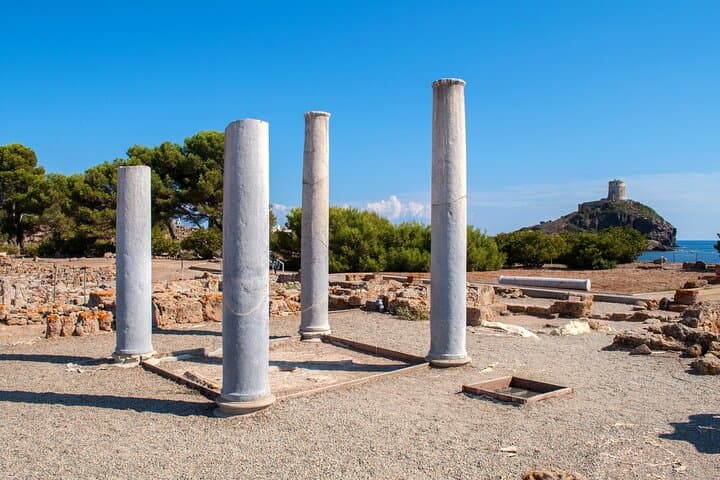
Nora began as a Phoenician trading post, then grew under Carthaginian and Roman hands; its theatre, mosaics and thermal baths speak of commerce and ritual across three millennia. Nearby, a Nuraghe — a Bronze Age tower of fitted basalt — stands with rough geometry that predates Rome by centuries. Geologically this stretch is limestone and coastal sands; parts of the ancient town have slipped beneath the waves as the southern shore slowly subsides.
Local culture is tangible: fishing villages, seasonal festivals, and the Campidanese dialect that names the stones and saints. Your guide threads history into the landscape, pointing out the Temple of Tanit, the Tophet burials, and the aqueduct remains while explaining how tides and storms revealed these layers.
Practically: expect 2–3 hours of walking on uneven, sometimes exposed surfaces; bring sun protection and sturdy shoes. The itinerary is shore-friendly and designed to return you in time for reboarding, so timing is strict. Photography is excellent in morning or late afternoon light; respect roped areas and mosaics to preserve fragile surfaces. This tour blends archaeology and shoreline hiking — a short but complete dip into Sardinia’s deep past.
easy.
5 hours.
Suitable for travelers in average physical condition who can walk 2–3 miles on uneven terrain.
Yes—pickup from the Cagliari passenger terminal or designated cruise dock is arranged; provide ship and docking details at booking.
Expect roughly 2 hours walking on uneven archaeological paths and cobbled streets; the pace is moderate and suitable for most visitors.
Admission to the Nora archaeological site is included as part of the guided visit in this excursion.
Parts of the site have uneven terrain and steps; stroller and wheelchair access is limited though some areas near the entrance are more accessible.
Nora was one of Sardinia’s earliest Phoenician settlements and later a Roman town; its layers include Tophet burials, mosaics and the island’s only classical theater.
Coastal subsidence and past storms have submerged parts of the site; stick to marked paths, avoid touching mosaics and support local conservation entry fees.
Bitan Daily Tours operates guided outdoor trips and adventures with an emphasis on safety, stewardship, and memorable experiences.


You step off the tender and the sea pushes a cool, briny breath across the quay — the Mediterranean daring you inland. Within 40 minutes the coast opens into low cliffs, a scatter of pines and the honeyed stones of Nora. The theater, half-ruined and still facing the water, watches the horizon like an old audience.
You step off the tender and the sea pushes a cool, briny breath across the quay — the Mediterranean daring you inland. Within 40 minutes the coast opens into low cliffs, a scatter of pines and the honeyed stones of Nora. The theater, half-ruined and still facing the water, watches the horizon like an old audience.
Nora began as a Phoenician trading post, then grew under Carthaginian and Roman hands; its theatre, mosaics and thermal baths speak of commerce and ritual across three millennia. Nearby, a Nuraghe — a Bronze Age tower of fitted basalt — stands with rough geometry that predates Rome by centuries. Geologically this stretch is limestone and coastal sands; parts of the ancient town have slipped beneath the waves as the southern shore slowly subsides.
Local culture is tangible: fishing villages, seasonal festivals, and the Campidanese dialect that names the stones and saints. Your guide threads history into the landscape, pointing out the Temple of Tanit, the Tophet burials, and the aqueduct remains while explaining how tides and storms revealed these layers.
Practically: expect 2–3 hours of walking on uneven, sometimes exposed surfaces; bring sun protection and sturdy shoes. The itinerary is shore-friendly and designed to return you in time for reboarding, so timing is strict. Photography is excellent in morning or late afternoon light; respect roped areas and mosaics to preserve fragile surfaces. This tour blends archaeology and shoreline hiking — a short but complete dip into Sardinia’s deep past.