THE ADVENTURE COLLECTIVE® · Independent discovery and booking for outdoor travel

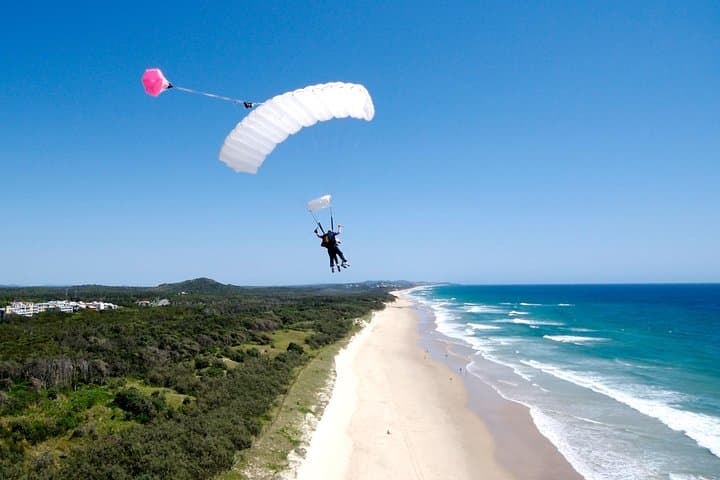
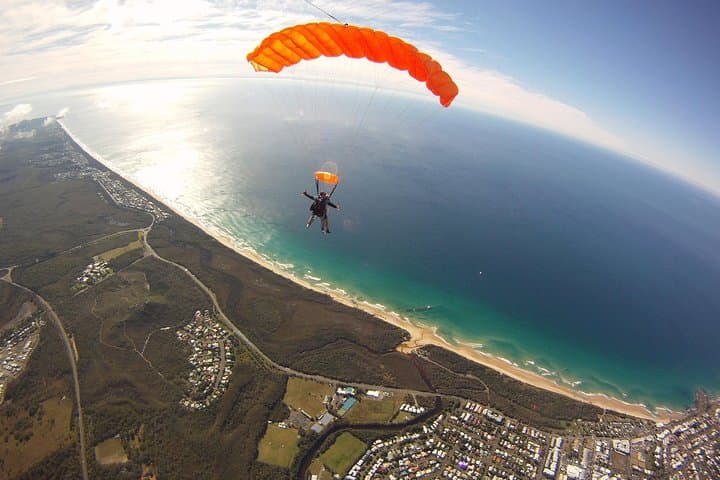
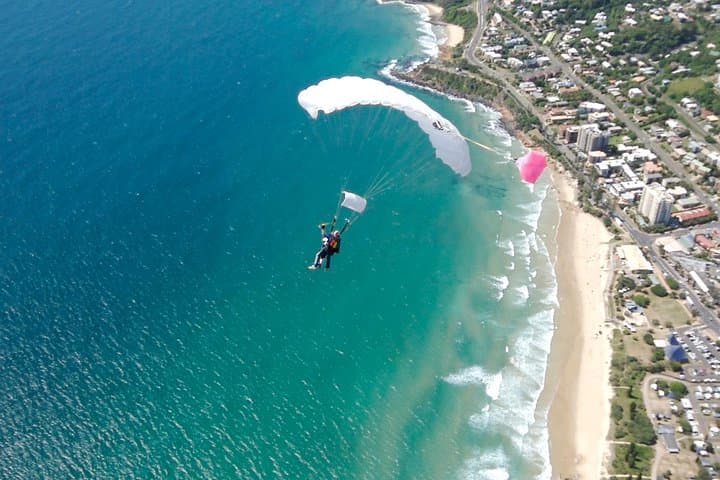
Launch from up to 13,000–14,000ft above the Sunshine Coast and trade life’s clutter for seconds of free fall, then float in to a potential Coolum Beach landing. This tandem skydive balances high-adrenaline moments with clear safety procedures and coastal panoramas.
Launch from up to 13,000–14,000ft above the Sunshine Coast and trade life’s clutter for seconds of free fall, then float in to a potential Coolum Beach landing. This tandem skydive balances high-adrenaline moments with clear safety procedures and coastal panoramas.
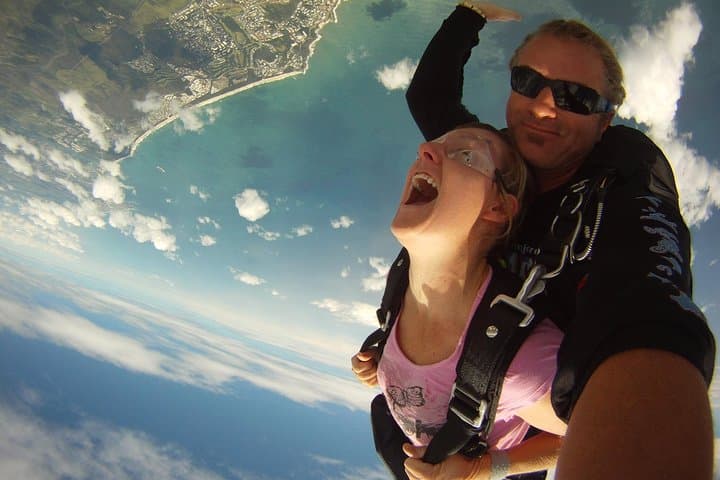
The plane climbs and the coastline loosens into a ribbon of white sand and green hinterland; salt air presses against your ears as the instructor checks your harness one last time. At altitude the ocean spreads like a challenge — blue, moving, daring you forward — and then you step into a minute of pure free fall that can feel both brutal and brilliantly simple.
Verified experiences and guided adventures in the surrounding area.
Operated by Skydive Australia · Coolum Beach, Queensland
The plane climbs and the coastline loosens into a ribbon of white sand and green hinterland; salt air presses against your ears as the instructor checks your harness one last time. At altitude the ocean spreads like a challenge — blue, moving, daring you forward — and then you step into a minute of pure free fall that can feel both brutal and brilliantly simple.
This jump takes place over the Sunshine Coast, a shoreline shaped by longshore drift and ancient sea-level change, with the volcanic Glass House Mountains rising inland as jagged markers of the region’s deep geology. The land here is part of the traditional territory of the Gubbi Gubbi (Kabi Kabi) people; local operators often acknowledge custodianship and run tours that link to broader coastal culture.
Expect up to 13–14,000ft of climb, roughly 50–60 seconds of free fall at terminal speed and 4–6 minutes gliding beneath the canopy. Weather dictates the plan — beach landings on Coolum are possible but always conditional. The activity is run to strict safety protocols: harness checks, instructor briefings, and weight/health screening are standard.
Practical tips: arrive with light, enclosed shoes and layers for the plane, know your exact weight beforehand, and hydrate but avoid heavy meals right before the jump. If you want footage, pre-book a video/photo package—operators film from a second tandem. Time your booking for morning or late afternoon to minimize thermals and catch softer light on the coast. Above all, listen to your instructor: they control the flight and the landing, but you’ll get a chance to steer and feel the canopy respond — a rare, immediate way to read the wind and the wide Sunshine Coast below.
moderate.
2 hours.
Suitable for most fitness levels but must be able to climb into the aircraft and perform a short controlled landing—no major cardiac or spinal conditions.
Minimum age is typically 16 with parental consent if under 18; weight limits vary by operator—notify at booking and expect surcharges or refusals above ~94–110 kg depending on conditions.
Free fall is generally 45–60 seconds from ~13,000–14,000ft, followed by a 4–6 minute canopy glide depending on altitude and wind.
Beach landings (Coolum Beach) are weather-dependent; while often possible, the instructor will choose the safest landing zone on the day.
Tandem skydiving is not recommended for people with significant spinal, heart, or recent major medical issues—seek medical clearance first.
The Sunshine Coast coastline has long been used by the Gubbi Gubbi people; modern recreational skydiving here grew with regional tourism in the late 20th century.
Operators are required to follow coastal protections and avoid disturbing shorebird nesting sites; visitors should respect flagged areas and local wildlife closures.
Skydive Australia operates guided outdoor trips and adventures with an emphasis on safety, stewardship, and memorable experiences.
The plane climbs and the coastline loosens into a ribbon of white sand and green hinterland; salt air presses against your ears as the instructor checks your harness one last time. At altitude the ocean spreads like a challenge — blue, moving, daring you forward — and then you step into a minute of pure free fall that can feel both brutal and brilliantly simple.
The plane climbs and the coastline loosens into a ribbon of white sand and green hinterland; salt air presses against your ears as the instructor checks your harness one last time. At altitude the ocean spreads like a challenge — blue, moving, daring you forward — and then you step into a minute of pure free fall that can feel both brutal and brilliantly simple.
This jump takes place over the Sunshine Coast, a shoreline shaped by longshore drift and ancient sea-level change, with the volcanic Glass House Mountains rising inland as jagged markers of the region’s deep geology. The land here is part of the traditional territory of the Gubbi Gubbi (Kabi Kabi) people; local operators often acknowledge custodianship and run tours that link to broader coastal culture.
Expect up to 13–14,000ft of climb, roughly 50–60 seconds of free fall at terminal speed and 4–6 minutes gliding beneath the canopy. Weather dictates the plan — beach landings on Coolum are possible but always conditional. The activity is run to strict safety protocols: harness checks, instructor briefings, and weight/health screening are standard.
Practical tips: arrive with light, enclosed shoes and layers for the plane, know your exact weight beforehand, and hydrate but avoid heavy meals right before the jump. If you want footage, pre-book a video/photo package—operators film from a second tandem. Time your booking for morning or late afternoon to minimize thermals and catch softer light on the coast. Above all, listen to your instructor: they control the flight and the landing, but you’ll get a chance to steer and feel the canopy respond — a rare, immediate way to read the wind and the wide Sunshine Coast below.