THE ADVENTURE COLLECTIVE® · Independent discovery and booking for outdoor travel

A full‑day loop from Muscat to the former capital Nizwa and the Jebel Akhdar plateau that combines a 17th‑century fort, a bustling souq and high‑mountain terraces. Ideal for travelers who want history, village walks and sweeping canyon views in a single day.
A full‑day loop from Muscat to the former capital Nizwa and the Jebel Akhdar plateau that combines a 17th‑century fort, a bustling souq and high‑mountain terraces. Ideal for travelers who want history, village walks and sweeping canyon views in a single day.
You arrive just after dawn, the highway east of Muscat thinning into a ribbon of concrete that climbs into craggy Al Hajar spires. The air shifts — heat from the coast gives way to a dry, mountain cool that lifts dust from stone villages. At Nizwa the fortress looms: a squat 17th‑century stronghold whose round tower watches the souq where silver khanjars and camel leather stallboards crowd narrow alleys.
Verified experiences and guided adventures in the surrounding area.
Operated by Golden Oryx Tours · Nizwa, Ad Dakhiliyah Governorate
You arrive just after dawn, the highway east of Muscat thinning into a ribbon of concrete that climbs into craggy Al Hajar spires. The air shifts — heat from the coast gives way to a dry, mountain cool that lifts dust from stone villages. At Nizwa the fortress looms: a squat 17th‑century stronghold whose round tower watches the souq where silver khanjars and camel leather stallboards crowd narrow alleys.
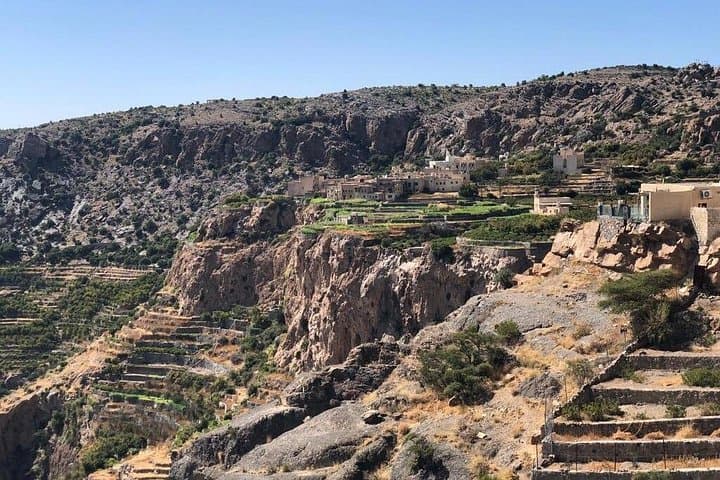
The region’s geology is raw and readable — uplifted limestone and metamorphic rock pushed into dramatic folds by tectonic forces, then carved by winter rains into terraces and dry riverbeds. Nizwa’s markets reflect a long commercial pulse; this was a regional capital and a center for Islamic learning and tribal trade. Higher on Jebel Akhdar, terraced farms and pomegranate orchards cling to ledges, fed by ancient aflaj irrigation channels that still shape villages.
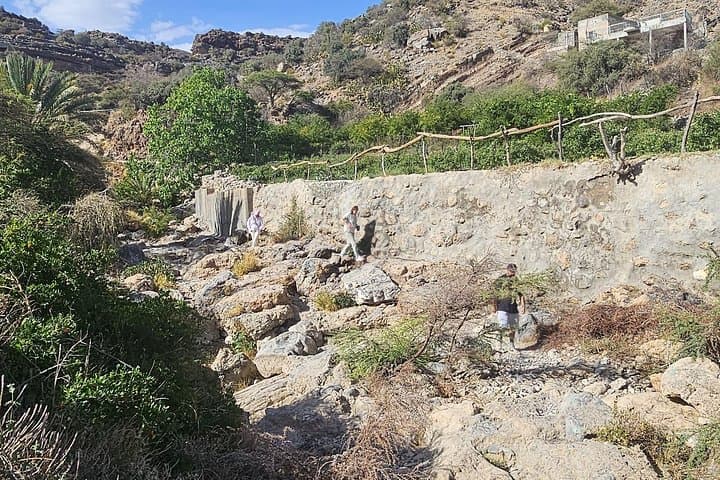
Expect a blend of cultural stops and light walking: the fort and souq visits are museum‑clean but lively, while the mountain walk passes village lanes, stone houses and viewpoint ledges that open to wide canyon panoramas.
Practical edge: start early to avoid midday heat, carry sun protection and at least 2 liters of water, and wear sturdy shoes for uneven village paths. Lunch is included on most tours, but bring cash for the souq. The road to Jebel Akhdar rises quickly — if you’re prone to motion sickness, sit where you can face forward. Respect local dress codes in towns and be prepared for cooler temperatures on the plateau.
moderate.
8–9 hours.
Moderate fitness with ability to walk unpaved village paths and climb short stone steps
Most organized day tours include admission to Nizwa Fort; confirm with your operator when booking.
The drive to Nizwa is about 1.5–2 hours from Muscat; reaching Jebel Akhdar requires additional climbing time for a total round trip of roughly 8–9 hours.
Light walking is family‑friendly, but this tour is not recommended for pregnant travelers and children should be supervised on steep or crowded areas.
The livestock auction happens on Fridays and can be included when scheduled; check the tour date to ensure the market is operating that day.
Nizwa was a regional capital and religious center; its 17th‑century fort was built to control trade routes and tribal territories in the interior.
Water is scarce in the region and terraces rely on traditional aflaj irrigation; stick to paths, avoid littering and support local businesses to help sustain fragile mountain communities.
Golden Oryx Tours operates guided outdoor trips and adventures with an emphasis on safety, stewardship, and memorable experiences.
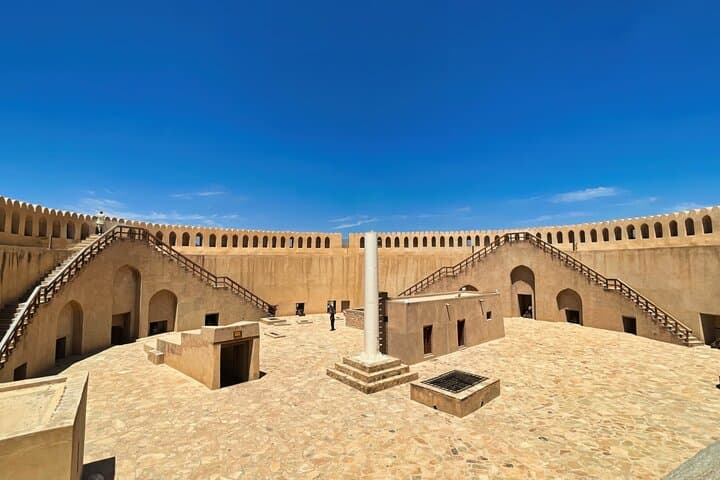
You arrive just after dawn, the highway east of Muscat thinning into a ribbon of concrete that climbs into craggy Al Hajar spires. The air shifts — heat from the coast gives way to a dry, mountain cool that lifts dust from stone villages. At Nizwa the fortress looms: a squat 17th‑century stronghold whose round tower watches the souq where silver khanjars and camel leather stallboards crowd narrow alleys.
You arrive just after dawn, the highway east of Muscat thinning into a ribbon of concrete that climbs into craggy Al Hajar spires. The air shifts — heat from the coast gives way to a dry, mountain cool that lifts dust from stone villages. At Nizwa the fortress looms: a squat 17th‑century stronghold whose round tower watches the souq where silver khanjars and camel leather stallboards crowd narrow alleys.
The region’s geology is raw and readable — uplifted limestone and metamorphic rock pushed into dramatic folds by tectonic forces, then carved by winter rains into terraces and dry riverbeds. Nizwa’s markets reflect a long commercial pulse; this was a regional capital and a center for Islamic learning and tribal trade. Higher on Jebel Akhdar, terraced farms and pomegranate orchards cling to ledges, fed by ancient aflaj irrigation channels that still shape villages.
Expect a blend of cultural stops and light walking: the fort and souq visits are museum‑clean but lively, while the mountain walk passes village lanes, stone houses and viewpoint ledges that open to wide canyon panoramas.
Practical edge: start early to avoid midday heat, carry sun protection and at least 2 liters of water, and wear sturdy shoes for uneven village paths. Lunch is included on most tours, but bring cash for the souq. The road to Jebel Akhdar rises quickly — if you’re prone to motion sickness, sit where you can face forward. Respect local dress codes in towns and be prepared for cooler temperatures on the plateau.