THE ADVENTURE COLLECTIVE® · Independent discovery and booking for outdoor travel

A private full-day loop from Muscat that pairs Nizwa’s market and 17th-century fort with the cool, terraced slopes of Jebel Akhdar. Expect markets, historic architecture and a scenic drive into the Hajar Mountains.
A private full-day loop from Muscat that pairs Nizwa’s market and 17th-century fort with the cool, terraced slopes of Jebel Akhdar. Expect markets, historic architecture and a scenic drive into the Hajar Mountains.
You step out of Muscat’s light into a harsher, older landscape as the 4x4 eats up miles toward Nizwa.
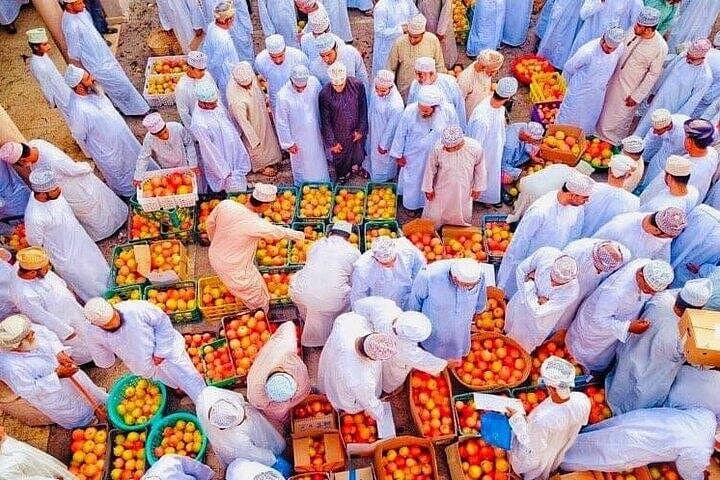
Dusty palms and low clay buildings give way to the Hajar Mountains; by midmorning the air cools and terraces appear like stacked gardens clinging to stone. At Nizwa Souq the market’s rhythm changes the tempo — vendors call, silver khanjars flash, and sacks of dates smell sweet and oily.
Verified experiences and guided adventures in the surrounding area.
Operated by Oman Tour Guide · Nizwa, Al Dakhiliyah
You step out of Muscat’s light into a harsher, older landscape as the 4x4 eats up miles toward Nizwa.
Dusty palms and low clay buildings give way to the Hajar Mountains; by midmorning the air cools and terraces appear like stacked gardens clinging to stone. At Nizwa Souq the market’s rhythm changes the tempo — vendors call, silver khanjars flash, and sacks of dates smell sweet and oily.
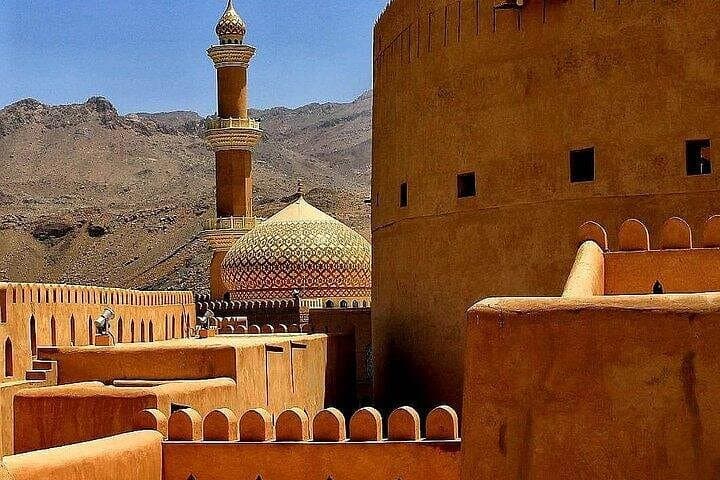
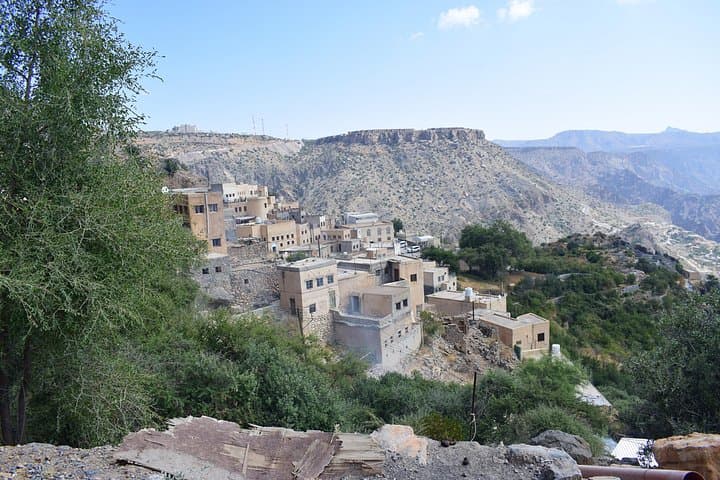
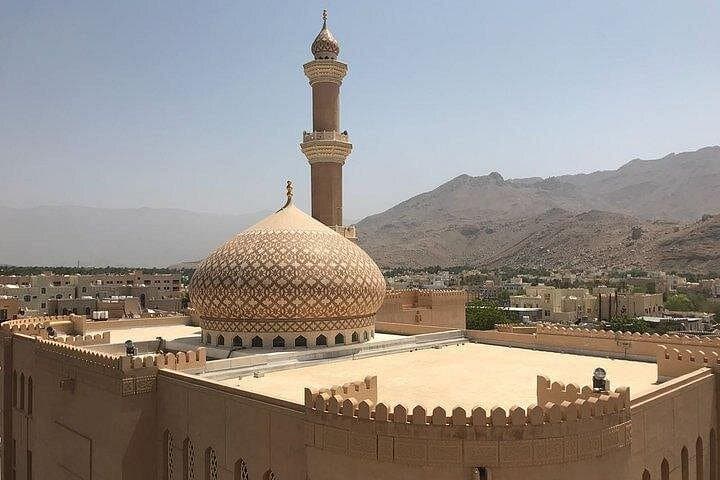
Nizwa’s fort, raised high in the 17th century under the Yaruba dynasty, dominates the town and still reads as a defensive machine: narrow slits, heavy doors and layered chambers where the past’s tensions are visible in architecture. The region’s geology — folded limestone of the Hajar range — splits into deep wadis and plateaus; Jebel Akhdar, the “Green Mountain,” retains enough moisture to support terraced orchards of pomegranate, apricot and roses tended by ancient falaj irrigation channels, one set recognized by UNESCO.
The private day tour stitches cultural and natural highlights into a manageable loop: souq browsing, a guided walk around the fort, a look at traditional falaj engineering, then the climb to Saiq Plateau for valley overlooks and short trails through fruit groves.
Practical edge: expect a 7–8 hour day with lots of short walks and photo stops. Roads to Jebel Akhdar require a 4WD and can be steep; temperatures drop with elevation so layer up. Bring cash for the souq, sun protection and at least 1–1.5 liters of water per person. Aim for an early start to avoid midday heat in Nizwa and catch late-afternoon light on the plateau for the best views.
easy.
7–8 hours.
Suitable for most adults with basic mobility — involves short uphill walks and standing in the souq.
The private tour runs about 7–8 hours from a Muscat pickup: Nizwa Souq, Nizwa Fort, a falaj/irrigation stop, then up to Jebel Akhdar with viewpoints and short walks; Birkat Al Mouz usually on the route.
Yes; the route requires a 4x4 due to steep, switchback sections — the operator provides suitable vehicles and experienced drivers.
This operator's description indicates admission is included for the fort on the itinerary; confirm at booking for any recent changes.
Children can join, and the tour is accessible for most, but the fort has stairs and some uneven surfaces — not recommended for serious spinal injuries.
Nizwa was the capital during the Yaruba dynasty; the fort dates largely to the mid-17th century and was built to defend the interior trade routes and agricultural heartlands.
The falaj irrigation systems are fragile UNESCO-recognized cultural landscapes; visitors should avoid disturbing stone channels and keep to paths to protect terraced agriculture.
Oman Tour Guide operates guided outdoor trips and adventures with an emphasis on safety, stewardship, and memorable experiences.
You step out of Muscat’s light into a harsher, older landscape as the 4x4 eats up miles toward Nizwa.
Dusty palms and low clay buildings give way to the Hajar Mountains; by midmorning the air cools and terraces appear like stacked gardens clinging to stone. At Nizwa Souq the market’s rhythm changes the tempo — vendors call, silver khanjars flash, and sacks of dates smell sweet and oily.
Nizwa’s fort, raised high in the 17th century under the Yaruba dynasty, dominates the town and still reads as a defensive machine: narrow slits, heavy doors and layered chambers where the past’s tensions are visible in architecture. The region’s geology — folded limestone of the Hajar range — splits into deep wadis and plateaus; Jebel Akhdar, the “Green Mountain,” retains enough moisture to support terraced orchards of pomegranate, apricot and roses tended by ancient falaj irrigation channels, one set recognized by UNESCO.
The private day tour stitches cultural and natural highlights into a manageable loop: souq browsing, a guided walk around the fort, a look at traditional falaj engineering, then the climb to Saiq Plateau for valley overlooks and short trails through fruit groves.
Practical edge: expect a 7–8 hour day with lots of short walks and photo stops. Roads to Jebel Akhdar require a 4WD and can be steep; temperatures drop with elevation so layer up. Bring cash for the souq, sun protection and at least 1–1.5 liters of water per person. Aim for an early start to avoid midday heat in Nizwa and catch late-afternoon light on the plateau for the best views.