THE ADVENTURE COLLECTIVE® · Independent discovery and booking for outdoor travel

Drive the Hajar foothills to Nizwa, explore a bustling souq and visit Bahla and Jabrin forts on a private full-day cultural tour. Expect historic architecture, local crafts and a mixture of short walks and scenic drives—plan for heat and stairs.
Drive the Hajar foothills to Nizwa, explore a bustling souq and visit Bahla and Jabrin forts on a private full-day cultural tour. Expect historic architecture, local crafts and a mixture of short walks and scenic drives—plan for heat and stairs.
Morning light cuts across the Hajar foothills as a private vehicle winds down the pass from Muscat, and the region opens into broad, sun-baked plains dotted with palm clusters. Travelers arrive in Nizwa to the low, circular silhouette of its 17th-century fort and the busy geometry of a souq where dates and silverware are arranged like quiet challenges to the senses.
Verified experiences and guided adventures in the surrounding area.
Operated by Oman Day Tours · Nizwa, Ad Dakhiliyah
Morning light cuts across the Hajar foothills as a private vehicle winds down the pass from Muscat, and the region opens into broad, sun-baked plains dotted with palm clusters. Travelers arrive in Nizwa to the low, circular silhouette of its 17th-century fort and the busy geometry of a souq where dates and silverware are arranged like quiet challenges to the senses.
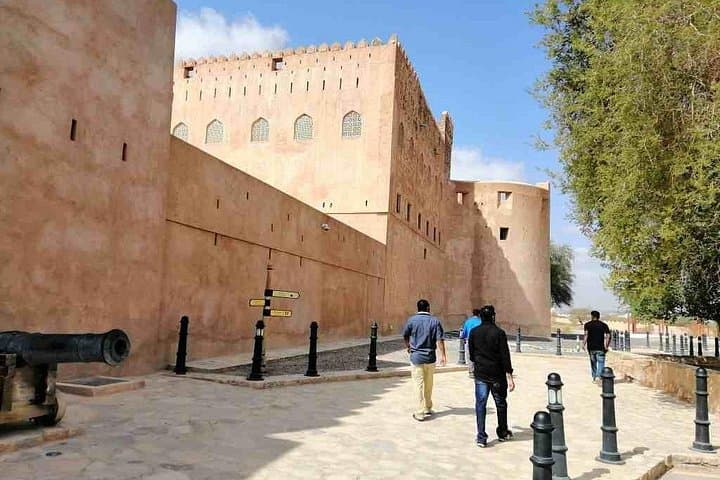
These sites sit on layered history: Nizwa was an early capital and commercial hub; Bahla preserves centuries of mud-brick craft and pottery tradition and is a UNESCO-recognized fortress town; Jabrin Castle, built in the late 17th century, reads like a medieval madrasa with carved ceilings and scholarly halls. Geologically the drive traces the Hajar Mountains’ limestone spurs and alluvial fans—terrain that shaped trade routes and irrigation systems (falaj) that still feed oasis farms.
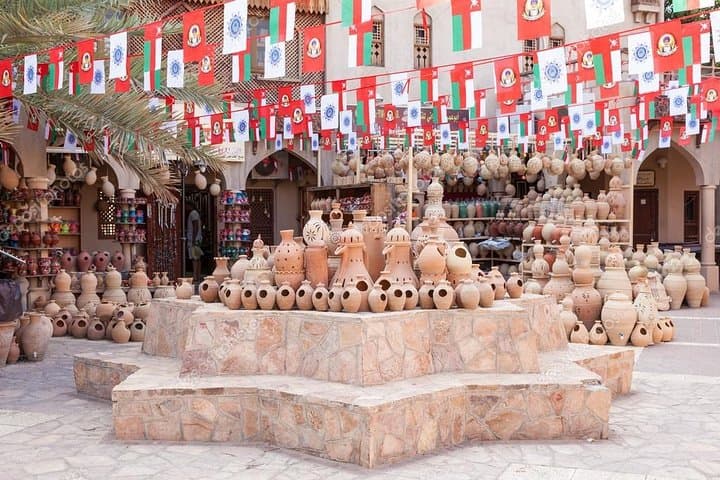
Culturally the day pairs spectacle with routine: market bargaining, date tasting, and watching potters turn clay the same way families have here for generations. The forts reward curiosity more than speed—narrow stairways, shaded courtyards and rooftop views that put the arid landscape in hard relief.
Practical guidance: this is a long, mostly low-impact day (7–9 hours). Expect walking on cobbles and steep staircases inside towers, modest dress in town, and midday heat from late spring through early autumn. Bring water, sun protection and small local currency for souq purchases and optional fort admission. If visiting on Friday, confirm Nizwa Fort access—religious hours may limit interior visits.
easy.
7–9 hours.
Suitable for most fitness levels; participants should manage short walks, steps and uneven surfaces.
Interior access is not always included—there may be an extra supplement (approx. $15) and Friday morning closures can limit visits; confirm when booking.
The tour runs roughly 7–9 hours, depending on hotel pickup location and how long you spend at each site.
A traditional lunch is included on most tour itineraries; notify the operator of dietary restrictions in advance.
The tour is family-friendly but forts have stairs and uneven terrain; it's not suitable for visitors requiring full wheelchair access.
Nizwa was an early regional capital and silver-trade center; Bahla Fort reflects centuries of mud-brick defensive architecture and Jabrin Castle was built as a scholarly center in the 17th century.
Mud-brick forts are fragile—avoid leaning on or touching delicate plaster and support local conservation by following site rules and minimizing plastic waste.
Oman Day Tours operates guided outdoor trips and adventures with an emphasis on safety, stewardship, and memorable experiences.
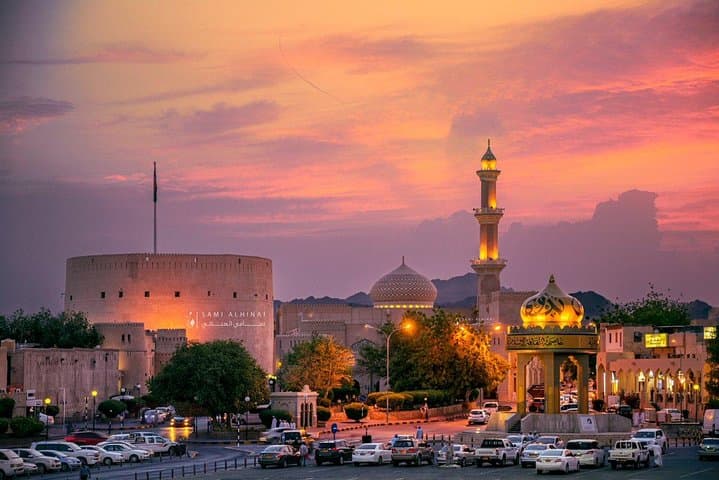
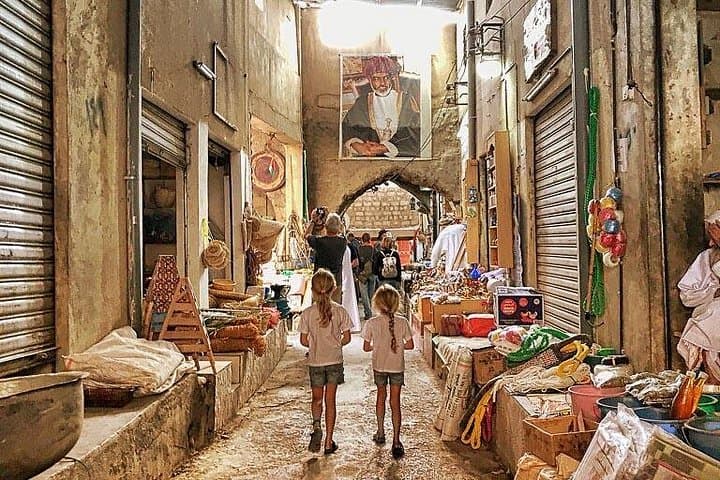
Morning light cuts across the Hajar foothills as a private vehicle winds down the pass from Muscat, and the region opens into broad, sun-baked plains dotted with palm clusters. Travelers arrive in Nizwa to the low, circular silhouette of its 17th-century fort and the busy geometry of a souq where dates and silverware are arranged like quiet challenges to the senses.
Morning light cuts across the Hajar foothills as a private vehicle winds down the pass from Muscat, and the region opens into broad, sun-baked plains dotted with palm clusters. Travelers arrive in Nizwa to the low, circular silhouette of its 17th-century fort and the busy geometry of a souq where dates and silverware are arranged like quiet challenges to the senses.
These sites sit on layered history: Nizwa was an early capital and commercial hub; Bahla preserves centuries of mud-brick craft and pottery tradition and is a UNESCO-recognized fortress town; Jabrin Castle, built in the late 17th century, reads like a medieval madrasa with carved ceilings and scholarly halls. Geologically the drive traces the Hajar Mountains’ limestone spurs and alluvial fans—terrain that shaped trade routes and irrigation systems (falaj) that still feed oasis farms.
Culturally the day pairs spectacle with routine: market bargaining, date tasting, and watching potters turn clay the same way families have here for generations. The forts reward curiosity more than speed—narrow stairways, shaded courtyards and rooftop views that put the arid landscape in hard relief.
Practical guidance: this is a long, mostly low-impact day (7–9 hours). Expect walking on cobbles and steep staircases inside towers, modest dress in town, and midday heat from late spring through early autumn. Bring water, sun protection and small local currency for souq purchases and optional fort admission. If visiting on Friday, confirm Nizwa Fort access—religious hours may limit interior visits.