THE ADVENTURE COLLECTIVE® · Independent discovery and booking for outdoor travel

Transform into a modern-day ninja in Kyoto: two hours of costume, shuriken throwing, blowgun practice and a live sword demonstration. This family-friendly session mixes hands-on skill practice with historical context and photo-ready backdrops.
Transform into a modern-day ninja in Kyoto: two hours of costume, shuriken throwing, blowgun practice and a live sword demonstration. This family-friendly session mixes hands-on skill practice with historical context and photo-ready backdrops.
You step through a low doorway and the room narrows: wooden floors, training weapons aligned like a professional’s tools, and instructors who move with the economy of practiced motion. The staff fasten a dark shozoku over your clothes, adjust a hood, and suddenly the city outside—Kyoto’s low hills and temple rooftops—feels a world away. For the next two hours you’ll throw shuriken, take aim with a blowgun, try simple sword forms, and pose in samurai garb against a hand-painted backdrop for photos.
Verified experiences and guided adventures in the surrounding area.
Operated by Maikoya · Kyoto, Kyoto Prefecture
You step through a low doorway and the room narrows: wooden floors, training weapons aligned like a professional’s tools, and instructors who move with the economy of practiced motion. The staff fasten a dark shozoku over your clothes, adjust a hood, and suddenly the city outside—Kyoto’s low hills and temple rooftops—feels a world away. For the next two hours you’ll throw shuriken, take aim with a blowgun, try simple sword forms, and pose in samurai garb against a hand-painted backdrop for photos.
Ninja training here is staged around real history. The shinobi traditions trace to Iga and Kōga clans of the Sengoku era, when stealth, disguise and improvised tools decided the fate of feudal skirmishes. Kyoto’s basin geology—soft river sediments bounded by low mountains—helped shape its defensive layouts and the covert routes couriers once used; the museum folds that local context into demonstrations and storytelling. Cultural notes: modesty and listening are part of the experience—follow instructors and avoid loud outbursts during demonstrations.
Practical guidance: the session runs about 120 minutes, is family-friendly (children under 3 may enter but cannot join the active training), and includes costumes, guided instruction, and a sword demonstration. Mobility restrictions apply for travelers with back or heart problems; the museum has brief construction and elevator outage dates to check before booking. Arrive with comfortable, secure footwear, bring your fully charged phone for photos, and reserve a slot in advance—popular morning sessions sell out on weekends.
easy.
2 hours.
Suitable for most fitness levels; requires light mobility for kneeling and basic throwing actions
Children can join most activities but infants under 3 are not permitted to participate in the hands-on ninja training (they may enter the venue). Children must be accompanied by an adult.
The activity involves kneeling, stepping and costume changes; check accessibility in advance—an elevator outage may affect access during specific dates.
Demonstrations use safe, controlled props and supervised techniques; guests use training versions of shuriken and blowguns under instructor direction.
Sessions are typically demonstrated with basic English explanations and Japanese; contact the museum if you need detailed translation support.
The shinobi traditions taught here draw on tactics developed by Iga and Kōga clans during the Sengoku period when espionage and covert operations influenced feudal power shifts.
The museum encourages respectful handling of reproductions and discourages flash photography to protect historic blades and textiles; travel lightly and support ticketed cultural programs that fund preservation.
Maikoya operates guided outdoor trips and adventures with an emphasis on safety, stewardship, and memorable experiences.
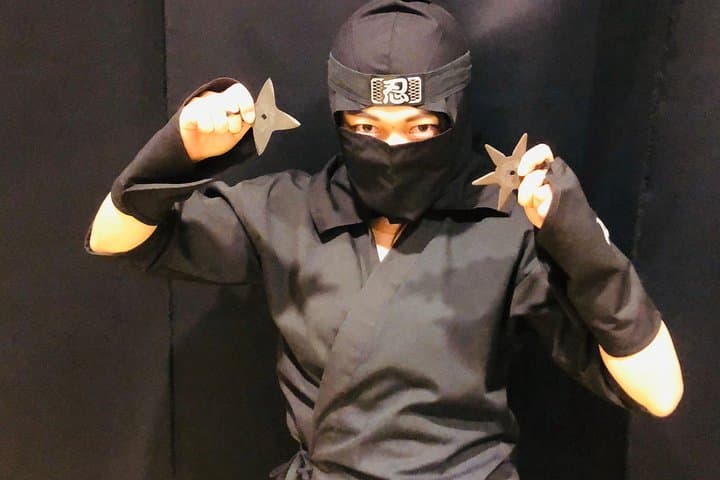


You step through a low doorway and the room narrows: wooden floors, training weapons aligned like a professional’s tools, and instructors who move with the economy of practiced motion. The staff fasten a dark shozoku over your clothes, adjust a hood, and suddenly the city outside—Kyoto’s low hills and temple rooftops—feels a world away. For the next two hours you’ll throw shuriken, take aim with a blowgun, try simple sword forms, and pose in samurai garb against a hand-painted backdrop for photos.
You step through a low doorway and the room narrows: wooden floors, training weapons aligned like a professional’s tools, and instructors who move with the economy of practiced motion. The staff fasten a dark shozoku over your clothes, adjust a hood, and suddenly the city outside—Kyoto’s low hills and temple rooftops—feels a world away. For the next two hours you’ll throw shuriken, take aim with a blowgun, try simple sword forms, and pose in samurai garb against a hand-painted backdrop for photos.
Ninja training here is staged around real history. The shinobi traditions trace to Iga and Kōga clans of the Sengoku era, when stealth, disguise and improvised tools decided the fate of feudal skirmishes. Kyoto’s basin geology—soft river sediments bounded by low mountains—helped shape its defensive layouts and the covert routes couriers once used; the museum folds that local context into demonstrations and storytelling. Cultural notes: modesty and listening are part of the experience—follow instructors and avoid loud outbursts during demonstrations.
Practical guidance: the session runs about 120 minutes, is family-friendly (children under 3 may enter but cannot join the active training), and includes costumes, guided instruction, and a sword demonstration. Mobility restrictions apply for travelers with back or heart problems; the museum has brief construction and elevator outage dates to check before booking. Arrive with comfortable, secure footwear, bring your fully charged phone for photos, and reserve a slot in advance—popular morning sessions sell out on weekends.